2025-10-03
YOSHIHIRO YUKI
Yoshihiro Yuki, a Tokyo-born new comers, rejects to be put in a box. Between futuristic soul, hazy jazz, lunar lofi, velvety R&B, and organic hip-hop, he crafts his pieces like an alchemist blends potions. His universe is both intimate and cosmopolitan, rooted in the global city of Tokyo but open to planetary vibrations. Meet a creator who prefers atmospheres to definitions, and who makes each note a secret passage to a sensitive dimension.
You come from Tokyo, a vibrant city in constant motion. To start, could you introduce yourself to our readers and tell us about your artistic journey, as well as what led you to music? How does this urban energy influence your musical approach and sonic universe?
Hello, I am Yoshihiro Yuki, a singer-songwriter and beatmaker based in Tokyo.
In Japan, elementary and junior high school students take music classes, but I showed no interest in the music taught there. Eventually, I became a high school student, and inspired by a friend who played guitar, I started playing guitar myself. That was the first time I actively engaged with music. At first, I preferred punk-rock that could be played with just power chords, but eventually I discovered soul music and hip-hop and became completely absorbed in them. And that brings me to the present. For instance, like the city featured in films such as Blade Runner and Ghost in the Shell, Tokyo blends Western orderliness with Asian chaos, and I find that alluring. I think that duality resembles my music.
Your repertoire is rich and diverse, spanning neo soul, nu jazz, J-rap, city pop, and lofi hip hop. How do you manage to balance all these influences to build your own musical identity?
Musicians can be broadly divided into two types: those who stick to one genre and those who can't rest until they've dabbled in diverse genres. I'm the latter. However, in the end, when I sing in my own voice, a sense of unity emerges, and I believe that ultimately creates a good balance.
Your tracks like Burned Out Pain and Reset evoke both deep emotions and a quest for renewal. What role do introspection and emotions play in your creative process?
I'm not a devout Buddhist, but these two songs are rooted in Buddhist philosophy. Even if we can't achieve enlightenment as ”Satori” by “abandoning everything and becoming nothing,” the message is that discarding the excess can bring some relief. That idea underlies many of my songs, and musically, my songs often feature sparse instrumentation―you could say that stems from this very concept.
Absolutely presents a brighter, more assertive aesthetic. Is it a way for you to showcase different facets of your artistic personality?
The theme of this song is absolute power that transcends the artificiality of real society. I don't see it as “showcase different facets of my artistic personality” but rather as inseparable from my artistic personality.
In Études for Rhythm Approach in Japanese Rap, you seem to explore rhythmic structures with almost scientific precision. Could you explain your approach to rhythm and flow in Japanese?
The rhythm of beats is complex and open to various interpretations. For example, whether you perceive the BPM as 70 or 140. In this track, I experimented and demonstrated that altering the musical notes of words can make the beats sound faster or slower. The style and flow of rap are still my subjects of ongoing research.
You use both your native Japanese language (日本語) and universal sounds such as lofi or soul. How important is your mother tongue in your musical expression?
Since I can't handle languages other than Japanese in terms of nuanced expression and pronunciation, most of my lyrics end up being in Japanese. I take a positive view of the fact that this creates a groove that wouldn't emerge in other languages.
![Yoshihiro Yuki - Shinjuku [Music Video]](https://media.whattheweb.org/resizes/2025/10/03/16/04/08/86fb4dc1-799e-427b-b72d-784f50b99516.jpg)
Your artistic journey seems to navigate between pain with tre track "Burned Out Pain", introspection with "Reset", affirmation with "Absolutely", and exploration with "Études".
Could one read it as a musical autobiography?
Thinking about it that way, it does feel like an artistic journey. Of course, it could also be called a musical autobiography.
As a Tokyo-based artist, how do you perceive the current Japanese music scene? Do you see it as a fertile ground for experimentation between soul, jazz, and rap?
Japan's music scene is exciting, though soul, jazz, and rap, maybe be alternative rather than mainstream. Even so, experimental endeavors are constantly underway.
You reference styles such as chillout, lofi, and nu jazz―music often associated with intimacy and contemplation. Is your art an invitation to slow down amid the fast pace of modern society?
It's sad to lose sight of ourselfs in the fast pace of modern society. That's why my message is to pause and take a breath.
City pop, embodied by iconic figures like Ohtaki Eiichi, Yamashita Tatsuro, Ohnuki Taeko, Yoshida Minako, Matsutoya Yumi, and Takeuchi Mariya, is experiencing a renewed international interest today. How do you draw inspiration from this legacy to shape your own music and offer a contemporary reinterpretation?
The pioneers were great, and without them my music might have turned out completely different. The jazzy elements in my music stem not from American jazz, but from the influence of Japanese city pop. I think I'm reconstructing city pop with more contemporary beats.
Could you tell us about your creative process: do you start from an emotion, a beat, a melodic line, or a phrase in Japanese?
It depends on the situation. Sometimes it starts with a beat, sometimes with lyrics, sometimes with chords. Anyway, whenever something comes to mind, I record it on my iPhone's Voice Memos app. Then I play it back and either play guitar along with it or paste it into my DAW and start adding sounds. That's pretty much how it goes.
Your art seems to navigate between urban modernity and a certain form of musical spirituality. Is this a duality you consciously seek?
I'm always conscious of urban modernity, but I've never been conscious of musical spirituality. If it exists, I suppose I express it unconsciously.
Who are your greatest artistic influences, both Japanese and international?
There are several musicians: Miles Davis, Jimi Hendrix, Ryuichi Sakamoto, Prince, D’angelo.
If you had to define your music with an image or a feeling, what would it be?
A heavy mist that feels good to breathe in.
Finally, what are your upcoming projects: albums, collaborations, or live performances, and where do you want to take your audience in the coming years?
This year I'll be releasing several singles. I'll also be contributing rap to ANTILOPSA's album releasing in November. Moving forward, I'll continue releasing neo-soul and city pop music as before. Since my music exists slightly outside the mainstream both in Japan and globally, I want to function as a specialty store for those who appreciate these rare genres.
Vinyl has experienced a true global resurgence, and it has always held a special place in Japan. What significance does vinyl hold in your own career, and how do you see its role more broadly in contemporary Japanese music culture?
I recently realized that my attitude toward music seems different when I listen on Spotify versus when I listen to records. With the former, I tend to listen to music as a resource or reference, while with the vinyl, I feel like I'm simply enjoying the music. More or less, isn't that how it is for everyone? A DJ friend who plays vinyl lamented the rising prices of used records.
You wrote and composed the track "Curious In The Morning" for the Japanese group Philosophy No Dance, included in their album "New Berry", released in March 2024. What did this collaboration bring you as a songwriter-composer, and how do you approach working with musical universes as diverse as yours and that of Japanese idol pop?
Japanese idol group music now blends with various genres like EDM, hip-hop, and heavy metal. In that sense, they're like general trading companies, and listening to their music helps us discover new genres or hybrids between previously unseen genres. Since Philosophy No Dance's musicality is based on funk and soul music, it was inherently compatible with my own music. These collaborations broaden the appeal of my music.
Your sonic universe is very rich and detailed. Could you tell us about the equipment you use to create your music? Do you favor analog instruments, digital tools, or a mix of both, and why?
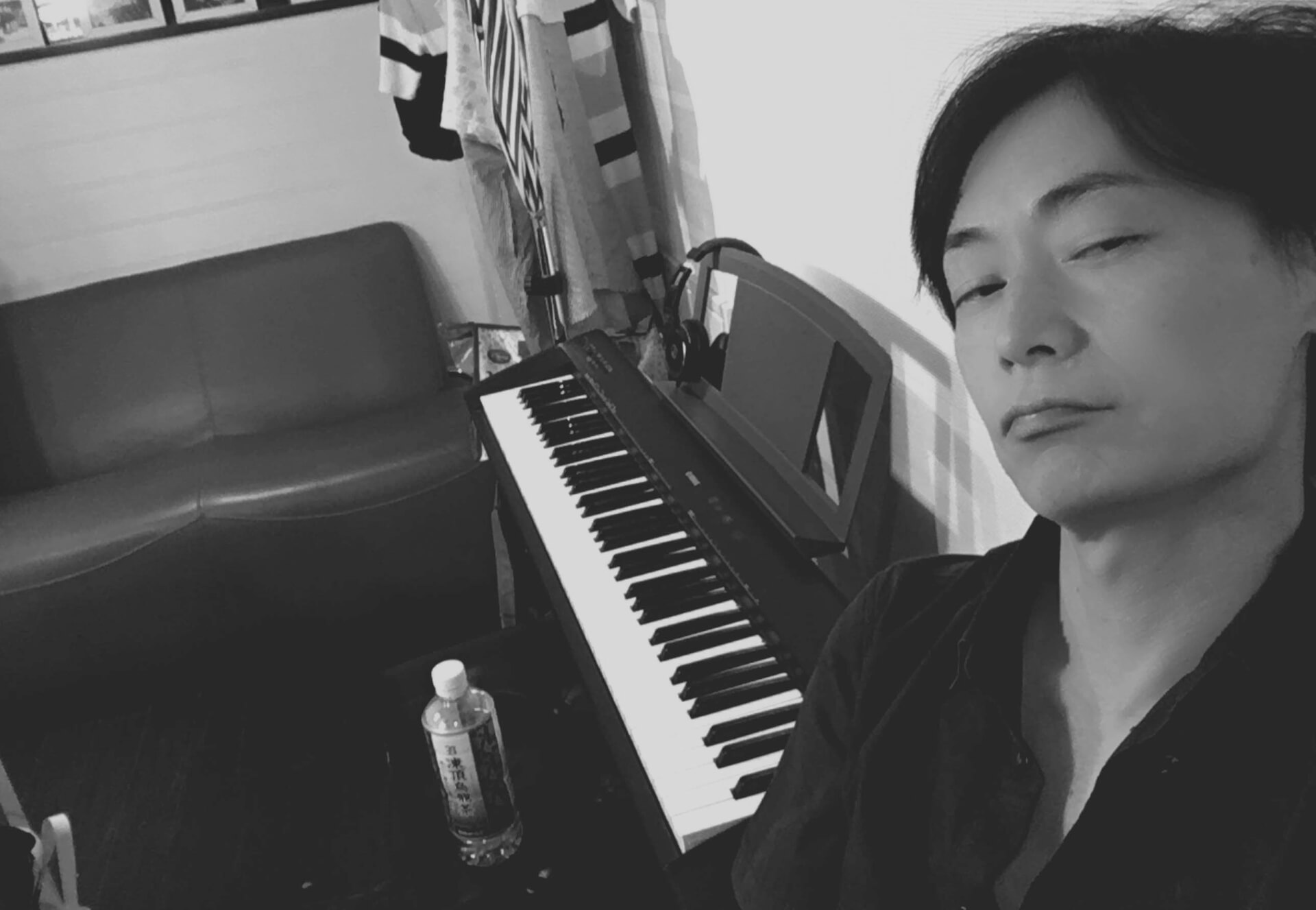
I now produce music entirely digitally. As for analog, it's just the guitar I play and my own vocals. My essential tool is the Voice Memos app on my iPhone ― without it, I'd miss out on many songs. My DAW is Logic Pro X.
Thank you very much for your time, Yoshihiro. To conclude this interview, is there a final message or thought you would like to share with the readers of Star wax Mag?
Zen.
It is an honor to meet all of you here today. I will continue to share Japanese music and culture with you, and I hope you will enjoy it. Thank you. Listen more music by Yoshihiro Yuki here.
Interviewed by Shogun Noir