2024-07-22
TAIGA
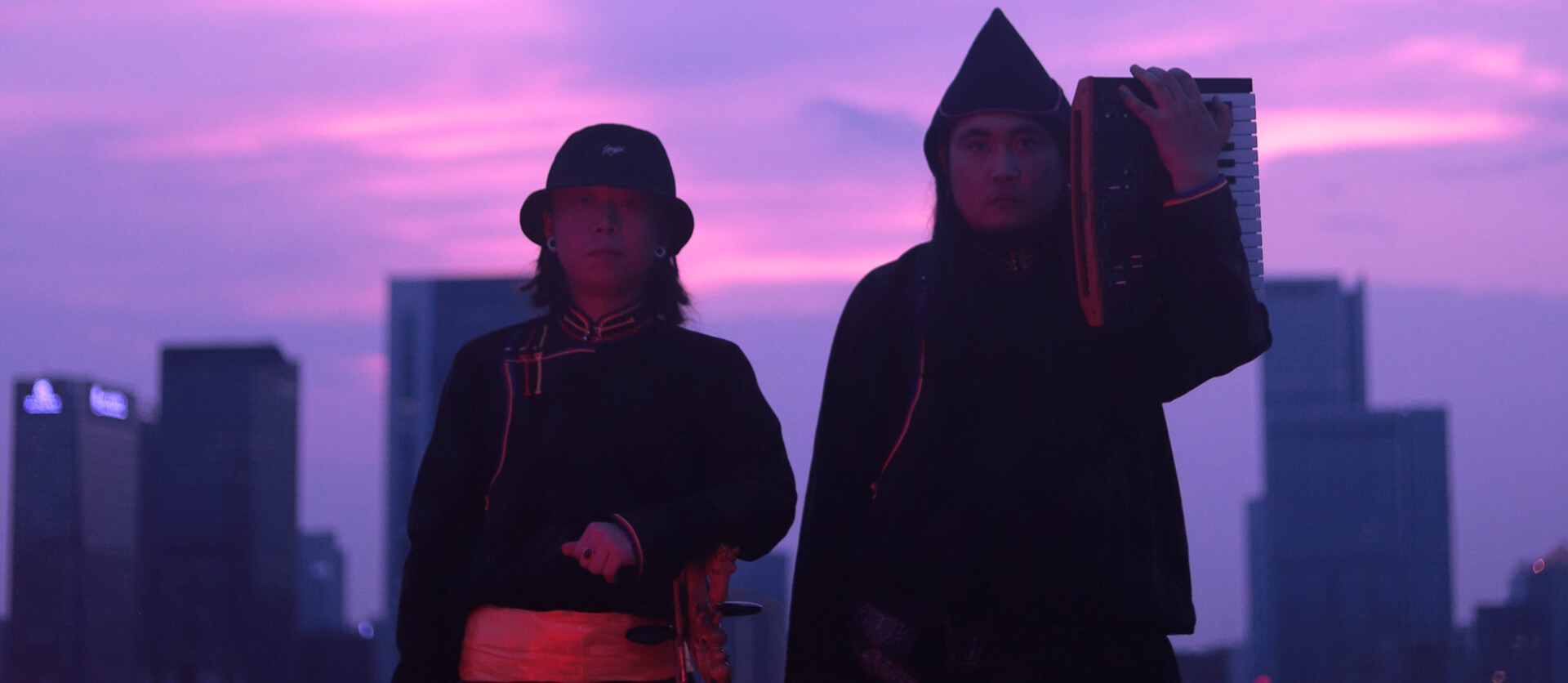
Taiga is an electronic music duo from Inner Mongolia and the Xinjiang Uygur Autonomous Region. Originally, it was a folk band comprised of four members. In 2014, the two multi-instrumentalists Xi Leilei and Husile met each other and in 2017 they took up the project and regularly perform Live at many Festivals around the world such as Strawberry Fest, Wheatfield Festival, South by Southwest (SXSW), ISIS Garden Festival… Their compositions fuse the traditional ethnic sounds and its contemporary approach to create their own nomadic psychedelic music. Rooted in the Mongolian traditions, they combine Khoomei throat singing technique, instruments such as the morin khuur, the Tuvan doshpuluur lute, bass drums and guitars… all with influences from dub, broken beats, ambient, trance. Each composition conveys a message and is a gateway to their authentic world and vision of life. Interview during their tour which takes place in France all this Summer.
Where do you come from?
Xi Leilei: I was born in Altay City, Xinjiang Uyghur Autonomous Region. My mother was an elementary school music teacher, so there was a good musical atmosphere at home when I was a child. I met Husile in the Kanas Area, and we quickly started playing in a band together in Urumqi (capital of the XUAR, ed). Now we both live in Chengdu, Sichuan, China.
Husile: I was born in Xilinhot, Inner Mongolia, China. My high school and secondary school major were classical vocal music. My childhood was good, just like everyone else. We met in Kanas, Xinjiang in 2014. Thanks to our shared passions and our obsession with throat singing at the time, we formed Taiga in the same year. At that time, it was a purely ethnic band with four members.
What does “Taiga” represent for you?
Xi Leilei: Because the style we initially did was quite traditional, the name "Taiga" includes many elements that we like.
Husile: "Taiga" means coniferous forest. It also has a more interesting interpretation: an ecosystem formed by pine trees, mountains, rivers, and elks. This ecosystem is called Taiga and Kanas is definitely a Taiga. Since we met in Kanas, it is very important to me.
Your influences and inspirations?
Xi Leilei: I think Husile has had a big influence on me and I have learned a lot from him.
Husile: Ajja (Swiss dj), “Requiem for a Dream" (film), System of a Down (rock music band from USA) and Shpongle (psychedelic electronic music project from England, ed).
What was decisive for you?
Xi Leilei: I moved to Chengdu in 2020 and then I gradually started learning production with Husile.
Husile: In 2017, Taiga disbanded, but I still wanted to make music. At that time, I was fascinated by electronic music and I could express myself alone.
Could you describe your sound?
Xi Leilei: Our music is a fusion of traditional ethnic music and electronic music. Some folk songs are very old melodies, and combined with electronic music, it feels more like using a modern way to express an ancient story.
Husile: I think Taiga is a psychedelic electronic band with nomadic attributes. Nomadism is rooted in our DNA. The world we want to create is concrete for us and we are trying to let everyone see and feel it. Maybe this world exists.
Sambar Sambar, by Taiga
Prayer, by Taiga
Space Buddha, by Taiga
Aksobhya, by Taiga
Your “Multi-dharma” Ep - streaming player above - was finalized in a Temple in Yushu. What do lyrics describe?
Xi Leilei: Most of the production and recording of this Ep were completed in a temple called Zhuoma Usaling. It blends Dub, Psychedelic, Ambient and some Breakbeat, incorporating scripture chanting to create a mysterious, deep atmosphere. Each piece of music has a special meaning, such as blessing, exorcism, disaster relief, teaching people to do good, and removing obstacles.
Husile: The content of the scriptures they sing in this album is about exorcism, expelling diseases, teaching people to do good and praying for world peace. Just playing these scriptures once brings great merit!
What is the message of “Mazhalik-Ta”?
Xi Leilei: This song is a folk song from the Republic of Tuva and the lyrics subtly describe the love of a shepherd.
Husile: "Mazhalik-Ta" refers to a mountain named Mazhalik. This is a piece of folk music with no story behind it. It is simply because this folk song is so beautiful that combining it with electronic music gives a new feeling.

Some words about the Mongol-Tuvan throat singing?
Xi Leilei: Throat singing techniques require long-term foundational practice and breath control and some techniques need to be stabilised over time.
Husile: There are five basic techniques: khoomei, sygyt, borbannadyr, kargiraa and ezengileer.
Has your way of producing changed from the beginning of your career?
Xi Leilei: When we started, Taiga had four members, with traditional Tuvan throat singing and some ethnic instruments. After I moved to Chengdu in 2020, we became a duo in 2021 and started trying new styles.
Husile: There have been many changes. In the past, it was just four simple instruments. Now we face computers, drum machines, synthesizers, and some real instruments. Making music now involves considering more things, more details and more musical elements. Of course, we are still learning.
Your definition of “psychedelic nomadic music”?
Xi Leilei: I think if you can integrate the psychedelic and nomadic elements well together, that aligns with the definition of psychedelic nomadic music.
Husile: The psychedelic effect, ethnic vocal styles, ethnic instruments combined with the texture of electronic music beats, drums and bass, that is a psychedelic nomadic electronic band.
What do you think about the term “world music”?
Xi Leilei: I think world music includes many sounds from all over the world.
Husile: World music is a genre created by the music industry, a collective term for all ethnic music from around the world. It has also led to the fusion of many ethnic music styles.
What are your best experiences?
Xi Leilei: Recently, experiencing different musical cultures in France was great.
Husile: My best experience was during a performance when everyone was in sync with us and it felt like everyone was in the same atmosphere.
Why is it so important to transmit your heritage?
Xi Leilei: This is our ethnic culture. I love it very much and I want to share our music with everyone.
Husile: It's not about transmitting heritage; I genuinely like it. If it were about transmitting heritage, it would feel very stressful.

What about your projects?
Xi Leilei: Mainly the production of a new album. We hope our next album will have new breakthroughs.
Husile: We will release a new album and tour China with it. We might also arrange performances outside of China and start working on the next album or Ep.
Which artists would you like to collaborate with?
Xi Leilei: Regarding collaboration, I think it depends on the feeling; if we meet a particularly suitable musician, we will naturally collaborate.
Husile: I don't have specific artists in mind for future collaborations. Currently, we are working with a female singer named Chacha.
TAIGA in 3 words?
Husile: Coniferous forest, which is 3 characters in Chinese.
If you could teleport yourself to any period, which one would you choose and why?
Xi Leilei: I think I would teleport to the time when we just started playing in the band. That time was really wonderful.
Husile: I would teleport to just before every moment, as people often say: "If only I had done this or that before." Maybe that is what many people think!
Interview by Sabrina Bouzidi
Next gigs:
01/08 : L’Agrivoise – St Agreve (07)
02/08 : KizouK Festival – Eyzahut (26)
09/08 : Ecolieu Argoumbat – Beaumont-de-Lomagne (81)
10/08 : Ambre (81)
23/08 : Hadra Trance – La Bordé (03)
24/08 : V & B Fest’ – Château-Gontier (53)
30/08 : Station Mue – Lyon (69)
05/09 : La Marbrerie - Montreuil (93).
Intro, by taiga
_Dynggyldai, by taiga
Padmasambhava, by taiga
Mazhalyk, by taiga
Eki Attar, by taiga