2024-09-18
STANISLAV TOLKACHEV
Stanislav Tolkachev is one of the most prominent techno producers of the 2 past decades. The Ukrainian is renowned for his unique signature. His sound is recognizable with raw-jagged textures, psychedelic and melancholic soundscape all reflecting his influences from Detroit’s classicism, avant-garde minimalist composers, industrial music... Stanislav’s career continues to thrive to this day by signing tracks one after the other, performing Live Modular-Synth, running his label Rudiment, exhibiting his photography work with which he illustrates covers, a way for him to authentically connect his two passions. Interview from his studio in Berlin.
How was your childhood and music environment in which you grew up?
I’ve answered this question several times before, so I’ll try to provide a more detailed explanation and share some things I haven’t mentioned earlier. I was born in the USSR in 1982, and I am Ukrainian. I am the son of a MiG-25 fighter pilot (now long retired), and my mother graduated from a music school specializing in piano and worked as an accompanist. My parents met in the dormitory of the music school. My father also loves music and plays both the piano and guitar. My younger sister graduated from music school in piano and also played drums in a band. My childhood and youth were spent in a closed military town. At that time, military families were well provided for, so I had everything I needed. I was quite a progressive child; my first computer, a ZX Spectrum, appeared in 1992. By the standards of the time and the place where I grew up, that was quite cool. My parents rarely argued and are still together. I am very grateful to them for the upbringing and the freedom they gave me. I attended music school twice: first for piano lessons at the age of seven, but I quickly lost interest. Then, at the age of 24, I returned to piano lessons and studied for four years (I dream of playing jazz), learning to read music, taking exams, etc. However, when I moved from Dnipro to Kyiv, I stopped my lessons. Now, I think it would be great to resume my studies, as playing the piano significantly enhances one's musical capabilities, even if you are playing a modular synth.
How did you discover electronic music?
Radio and the Internet! In the mid to late '90s, in the city of Dnipro, which was always culturally advanced but less mainstream than the capital, there were several regular radio shows where you could listen to club music mixes. I was still too young to go to clubs on my own, and I met like-minded friends a little later. With the advent of the internet in 1997, at a modem speed of 56kbs, I listened to internet radio stations with techno at night and downloaded tracks from Napster (the Soulseek of those times).
Who are your main influences?
When it comes to the specific techno artists who have influenced my work, they are Robert Hood, Jeff Mills, Terrence Dixon, Pacou, Surgeon, Regis and Christian Bloch. However, my musical tastes have always been quite broad. I value techno just as much as the aesthetics of early electronic music by Klaus Schulze, Terry Riley, Raymond Scott, Roland Kovac, and Morton Subotnick. I also liked classical avant-garde music such as Steve Reich, John Cage, Luciano Berio, and Valentin Silvestrov, as well as classical composers like Bach and Chopin. Additionally, I was influenced by grunge and punk rock from Sonic Youth, Brainbombs, James Chance, Grajdanskaya Oborona (GROB), Zvuki Mu, industrial music from Psychic TV and Coil, and free jazz from Marilyn Crispell and Irène Schweizer, among many others. This eclectic mix was further fueled by heavy psychotropic substances at the time. Of course, the people I interacted with also had a significant impact on me. My first love, Tanya, with whom I lived for two years from ages 20 to 22, greatly influenced me. She had an impeccable taste in music and a strong (sometimes quite challenging) opinion on techno, and I always tried to impress her with my tracks. She played the cello (she was the lead cellist in a youth ensemble) and was incredibly talented and multifaceted. I believe it was because of her that I pushed myself to develop so intensely and in various directions at that time. We also started exploring photography together. Our breakup was very hard for me and I think it had a significant impact on my music and character.
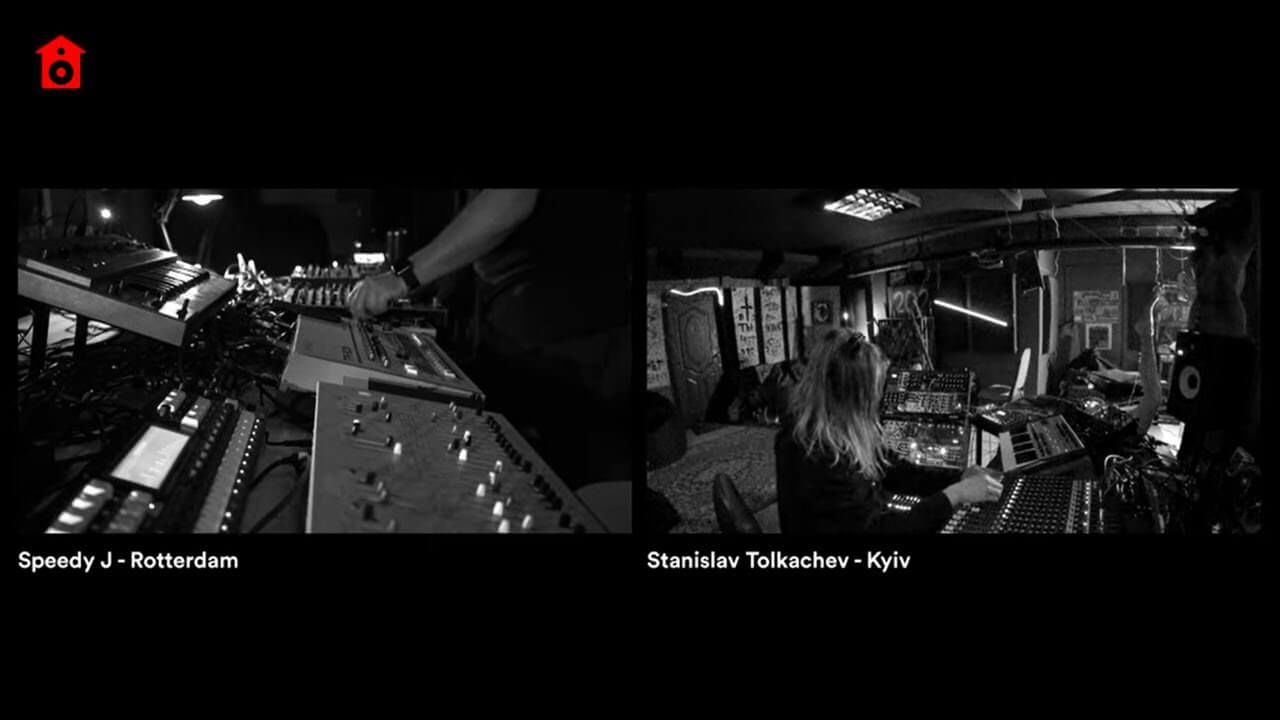
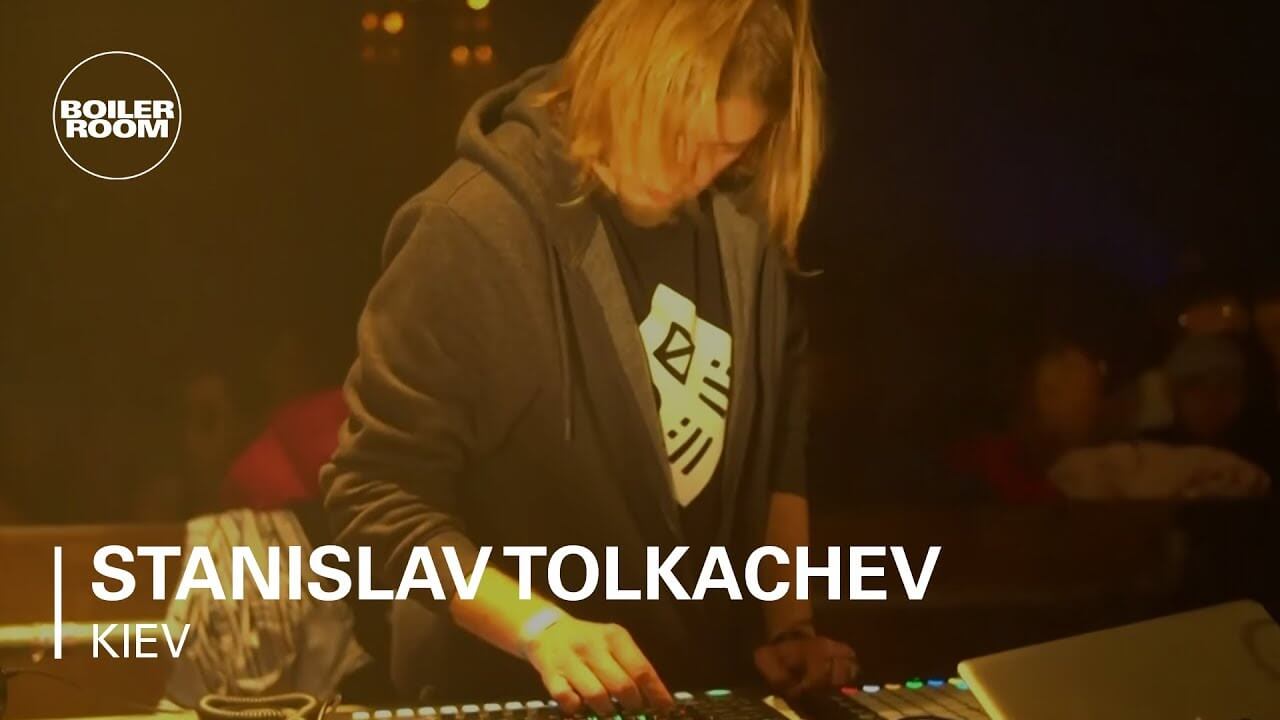
I think one of the most unique and interesting experiences was the jam with Speedy J, Stoor, during the pandemic - video below. It was a truly interesting project, and I am very happy to be a part of it. Recently, I visited Rotterdam and was in the studio with Speedy J. We plan to record a joint studio jam release for Stoor, and we just need to find the right time for it. Of course, I dream of joining their 8-hour jam at ADE, who knows, maybe in 2025 or 2026. I also have fond memories of Boiler Room CXEMA, which was really amazing.
What was decisive to become a producer?
In 1997, I got a Pentium 166mmx and a Soundblaster sound card. I immediately bought a disc with audio editors Cool Edit Pro, Soundforge, and Rebirth and started experimenting with sampling. Later in 2000, Propellerhead Reason was released, which became my main tool for a while, combined with analog processing and live recording. Gradually, I bought desktop hardware instruments, then modular synths, and today I do not use VST for synthesis, but use a computer only as a sequencer (sometimes), recorder, and FX.
Where is your studio and what kind of gear do you use for production?
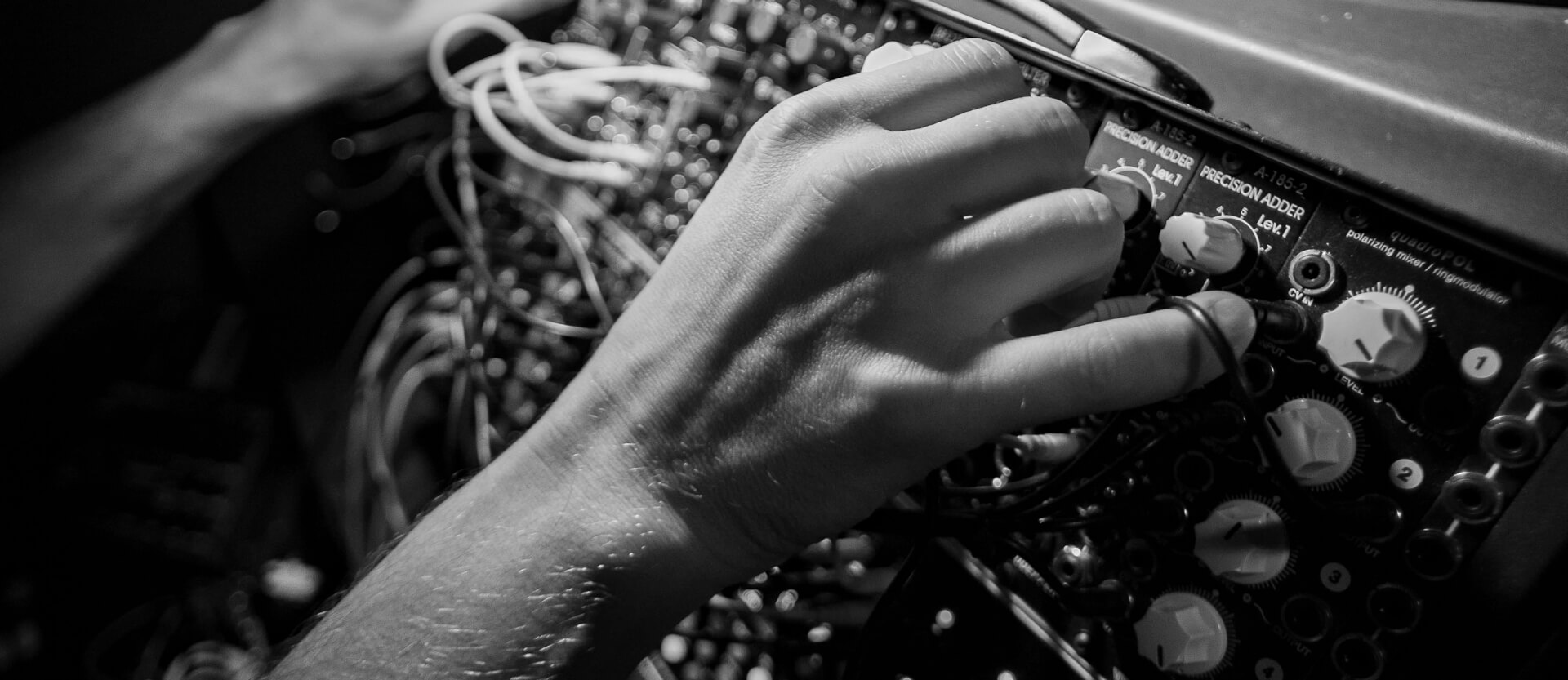
My studio is now located in Berlin. Over more than 20 years, I have changed a lot of different instruments, but the main principles of my workflow have remained unchanged. I try to write tracks live, often in one take, and rarely multi-track in several stages. I use modular synths with CV control, desktop analog and digital instruments, as well as grooveboxes controlled via MIDI, but still using (simulating) the principle of CV modulations and matrices. I learned this in Reason in 2000, where it was always possible to sum and subtract signals, multiply them and send them to different instruments in various proportions. Now I do this analog or with Ableton. But sometimes I like to reminisce about my youth and might play around in Reason, using it only as a MIDI sequencer. Melody is the basis of a track for me; I always start with a synthesizer part and when I find an interesting motif, I arrange it with a drum machine or groovebox and record several channels live.
We often hear that your music is difficult to mix for Djs. What do you think about that?
Let's speak about your label. Regarding the name, is there any link with your release Rudiment out in 2006? How did you decide to co-found with Sergey Chernyshov the label Rudiment? And could you tell us more about your charity releases?
Indeed, Rudiment was born in Dnipro, Ukraine, in 2006. It is named after my first mini-album on Christian Bloch's label, Funquedroppings, some tracks of which were later re-released on vinyl by the label Pohjola.
The term "rudiment" in English means "beginning," or "foundation." The Latin word "rudimentum" comes from "rudis," which means "rough," "raw," or "unprocessed." "Rudiment" carries the idea of harmony between tradition and innovation, past and future, foundations and experiments, making it a deep and multilayered symbol. The image of a predatory dinosaur skeleton emphasizes the connection between the past and the present, showing respect for origins and foundations while symbolizing the power and significance of basic elements in art. It also embodies a notion of self-destruction, reflecting the raw, unrefined nature of both artistic creation and evolution. Through this lens, "rudiment" not only represents the foundational elements but also the cyclical process of destruction and renewal inherent in both nature and creativity.
I designed the logo myself (as I worked as a graphic designer at the time), and the Rudiment label became a small promo group that organized vinyl techno parties in small underground clubs in Dnipro. Even then, I dreamed of releasing my music under this label, but I wanted to do it on vinyl, which was extremely inconvenient and expensive living in Ukraine at that time. Then it became possible to be released on cool, well-known labels, and Rudiment went dormant.
I met Sergey when he asked me to record a track for his label NICZ Records. We released the track “Ant Parade” and later became friends. We hung out together when I visited Berlin for gigs. During one of these visits, he mentioned wanting to start a new label, and I suggested Rudiment. Then the war started. We decided to release our first charity compilation on Rudiment. For the first Rudiment release, RDMT001 “Life Will Win Over Death,” we did an open call and received hundreds of tracks, plus I reached out to friends. We ended up selecting 50 tracks from artists like Surgeon, Speedy J, Dasha Rush, Ex.Hale, Jeroen Search, Dimi Angelis, Israel Toledo, James Bong, and many others. This is how I met and became friends with Ruman. He sent beautiful demos, and we selected three tracks for the compilation. We received free mastering services from KTC Mastering, Israel Toledo, Nihad Tule, and Levan Andiashvili.
Goodbye Medellin, by Stanislav Tolkachev
Middle Finger Variation, by Stanislav Tolkachev
Unspoken Feelings, by Stanislav Tolkachev
Now We Are Talking, by Stanislav Tolkachev
Prononciation, by Stanislav Tolkachev
These Are Not Butterflies, by Stanislav Tolkachev
Vira, by Stanislav Tolkachev
It Wasn't All in Vain, by Stanislav Tolkachev
The Saddest Music in the World, by Stanislav Tolkachev
Two Treats Right Now, by Stanislav Tolkachev
Whole Life Order, by Stanislav Tolkachev
Delayed Gratification, by Stanislav Tolkachev
There Is No Cure, by Stanislav Tolkachev
What about the second release?
For RDMT002 - “HI,” there was no open call. I personally contacted my friends and acquaintances, requesting music for the compilation, resulting in a more prestigious collection of 44 tracks featuring Mike Parker, Oscar Mulero, SHXCXCHCXSH, Developer, Cravo, CONCEPTUAL, Peder Mannerfelt, Blawan, Ben Pest, Steve Bicknell, Umwelt, Steevio, D-Leria, Franz Jäger, Zadig, and many others. The cover photo was taken in the first months of the war in my photo studio in Kyiv, in collaboration with Anatolii Borysenko. The large caliber shells in the photo were brought from the front line by Anatolii, who served in the paramedic battalion Hospitallers. My friend Vitalii Shevchenko, a young and promising artist currently based in Kyiv, joined the curatorship of "HI" and selected the Ukrainian demos. Masha Melnik, my dear friend who has supported me over the last few years and has now moved to the USA, also became a partner of the label. After two releases, I think it will be better if I continue running Rudiment on my own for a while. Sergey is busy with other projects and collaborations. We are friends; our studios are next to each other in the same building, and I believe we will continue to help and support each other.
For you, what does Techno represent?
For me, techno is a mix of intelligence and shamanism. Hypnotism. Trance. The ritual of live recording. Techno is, above all, mutual respect. It's a reminder that, despite our differences, we can unite through the universal language of music, creating a space where everyone feels at home.
Let's speak about your second passion: Photography & Paint. Could you tell us more about your photo-studio, materials that you use for creation, your inspirations, your upcoming exhibitions …
I love black-and-white photography. I started seriously getting into it in 2002. I began experimenting with narrow black-and-white film, developing it myself, and learned to print it in the darkroom on bromide paper. Later, I discovered medium format. The peak of my interest and experimentation was at the end of 2012. I didn’t have a photo studio; I shot outdoors and staged setups in garages and abandoned buildings. My favorite artists were, of course, Roberto and Shana ParkeHarrison, Roger Ballen, Joel-Peter Witkin, Francesca Woodman, Arthur Tress, as well as documentary photographers like Josef Koudelka and James Nachtwey. My photography has always had an applied character. It was an extension of my self-expression in music, so I use my pictures for the covers of my records to this day. When I think of a new release, I envision it as a whole: the visual I create myself, the title, and the music. At the beginning of 2011, I discovered a material called CTP plates, which are expendable aluminum plates used today for printing in offset printing (magazines, books, newspapers, basically anything related to large print runs). These plates can attract oil paint like a stencil. This is similar to working with oil prints on early-century photo paper and the GumOil process by Karl Koenig invented in the early '90s, but simpler and more durable as the carrier is aluminum, which does not age quickly or corrode from moisture. For convenience, I started calling it CTPoil.
In 2016, I met my future wife, the artist and painter Valeriya Tarasenko. We were together for four years, and during this time, #CTPoil became our joint project. We collaborated on a series of abandoned fountains that we collected from around the world (we gathered about 100 of them) and later printed them using the CTPoil technique. We had many joint exhibitions, and our works are available on Instagram under the hashtag #CTPoil. We separated due to the crisis caused by the pandemic, and now, because of the war, we live on different continents. She is currently in Chicago, continuing to grow as an artist, and she is doing well. We still communicate occasionally. Regarding my future exhibitions, yes, I think in 2025 I will have several solo exhibitions in London, Milan, and Berlin. I am currently working with several curators, and I believe everything will be ready by 2025.
What do you think about AI?
Yes, I am amazed by what is happening in the world of information right now. It is truly wonderful. I have been experimenting with Midjourney since version 3, following all the steps of the evolution of graphical neural networks. These are excellent design tools that can also be sources of inspiration or for planning and structuring an artist's manual work. I also try to use mixed media AI graphics with manual oil printing, and it looks great! AI in music is also frighteningly wonderful. I am not yet using these innovations in my music, as I am currently focused primarily on analog modular sound, but I am sure it will be useful for those who use samplers, for AI-generated stems, and maybe for me in one of my future projects. And of course, digital AI mastering will surely become the norm. At the same time, the value of live human labor in art and the process will increase.
Your projects?
My new six-track record, "Dog Flavored Cat Chew," has already been mastered and will be released this fall on a small New York label, "White Owl." As I mentioned earlier, I am preparing to do a record with Speedy J for Stoor. I am working on a collaborative record with the wonderful Katya Milch. This is our joint mini-album, a mix of deep melodies, ambient, minimalist techno, dub, or bass foundations. We would like to try to send this to Delsin or Ilian Tape, let's see. Collaboration with Ruman. This guy inspires me, he is very precise and concrete, my music has also influenced him, so now I feel the feedback and bask in his talent! We plan a split release on Staub in the fall, and of course, looking ahead, Warm Up or MORD. Collaboration with Developer and Modularz. A new record for Dasha Rush's label - Fullpanda. A solo release on Rudiment.
If you could teleport yourself for a few hours, where would you choose to go?
The Future. It would be incredibly interesting to look at least 100 years ahead. I wonder if humanity has managed not to destroy itself in that time. I would love to listen to the music, see the art, and observe everyday life. I'd want to take a look at the world map. Of course, three hours would be too short; can I stay for a week please? I promise to return.
Finally, who is the “current” Stanislav Tolkachev in 3 words?
Student, Artist, Lover.
Anything else?
Yes.
Interviewed by Sabrina Bouzidi / Photos by Hellis Fox.