2026-08-17
SPACED OUT KREW
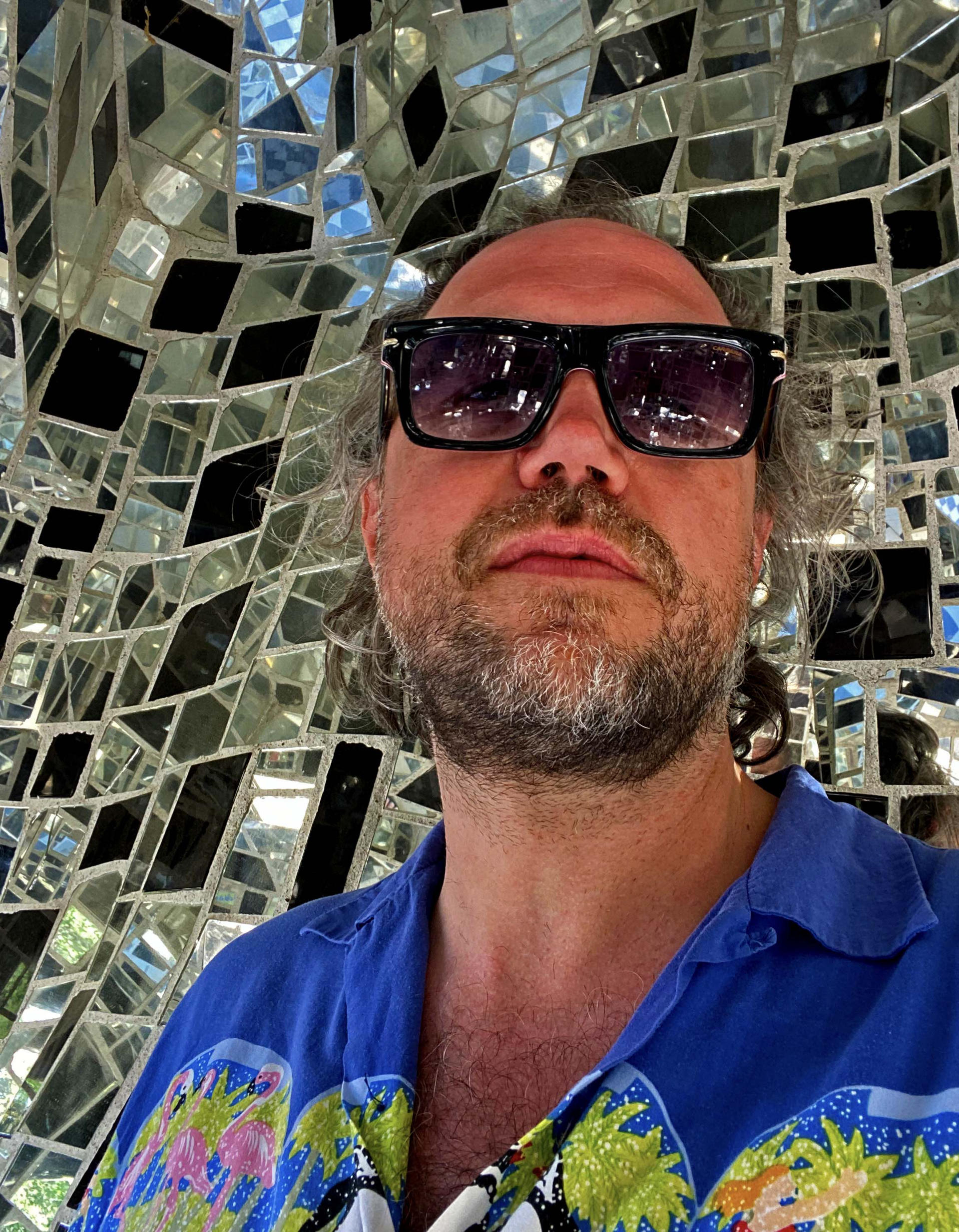
Marius Cyrilou aka S.O.K. (Spaced Out Krew), member of Cee O Funk, Motorbremsen, is a French producer from Annecy, France. He digs records since he was teenager and he’s online records dealer since 2005 via holywax-records.com, a heavy website specialized in rare, obscure, weird, deviant sounds. Then his passion for analog synthesizers led him quickly to make is own beat, influenced by Afro American music, Disco Not Disco movement and DIY psych, synth wave vibes. He has released records himself on his label, Bazaar Records and also on PPU, Born To Shine, Mother I’d Like To Funk… Recently he sign a deal with the based-Chicago Star Creature-Universal Vibrations and he is releasing a 7 inch with Gabriel Ghebrezghi, also known as Ghostape and we love it. An Lp will follow! Let's go for a fast but deep interview!
Welcome! A glass of?
Hello!! a glass of white wine, Sulfite-free, please, to avoid a hangover.
Where and in what environment did you grow up and did you have vinyl records at home?
I lived alone with my mother in a small village in Haute-Savoie. A place where there were more cows than humans. So there were no vinyl records lying around when I was little; my family wasn't really into music.
Your first approach to Djing-selecta?
When I was around seventeen I was doing a culinary internship in Annecy, a little beautiful city in the French Alps, as part of my training; I used to go out a lot, and one night I found myself at a local club called Pop Plage. Strangely enough, there was a Virgin Records promotion that night about Daft Punk and their record " Rollin' & Scratchin' " / " Da Funk " … and I ended up with a copy of the 12inch…. So Weird… After that, I bought a turntable because I had a record and at the same time, the electronic music intrigued me; then came a second turntable and a mixer... and I found myself buying records at Interzone, the only independent electronic music shop in the area, and started DJing.
Your first approach to beat making?
Shortly after I started DJing, my interest in this new world opening up to me grew day by day; I was listening to a lot of house, techno, jungle, trip-hop, and hip-hop, it was the 90s, and so many great things were happening in music. That period also marked the beginning of digging for me. One day, a colleague named Ahmed, who was also into music, took me to the Geneva flea market, and it was a revelation. We loved modern Afro American music, like New York house/garage, Detroit/Chicago techno, hiphop and also UK garage, drum and bass, trip hop, but we didn’t know old soul, funk, jazz music, so, naively, we looked exclusively for record sleeves featuring Black artists... Back then, there were tons of vinyl records at the flea market and hardly any other diggers; we had the place to ourselves... it was so much fun. It was incredibly exciting... We were like children faced with a lot of new toys. I remember it like it was yesterday: I went home with records that moved me deeply, my first catch, Al Green's "Let's Stay Together"—as well as Curtis Mayfield's "Superfly"; I was blown away when I listened to them. There was also Sydney Joe Qualls on the Dakar label—superb deep soul—and a classic Barry White record… I still have these records… For me, that first day of digging was a sort of formative moment that shaped my entire life… Later, listening to tracks by Cassius, Daft Punk + Madlib, Jaydee, RZA… artists who used sampling—we became interested in sampling ourselves; I bought an MPC 2000 and started making music, house beats, hip hop beats, etc.
How has your passion for synths evolved since you started out?
My passion for synths started just like my passion for records: I stumbled upon a Juno-60 at a flea market one day—it was 300 Francs back then, or 50 euros... I didn't know a thing about them, but I started tweaking all the knobs, and it was like, "Wow! What is this amazing thing?" Finding that synth was a huge influence on me; I turned into a total geek, hunting for records, making music, and experimenting with synthesizers.
Do you play another musical instrument?
No, I only play keyboards; I do a lot of tinkering with synthesizers too.
When did you launch Holywax? Was it originally a physical store?
I started Holywax with Léandre, a real ‘Deep Diggin’ records collector from Geneva, sometime between 2005 and 2010, I think… there was never a physical store.
How has the shop evolved? Are you still obsessed with rare and obscure records?
Back then, we loved super obscure, unknown, and rare records—alternative music like library music / OST, psych, weird / odd grooves, and synth-wave, but also spiritual jazz and rare soul-funk records. We’d list the records we found on the site; it was cool, but it took up so much time. After a few great years, I had to stop because I was spending too much time on the site. I now sell these kinds of records at conventions, notably in Den Bosch, in the Netherlands. I have also a space near Annecy, with all my records, I welcome people by appointment and I work on Discogs too. Yes, I’m still obsessed with obscure records, but you don't really find them anymore, everything’s been discovered... or almost... "deep diggers" are looking through cassettes and CDs now... that era is pretty much over, but it was amazing. Now I like hunting for little gems in modern music—and they’re out there... stuff that slips through the cracks.
How did you connect with Tim Zawada from Star Creature Records based in Chicago?
I simply sent the demo to Tim via Instagram, and he loved it. I love the Star Creature label; it’s a label that’s really evolving and becoming increasingly eclectic, with a wide range of genres and artists. I met Tim at the Den Bosch record fair last year—he came along with the guys from Numero Group. We had a great chat and really hit it off; I played him a lot of obscure European records—he’s very curious!
Can you explain your creative process for your great double sider 7 inch? Spaced Out Krew and Ghostape is it a new union?
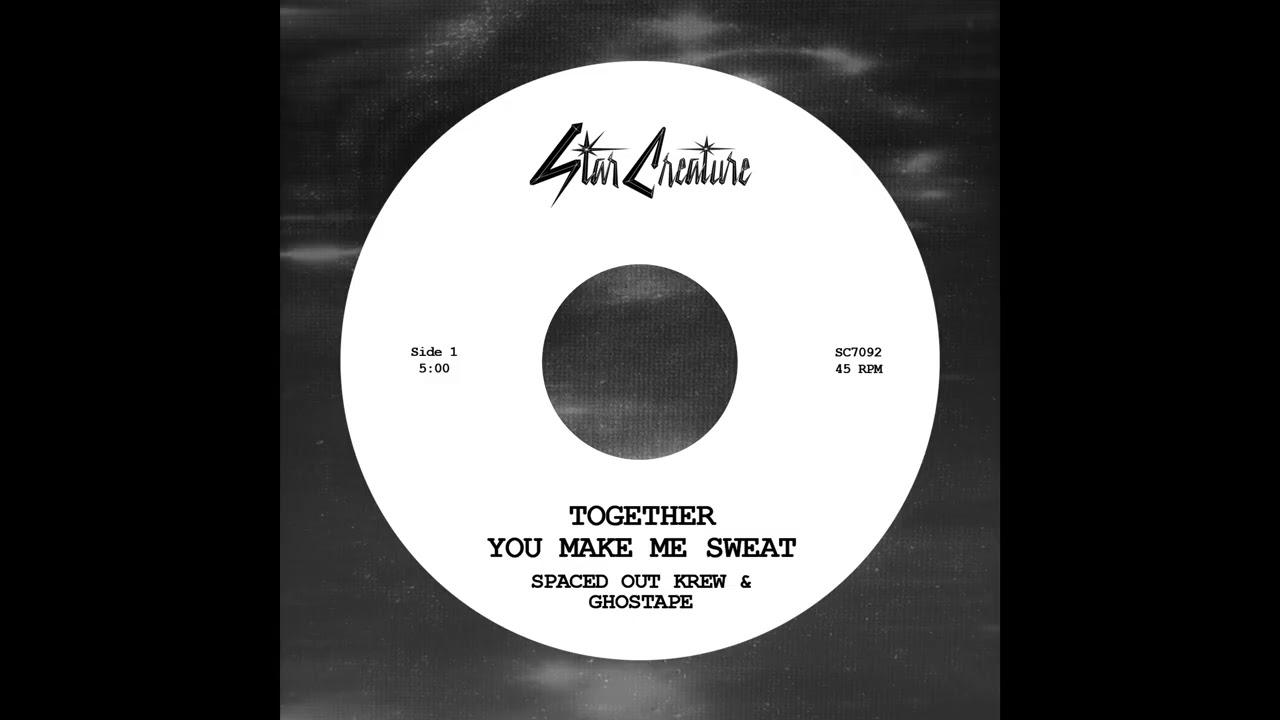
Ghostape and I had wanted to work together for a long time. We finally found a window of time. So, About the track ‘Together’, I worked on the beat and Gab laid down the vocals afterwards. I used a drum sample from a boogie track by the group Radiance, though it’s barely recognizable. Then I created a harmony on the electric piano and added a bassline using a synthesizer I love, the Roland SH-2. I also use it for the B-side of the 45, ‘You Make Me Sweat’... actually, I use it on a lot of other tracks. I love that synth because it has really gritty bass and a very distinctive sound, thanks to his crazy filter. After that, we fine-tuned everything, added some lines on the Juno-60, and that was it—job done. A Lp release is coming out soon on Star Creature, too. Here you can listen to the 7-inch, both side - click here.
You also run Bazaar Record, is it still active?
Bazaar is a micro-label; I hadn't done anything with it for years, but now I’m keen to release a lot of material. Let’s go! I’m hot!
You’re also a member of Cee O Funk, and I believe the band’s line up is evolving. Can you tell us about this project, both in the studio and live?
We stopped Cee O Funk maybe one or two years ago. Now, I continue making music with my buddy, Olivier aka Orion Westbrook. In September, we’re releasing a a six-track that I absolutely love; it’s musically radiant, funky, and a bit offbeat.
What’s next, do you also have other tracks coming out on vinyl this year?
There are three projects, two EPs and an LP with Ghostape, coming out between the end of this year and the start of next. In September, we’re releasing the six-track EP with Orion Westbrook And next year, I will release some personal projects, one LP, some 7-inch too.
Some DJs are nostalgic for the past – vinyl only … while others don’t care, for example recently we interview Alan Oldham and he said: “The music has never been better. I can’t keep up with all the quality promo releases”. What do you think?
I listen to both digital and vinyl... About digital, though I don't use Spotify; I tend to go for Bandcamp and independent radio stations. Vinyl is a physical object and I love that; when I take a record out to listen to it, it connects me to memories and emotions. With digital, of course, the music connects me to those things too, but there’s no tactile element. It’s important for me to feel and touch the object; there’s something fleshly about it... And the sense of time is different as well. Taking out the record, putting it on the turntable, listening to one side and then the other—it’s about slowing down... it feels good. Another example: when you’re DJing—I don’t mix digitally myself, but friends tell me you can easily get lost in the files on a USB drive; sure, it’s convenient—and lightweight, above all—but in terms of the visual and tactile experience, vinyl is great.
Yes, it’s a very creative time—so many releases are coming out; it never stops. You couldn't really say there’s a revolution involving the emergence of a major new genre—like we saw in the 60s, 70s, 80s, and 90s with jazz, soul, funk, psych-prog, pop music, synth-pop, synth wave, punk, hip-hop, and electronic music, also modern African, South American music. It feels like artists today are drawing creative inspiration from all those styles, just having fun with it and adds something extra.
What does Paris represent for you and what do you think of the club and vinyl scene here?
I don't know Paris very well; I'm not sure what's going on there... I know quite a few fellow great record store owners—people who run labels and some artists.
What’s your motto-adage, your favorite quote?
I was watching a documentary about Einstein a few days ago—I'm really into science and cosmology right now—and I love this quote: "The true sign of intelligence is not knowledge but imagination." It's the truth. And it's funny, because it's a scientist saying that, one of the greatest. And that quote can really resonate powerfully in art and music...
Interviewed by DJ coshmar / photo (c).