lun. 8 sept. 2025
MAYAN & SARA WUAL
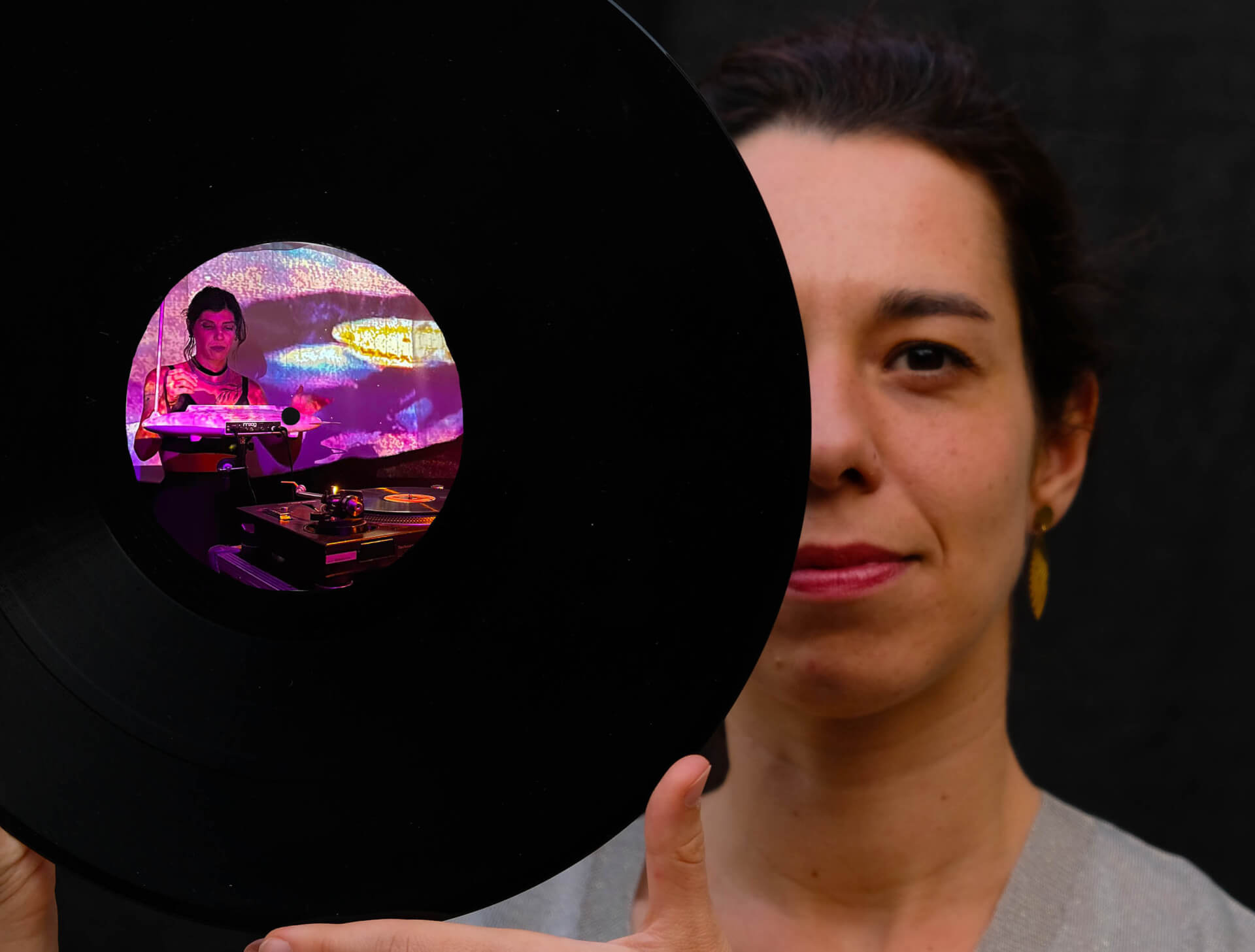
Creating connections, offering keys, having lofty ideas of sharing and mutual aid, of accuracy and quality, spreading strength in the gentleness of a peaceful and cheerful musical palette, connecting the roots of nature to the infinite possibilities of technology, this is the path that Mayan and Sara Wual are tracing hand in hand. Their production aims to be both conscious and innovative, both tireless and committed. Let us tell you about creative encounters based on sensitivity and synchronicity in an improvised interview driven by the flow…
How did you both get into music and production ? How did you meet each other? When did you start working together ?
Sara: We met at ELA, an underground music event in Portugal co-founded by me and a few friends in 2016. Some upcoming events are already planned for 2026 in Lisbon, still going. At the time, we were really active in the Lisbon scene, and Rita was a regular presence, firstly as a dancer. We started to hang out at that time, and shared a similar vision about the music scene. Rita at that time was still working in the health industry as a radiologist. But she comes from a family of musicians, she grew up in the middle of backstages and all that. She was a very avid consumer of music, a noticeable presence in the Lisbon scene, not only in my events. So we would go out together. With time, we became friends. Meanwhile, she started exploring DJing techniques, with vinyl and digital music. Rita started to become more active helping us at ELA. Eventually, she became a resident DJ, when she felt ready, when the right moment arrived.
Mayan: In December 2022, we had a first meeting with Susanne from Female Pressure, an international organization promoting women empowerment, inclusion and diversity in the music industry, since 1998. The primary goal was to make something for female artists in Portugal, mainly in Lisbon since it’s our main networking area. I had this idea that there was a lack of support for women or minorities artists like LGBTQIA+. Sara was immediately on my mind, because I knew I needed someone to handle big responsibilities, who knew the night life, the needs of DJs and the specifications of other forms of Art too. To me, Sara was the perfect person to help me with this project ! I remember when I asked her to do this with me, and she promptly said : “Let’s do it !”. I was like “Woaw”. And this is how soulmates connect, and go in the same direction with the same vision.
Sara: We are not developing so many physical activities at the moment, but two months ago we started working on the idea of creating a cultural association to deal with harassment situations among nightlife and festivals. Also, on September 6th we are playing alongside Electric Indigo, the founder of Female Pressure, at Village Underground Lisbon. We will present the new website alongside her, and share a bit of our experience with the project so far. Very excited about that!
I can certify that you organized a very nice event last March for the International Women Rights week in Arroz Estudio ! A Djing class, a conference, live performances and Dj sets…
Mayan/ Rita: It was nice, but after that event we have decided to take a break from parties and focus more on workshops and developing our database of artists. Currently I am also based in Porto, which on one side limits our capacity to run events in Lisbon, but on the other hand, may open other types of possibilities to join forces in the same mission (like the on-going partnership we currently have with Arda Music Studios). Anyway, that’s basically how we two met, and started to have a common life goal. Sara mentioned my family of musicians. They always told me : “Never work in the music industry, you have to be a doctor, you have to be an architect, or you have to be someone! You cannot go to music, you cannot go to arts because that’s going to be an unhappy life !”. I think they were all afraid, because they all suffered, right? They didn’t want me to go in that direction. When I became a little braver, and had already explored the world of health care, I completely understood that I had to change, and I had to do something to fulfil this feeling of attraction to music. I had to explore this feeling of “What if ? What if!”. I think it’s very interesting when we start to unblock our limitations, and we just try… And then, that’s when something starts to appear. Trying is very, very important. Even these days I have to keep this mindset, because I think we all suffer from this feeling of insecurity. This “I’m not good enough, there are so many people doing so many interesting things….”. Actually I just try to shut down this voice behind my head, and just say to myself “No, you try ! Let’s do something, build something and then we’ll see!“
Sara: Going back to Female Pressure, I think it’s important to state that we started the project in an honest, committed way. We contacted the founder of the international organization to create the Portuguese branch of the project. We mostly got moral support, an email account, and we are part of the international database. But of course, being the only two to sustain the project entirely out of our own pockets hasn’t been an easy journey, and I feel like we did a lot since the kick start of the project. Last year we actually achieved some goals, organising and materializing several events and bringing together a lot of people. We had bold initiatives, collaborations with other like-minded projects like She Sapiens, Psst Mlle (Belgium), partnerships with different types of venues... In the second year, we realised that we really needed help to continue working on this project. We decided to look out for funding support. Actually, we had a few sleepless nights working on presentations, budget sheets, portfolios… We arrived at the conclusion that we needed to rethink the project, give it a little more financially-driven structure to make sure to keep it going sustainably. In parallel to the mission of Female pressure, which is always there, we created this idea for an agency that would give more financial support to the artists in our database. With that structure put “on paper”, we started to apply to fundings, we spoke with people on a wider scale. You came to the main event we organized this year. Further down, one or two months ago, we participated in this event at RnA Studio, which invited us to curate the event using our logo, and booking 2 artists from our database. Now, this latest idea to merge Female Pressure Portugal with more people to help manage (and make accountable) harassment offenders within the Lisbon nightlife, came up. It works similarly to an awareness team, but the idea is to directly work with lawyers who can defend the victims to another level, in case something serious happens. The vision includes implementing the on-site team in festivals in Portugal. We are trying to gather all the tools we need, especially the right lawyer whom we didn’t find yet. In any case, Rita is having a lot of gigs. I'm starting a new label called TEMAS Records with Paul Cut and Cintia Aguiar Pinto from RnA Studio… and I’m also playing and running my own signature events. All of this is fantastic, but takes up a lot of time as well. We are a bit busier than we were at the beginning for Female Pressure. This can be also good for the project, because one thing feeds the other, and the more active we are, the more visibility the project has, anyway. I wish we had structure to have monthly events, or invest on a very good website specific for Portugal (with portfolios), so agents in the scene would contact us saying what they need. “I need a female DJ for an R&B for this night”, or “I need a Techno non-binary artist to play in this club”, stuff like this, and we would be able to quickly provide it within our network, and help to increase gender equity in the Portuguese scene. We keep on finding new partners, not only financially-wise but also in terms of resources, places, gear. Right now in Lisbon, the cost to make an event is beyond insane. Just to open the door you have to spend 2000 or 3000 euros, roughly. It’s not an easy ride, but the mission is there. We carry the project and give our face for it every day, we keep it alive, and people often contact us first to establish collaborations and spread messages.
We keep on developing and curate the database, anyway. On the other hand, good news from Female Pressure International have arrived recently, as we said. With the new website, a better-looking and a well-structured database, that could definitely help to promote the brand, and also the smaller Female Pressure branches in other countries worldwide… Female Pressure exists now in 90 countries, and it keeps on expanding.
And you Sara, how did you start writing music ? You talked about Rita but not about yourself…
Sara : Do you have time? (Laugh). I learned music when I was 16 or 17, music theory and classical jazz. Mostly with tenor saxophone. I still have it at home. I was actually quite good at it, and learnt impressively fast. But at the time, let’s say I had quite a traumatic experience with my tutor. It took me a lot of effort, motivation from friends, and time to recover from it. My brain started to associate the process of playing music and the saxophone itself to the stress of the traumatic situation, which made me turn my back on playing music all together for a few years. Eventually, time passed, and when I turned 30, some of my best friends gathered to offer me a theremin. By that time, I was already expressing to a few people that I should go into music again, that I was feeling a sort of call for it. I was organizing events as a producer for many years, but not making any music. My contribution to the music scene was only organising and producing events, until 2022. When this Theremin present came up, it was a complete surprise to me, and it took me like a solid year to really know how to handle it, and be comfortable using it. But when I felt ready, it was beautiful to finally be able to make music, and to share it with people. But of course, the theremin in itself is considered a “vocal” instrument. You can’t do a show only with it, it would be more like an acapella show. Therefore, I had to learn to compose and mix music on Ableton, and using other machines, while keeping the theremin in the spotlight. I’m completely self-taught, and still learn every passing day.
I developed my own way to integrate the theremin in a live performance. I don’t like to see computers on stage, nor in others or myself. Therefore, I also learned the basics of digital DJ mixing, so I could present my original music on stage. My ultimate goal has always been to create a 100% live set with machines. Besides the theremin, in the years after my friends partnered again to offer me an Audio Technica microphone, some amazing headphones from the same brand, a pair of Rockit studio monitors, and even contributed for me to get my first Yamaha Keyboard. I feel deeply loved and supported by all of them, and infinitely grateful. After that, I bought a Beringher TD-3 to make bass lines and acid. Most recently, Paul Cut kindly gifted me his old Korg Electribe sampler, which can be used to make drums and pads, and more. Currently, I’m transitioning from a hybrid live format to a full-on live show, and I always produce and mix 100% of what I play live, regardless. I perform using the theremin and the keyboard both live on top, which I feel that adds a lot of visual dynamic to the show. Ultimately, my final desired format is to present a 100% full live format with drum machines, acid machines, theremin, keyboard and whatever I feel like learning as well, and adding to it. It’s basically been 3 years since I learned, and 2 years since I started being really active with it. It is now steadily becoming my main source of income, which is delightful to acknowledge!
Could you tell me more about your music influences ? What kind of music do you listen to when you’re not playing?
Mayan: I love to listen to Bossa nova, I love to listen to Jazz. Nowadays, I’m landing on this electronic-ambient-weirdo stuff, because of my Masters’ in Berlin, where I had to dig into weird things. Stuff like, how to create music with non-conventional instruments. This led me to discover really interesting artists I can’t usually find within traditional electronic dance music. I take my time to dig, and to just chill listening to music. I love to pick up one vinyl and put it in my living room, and just listen to the full album. I actually don’t have Spotify. I only have Apple music. But really, my choice would be to pick up a vinyl and just listen to it until the end, analyse it. I like to have that habit.
Sara: I have a slightly different habit than Rita. Also because I’m not a DJ by default. I also do vinyl digging, especially when I travel abroad. I like to discover cities by their record shops. I have a fairly varied medium-size collection of vinyl records by now. And I do like to mix some records at home with friends if the setting allows, mostly for fun and to share good vibes, free from responsibility and pressure. Mostly, I listen to varied genres within the electronic music spectrum, and its many subgenres. I also love more “organic” genres such as bossa nova, funk from the 70’s, synth disco-ish stuff, 90’s krautrock, classic jazz, etc. I have a collection of those. But I confess that I don’t really have this habit of listening to music at home to chill every day. When I’m home alone and not working, silence is gold! This has a lot to do with my work and daily routine. I spend a lot of hours in the studio making music, it’s crazy the amount of time you could spend when you’re in the studio composing and mixing. Sometimes I find myself 12, 14 or 16 hours there, if I have tight deadlines to deliver work. And then, there’s the research process… that takes a bit, too.
I take breaks to shower, eat something, catch a bit of sunlight, and so forth. So obviously, and quite naturally, if you have an active routine of making music every day, and spend so much time in the studio making music, your ears are going to be tired. Basically, I have to listen to music for a really long time when I’m on duty, when I’m producing, researching inspiration, trying to understand ideas and how I can make them myself, or turn them into my way. Therefore, when I’m not working, I like to simply take a break and don’t listen to more music - I like to use my free time to do other activities, and take inspiration from other types of stimuli, such as nature, beautiful settings, cycling, paintings or poetry, and other stuff.
As you said, artists don’t take vacations !
Sara: We don’t, ahahah! There’s always something coming that you have to be ready for. And you can’t really say no when it comes, as well. One of my main references from the very start were, for example, Larry Heard. As far as I remember, it was the very first electronic music that I discovered, because my uncle had a Cd from Mr. Fingers, his alias. I also discovered Aphex Twin a long time ago, and felt fascinated by his level of creativity, uniqueness and boldness. I was also a big fan of Mr. Scruff back in my teenage times, I still am. I really like the spirit that he brings to the scene, very light-hearted and true to himself. Herbie Hancock was a regular presence during my upbringing, I have a few vinyl records from him… I also grew up listening to The Prodigy, which is mostly electronic, even though it has other influences such as metal or breakbeat… Then, during my period living in London back in 2013, I started to really dive deep and to discover other genres like acid, house music, UK garage, some types of dubstep, some types of techno… working at Fabric London was a big push for me! Every week listening to amazing music and getting paid for that, was incredible… And by the way, I’m very picky with Techno! For me, techno has to be much more complex and detailed than a simple a-hat-and-a-kick rhythm to make me vibrate with emotions. I find “basic”, 4-on-the-floor predictable Techno quite boring, to be honest. But there are some really interesting artists, such as Steffi, Vakula or even Pearson Sound, that I think are capable of producing very interesting Techno-ish aesthetics, and build more contemporary subgenres. Then obviously, the pillars of House Music like St. Germain, D'Julz from Bass Culture records - whom I had finally the pleasure to bring to Lisbon recently -, or names like A Guy Called Gerald and fabric resident Terry Francis, from the UK. From Japan, I love Susumu Yokota, an amazing electronic music producer from the 80s and 90s who got famous for his Ambient, but also shines on amazing techno and acid grooves,- and the one and only, Soichi Terada in the House Music realm. Martyn from the Netherlands is also another artist that shaped me through his off-beat, dubby approach to Future Bass. And so many others, we don’t have enough time for all of them!
What about this EP you were preparing last year ? Have you released it yet?
Sara: It’s going to be out soon, it’s in the making already! We sent it to production one month ago, but because we made the pressing plant research for more sustainable options instead of regular PVC, it’s taking a little longer. Besides me and Rita, we have some other outstanding artists onboard in this first vinyl release of TEMAS Records, such as Flabaire and Paul Cut. We got funded by the European Union, and half of this funding went for me and Rita to spend 21 days in Paris researching, expanding our network, opening up new opportunities, trying to soak in the French scene, and eventually recording and producing some music there together with Paris-based artists. We were supported by Friendsome Records at the time, even though in the end we decided to go another direction.
The other half of the EU Grant was invested in the making of this first EP. This (actually VA) is going to be the first of the label, but the goal is to keep producing music, and this is only the kickstart. I wanted to create a label that could be a lab for research and to test news methods and ways of doing things in the music industry. Ground-breaking ideas that are really cool and new in the market, that are not yet widely used and normalized because the majority of the people still don't know those exist! This lack of knowledge causes it to still have low demand, and therefore, to cost a bit more to produce. I wanted this label to NOT be just another one in a million others, popping music out like pancakes in the digital market. My vision for it is to become something purposeful, that defies the already-known, ground-breaking, and that could show people what can be done beyond the traditional. Starting by the materials you use, versus the kind of materials that are being explored at the moment, what kind of philosophy and positions you can assume in the music industry to address the problems it is facing right now.
The music industry is going through a weird period right now. It feels like everyone is rushing to release music, there’s so much information, everyone is on Spotify, and artists aren’t paid fairly and most are struggling to keep their careers stable. The music industry is, for the first time in History, making more money than the cinema industry, surprisingly. But the question is, where is all that money going? As far as we know, mainly to sustain big platforms such as Spotify. It’s something alike neo-feudalism, the system we are living in now. A few people own everything in the digital world, just like land, and all the work and profit is deposited there. Artists are not seeing these profits, clubs are closing, record labels are struggling unless they already have a well-established presence from the past… You know, it’s a hard time to be an artist and to keep moving with peacefulness and steadiness across the scene.
In the meantime, everyone seems to constantly be running to feed the algorithms for social media. Therefore, the Ethos behind this label is to power a wake-up call, and make people wonder how they are positioning themselves, and how they see themselves positioned in the Future. To make it happen, we invited people on board that have not only resources here in Lisbon but also names recognized worldwide, and that are excited enough to embrace the project as their own. And just by the fact that they are, it automatically created value. In that sense, I got on board Cintia Aguiar Pinto, that amazing girl that you saw presenting the small conference about Women in Tech at Arroz Estúdios earlier in March. She does so many things, including running a studio in Lisbon where she is working with the most advanced technologies, combining AI, arts, mental health, music, visual arts and all kinds of exploration fields. We have our base there, and they are currently representing us in legal terms. In this embryonic phase it makes sense. Of course all the artists will have their contracts with the label, exclusively. And then we got on board Paul Cut, that you must know. And then he brought Flabaire to participate in the label as well, which we are very happy about. Even though we have quality artists involved, the highlights pass by the different ways of working, the different materials, and the noticeable and fundamental connection to nature.
It is, shamelessly, a label that defends human rights, equity, climate awareness, and pushes people to rethink how their small choices leave a mark in the scene, and in our lives. On top of all those values and a Degrowth philosophy, music so far sounds great also! You don’t have to necessarily set a position of a “low profile hippy” with your projects in order to defend and represent those values, in fact. You can be badass, strive for quality and still fight for these kinds of humanistic and ambientalist values!
I am happy with the final result, which erupted from a group effort. Rita and I got the money, gave a creative direction to the project, and made music. Paul helped us reshape all the tracks, aiming at coherence and quality, and on the visual side. Cintia is contributing a lot to the structure, and providing resources, as much as artistic input and vision. Now, we are going to have a launching event soon, where all of us will play music. We will showcase some of the tracks in this first release. We’ll find a way to bring Flabaire here, as an important part of the launching process, and we can all go to Paris at the right time also. I’m really excited about finally having the EP in my hands. Hope to hear from the pressing plant soon!
Where are you going to hold the event ?
Sara: We have a few options on the table at the moment. But something we can disclose already is that our main goal will be to create more daytime multi-sensorial experiences that go beyond sound only, that apply inclusivity and awareness as the main foundations. We don’t feel like becoming another party in the middle of the “noise”, by going through the traditional clubbing format, and sticking to DJs playing all night long. It’s more than just that.
Mayan, you're also releasing another track soon, with my friend Judith Grimaud. She told me this recently. Could you tell us about it and how we met altogether in Berlin ?
Mayan: Yes in September, on a Barcelona label called Femnoise records. And the way we met was funny. When I was studying sound design in Berlin 2 years ago, we met in the street. There was this outdoor jukebox looking like an old telephone cabin, but once you get in, it was actually a tiny nightclub, with mini disco balls and lights. I was with a good friend, and I remember telling her “Imagine if that famous song from my mother [Dina] was here!”. You girls just got out of the box laughing out loud! We searched for the name of the specific song, and it WAS there indeed!”. So me and my friend, we paid 2 euros to get inside, and listened to the music. It was very emotional and very funny! You talked to me about Djing and Judith told me that she was a singer. When she started to send me things, I was like “oh my god! I love this voice! This speaks to me! I would love to do a track with your voice or just record it…”. So, we did it! We started in Berlin with some records, when I was living there. We had an afternoon recording and then I showed her this song I was working on, and she started to sing on top. So we started to really work on this music, but actually it’s not the one which is going to be released, in the end. I still have to finish this first piece of music, I think it has potential, but I’m not completely decided about the direction, I’m still working on it. Then, after some months, Judith came to visit me in Portugal, and we did it again. I had a song ready that I did before, with a sample of “I want you to get together” which appears on the Saint-Germain EP, and I told her “maybe you could record this, in your own interpretation” and she loved the idea! She recorded it, and then I sent this demo to the girls of Femme Noise with the story of our encounter in Berlin. The label girls in Barcelona loved it, and offered to release it under Femnoise. It’s going to be released on the 4th of September in Barcelona. In consequence, I’ve been invited to play at Hor, which is a big step in my DJ career in Berlin. It was a beautiful process, and 2 weeks ago I sent her a message again with another song, and the door to work on another song remains open. This time, perhaps more Ambient, because I’m exploring some 3D sound design in space.
I think it’s very comfortable listening to music with a smooth voice in the air. Maybe we will include my own voice too, because I recorded it also for this track, just as a back voice. I think the final result is smooth, and super interesting.
If you had to recommend some places for our readers in Lisbon and Porto, which ones would you choose?
Mayan: Actually I don’t have so many places I would recommend like “this is the one”. In Porto, my favourite one maybe is called Sonoscopia. They do artistic residencies and they have some outsiders, artists that are working with unconventional instruments. Very different… When you want to see something different, you go there ! Another one is Hotelier. I recently saw an amazing concert there with cello and electronic instruments and other magnetic machines.
Sound Archives #6 – Sara Wual [Theremin LIVE]
Guest mix #122 || Mayan for Deeprhythms
And you Sara, what would you recommend in Lisbon?
Sara: Right now, I sense we are facing a period in the city where we are lacking consistent and exciting venues. Few very important venues closed down, such as Musicbox and Lounge, that were established for decades. In any case, I still have 3 spaces to recommend, even though they aren’t clubs. They are music and arts-related spaces, where I think very cool things are going on on a regular basis. It just feels nice and cool to go there. You can dance, but also sit and enjoy a drink, buy art, try some delicious food, and watch concerts or DJ sets. People are actively going there. These are hotspots for like-minded artists. One of them is Fabrica Braço de Prata, being there for 30 years now, standing solid. Super left wing, kind of anarchist, powerful message. They have a very diverse program, with a bit of everything: a huge library inside that you can visit, temporary (and always changing) art exhibitions, a wonderfully decorated restaurant with great food, a Sunday market, among other stuff. It has an intriguing historical past: it was actually the factory where the Portuguese were producing guns and gunpowder for the Second World War (which I am not proud of, but at least the building ended up turning into something good in the Present times). After the 25th of April revolution, it emerged from the war’s ashes and became this cultural pole in town. It has been recovered and now, it looks a little bit like Berghain in Berlin, super underground, with a garden. It feels like a festival every time you go there on the weekends. They do parties, live music, theatre, so much stuff… I really recommend going there !It’s one of those things that it’s not up to taste! Everyone likes it! (Laughter) Even my grandmother likes it!
I also recommend a little art gallery in Anjos called Passevite. They have a small bar where you can mingle, connect with people, other artists, everyone from the cultural scene goes there. You’ll see DJs, famous musicians, poets or whatever type of artists exchanging impressions, under the same roof. Besides the art exhibitions, they also have little events, live-act shows and vinyl-only DJ/selector sessions. They have this event every two months called À Escuta, which happens in the basement area, and it’s an immersive listening session with mostly Ambient music, not necessarily beatless but the goal is to be in complete silence. It’s only records or live machines, no digital stimuli.
They invite different musicians and DJs from Lisbon. People are sitting down with this really intimate and cosy atmosphere, a bit like Kasheme vibes (in Zurich, for those who know). Small lights, pillows, curtains, no alcohol policy but you can smoke a joint (non-criminalized in Portugal). And people are listening deeply, sometimes over a 10-hour period, which is probably the most immersive sound experience I have ever seen here in Lisbon. For those looking for more introspective experiences, and to meet a lot of local music-industry faces, this is the place to go.
The last space I wanted to suggest is called Miradouro de Baixo, the rooftop above Carpintarias de São Lázaro cultural center. A huge and massive building that reminds you of MAAT, in Belém, but right in the heart of Lisbon. You can expect World-class art exhibitions, since the curator is a massively respected person in Lisbon called Fernando Belo. A wonderful person, too. On the rooftop of the building, which has an amazing view over central Lisbon, they host one of the most diverse, inclusive and fun music events in town.
It is, basically, an open-air large rooftop with a transparent tent with bar service, pop-up restaurants with food from the world (with different countries and flavours to try), and a handful of world music events. The music program is fully curated by the person who co-founded ELA in 2016 with me, Miguel Varela aka Guy from 1990. I trust Miguel 100% on music curation. He is one of the key people in Lisbon, as a producer and music curator. Their program is super diverse, and rest assured, the venue it’s always full.
Mayan: We also can mention the Drama Bar. A queer bar with a nice intimate atmosphere, close to Passevite.
Sara: It feels weird to voice it, but I sense club culture is dying a bit in Lisbon ! What is blooming a lot seem to be itinerant music parties. I see more and more events like this popping up. Some of them probably need to soak a little bit more into the Portuguese authenticity, the way we still carry our local identity, and make a bigger effort to fit in better. But some of them are doing it very well, good quality events with exciting names, nice communication, nothing too commercial. I have seen some good stuff lately, party wise.
So, which events would you recommend?
Sara: Yes I have 3 of them I could suggest. They are all very distinct between each other, so there is no preference for me . All of them have completely different missions, even music genres. Porno Nouveau is a new event in town organized by an Italian collective. They are bringing the concept to Lisbon, after a few years of success in Italy. They created a whole universe based on the aesthetics of the vintage Italian Porno Cinema, which fueled a powerful movement in Italy for women’s rights and female sexuality. Besides the music and the carefully curated decoration, they also offer panel talks and screenings. It’s not a sex party, nobody’s naked, it’s not about sex but rather the aesthetic, the visuals, the colours, the sounds. I found it very immersive. Every party has a different theme within this universe they chose: some may make you reflect about female sexuality, or the emancipation of women. Some may take you on an awareness trip about consent, harassment, or boundaries. They always start from this specific aesthetic, while enrolling you in an intimate, delightful atmosphere. A lot of synthesised music, a lot of drum machines, with a rich old school touch. I find it very different from what we have in Lisbon, I haven’t seen anyone doing the same thing yet. Everything they do is very tasteful. And it’s obviously, by default, a safe environment.
Continuing on applying this “fresh” filter, there is also this new [girls’ and non-binary led] events called Sexatronika. Sometime ago, the founders attended one of our Female Pressure Portugal DJ workshops, and after that they decided to make their own party and play! To me, it became one of the most hyped events in the Lisbon scene for the Gen Z. I see the way they developed, and I can tell they are on a really interesting path. They bring a really good combination of performative arts and music. Diverse and contemporary clubbing music, an amazing and diverse crowd, between 25 and 30 year old. The community there acts super respectfully, a lot of non-binary or transgender dancers, and women feel safe to dress however they feel like and dance like nobody is watching them there. It is worth exploring.
And last but not least, is Boa Viagem, one of my latest favorite music parties in town! They are bringing really good artists and a laid-back atmosphere by the beach, where you can be yourself or anyone you feel like being. The line up of the last event I attended was really cool with Chima Isaaro, one of our most well-established female DJ here, plus one of my all-time favorite artists Soichi Terada and a few others. Luxury line ups, and hot dancefloor! This one is brought to life by my friends and neighbors Vito [La Mammie’s / Boavista Social Club] and Antoine Biehler [Shotgun / Moga Festival], both living and working here in town.
This last suggestion also aligns better with one of my main focuses here in Lisbon (besides my musical career): House Mouse, our community event in Lisbon born from an on-going partnership with my mate Jorge Caiado-interview here, from Carpet and Snares. We work for the sake of House Music in Portugal, with regular events that happen mostly in Lisbon but also in Porto once a year. We bring to Lisbon absolute legends and heavy internationally-recognized references, names that usually you would only see at festivals or big clubs, and fit them into cozier, smaller and more relaxed environments and venues. It’s all about community, diversity, love for the genre, and passion for keeping the raw essence of House Music known. We keep a light-hearted but educative tone in our communication, making sure everybody knows that this genre is not supposed to be fancy but is rather a movement started by discriminated and racialized minorities in Society back in the late 70’s, early 80’s in the US. We try to cover all aspects of the genres’ evolution, from it’s roots until the more contemporary approaches, passing by key areas in the globe for the development of its subgenres, such as Paris and London. We turned 3 this year with a wild 3000 people take-over at Moga Festival, and have 3 more events coming up until the end of 2025. So far we brought names like Chez Damier, Jovonn, Ian Pooley, Cassy, DJ Deep, Jus-Ed, Terry Francis, DJulz, Robert Owens and many more. What is coming next is a surprise (and will be as big), so the best is to catch us up through RA / Shotgun, or directly by following our instagram page.
Mayan: … And Fresca! Because nobody is doing it like I am. It’s unique. What I’m trying to do is to bring psychedelic arts in different forms, in painting or music. We already organised parties in Arroz Estudios and Miradouro de Baixo. They have been really supportive to us, because it’s a struggle [to run events] sometimes. It’s rooted in old rock psychedelic, jazz psychedelic, disco psychedelic because I really enjoy how the sound design is made. For me it’s crazy. Even with psytrance, I’m not on drugs but it feels like I can see things, it feels like “what the fuck is this sound !”. Maybe I’m a bit of a cinaesthetic person because sometimes I can see colours, or have feelings with certain sounds. I really like to do digging and research about new forms of psychedelic. I met a girl during the Web Summit once, she popped by in a Fresca party. She’s working with these Ukrainian and Russian warriors, with psychedelic substances for people with PTSD. We got connected, and now we are promoting these programs in our parties too. There’s a lot you can do with this topic.
Mayan/ Sara : Thank you for doing this interview!. We really appreciate it, and the sensitiveness to promote work done by female artists and professionals from the scene here in Lisbon!
My pleasure dears ! You know, since Star wax was created almost 20 years ago, our editor in chief always had at heart to give more prominence to women but it’s not always that easy… Especially because, as I told you, we don’t want to give space to women or minorities just because they are women, but first and foremost because they are great artists with true values! Otherwise, it would be another form of differentiation that I do not approve of as a feminist. So really feel free to send us profiles of other artists we might like and help to discover. We would be really happy!
Interviewed by Mafaldista / Photo by Filipa Martins (edited by snic).