2024-02-24
LOCAL SUICIDE
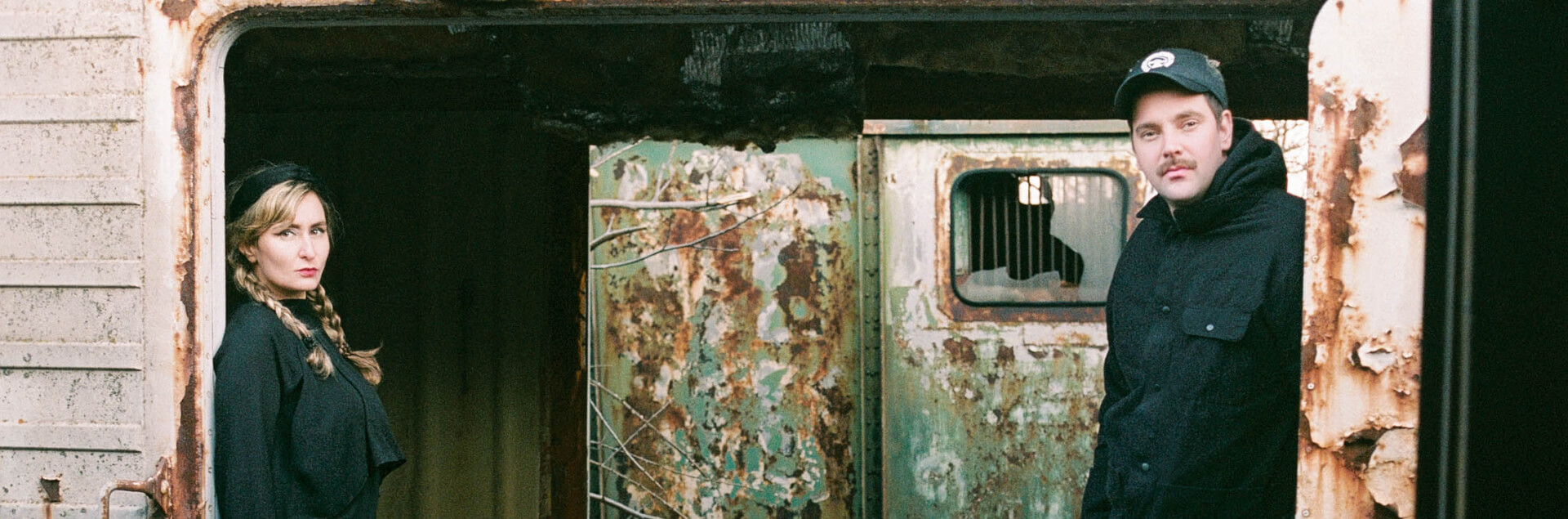
Max and Dina stand as one of the most influential artists in the world's dark disco scene, along with the likes of Theus Mago (founder of Duro label), Curses (Ombra records) and Moderna or Damon Jee. They originally started djing in their respective countries (Germany and Greece) before producing and playing together under the nickname Local Suicide. Founders of their own label Iptamenos Discos, involved in other music industry-related activities. They also recently started Dina Summer, a new live project with their friend Kalipo. Their latest EP, “Hide & Seek”, was released on Iptamenos Discos in February 23rd, 2024. Full EP streaming below.
Was music an important part of your childhood?
Dina: Absolutely. My dad, a self-taught musician, hosted regular jam sessions with friends, exposing me to various instruments. I started piano lessons at seven but we moved to another city which made it difficult to continue. The piano school was too far and too theoretical, so I quit. I still spent an hour per day after school playing songs I loved by ear though. And I spent a lot of time listening to the radio, especially the radio show of the Greek John Peel called Yannis Petridis.
Max: Although my father had record collections with artists like Peter Tosh and Gipsy Kings, I rarely saw him listen. My great grandmother was a pianist though. I had some flute classes and as a teen, I started playing in bands.
What were your teenage musical influences?
Dina: MTV was my go-to source during my teenage years. I even convinced my dad that it was helping me learn English faster so that he lets me watch every day. Genres didn't matter; I was open to everything.
Max: My teenage musical taste was heavily influenced by skateboard culture – punk, garage, and indie sounds. I was part of the indie band scene, exploring post-rock vibes.
Dina, you started djing in Thessaloniki (Greece). You were the first female DJ over there, in a very patriarchal culture. Was it a challenge for you?
My journey into djing began with radio shows during high school, which were relatively smooth. When I was at university I joined the uni radio team. They were looking for someone to Dj at an event to raise money to buy records for the radio. I volunteered and after the first gig I was hooked. A couple of years later I moved to Thessaloniki and thought it would be easy to get gigs, however breaking into its scene posed unique challenges. While trying to secure Dj residencies, I faced rejection, with some venues offering me a job as a waitress or barwoman instead because I was too young and a girl. Eventually a bar gave me a chance and before I knew it, I was a resident at one of the most legendary places in Thessaloniki called Lucky Luke and many other places followed suit.
Max, do you think what happened in Berlin in 1989 influenced your musical career?
Max: Although the events in Berlin in 1989 did not have an impact on me, as I grew up in Munich, the city's transformation post-1989 undoubtedly created a great environment for clubs and artists. There was a lot of space and it was cheap.
Talking about Berlin, the city has evolved a lot lately, is it still the best place to produce and live as an electronic music artist?
Max: Despite the increasing costs of living, Berlin remains a hub for electronic artists. Most artists come and play at least once a year, so definitely yes, for me, it’s still the place to be.
Dina: Plus it’s still cheaper compared to London or Paris and it offers more spacious accommodations. However the underground music scene is suffering from the changes, and the city's saturation with artists sometimes makes it hard to get gigs.
Each of you has pretty demanding professional activities. Max manages Ninja Tune for Germany and Dina has Eclectica, a music PR agency. Additionally you both manage your own label Iptamenos Discos, produce music, Dj and play live (Local Suicide + Dina Summer project). How do you manage to do all that? Do you still get enought sleep at night?
Dina: We are undoubtedly workaholics with a vision. Balancing it all can be challenging though. Last Christmas we ended up choosing rest in Greece instead of on a tour in Asia.
Max: For me the most important is my day job at Ninja Tune and after that comes our own label Iptamenos Discos.
Are you party animals?
Dina: We love a good party! Although I'd hit the sack earlier if Max let me (laughs). We are not the type to leave directly after our set, though.
Producing and playing as a couple, is it an advantage in your career?
Dina: I'm not a loner; I enjoy sharing experiences, and sharing the travels and gigs with my favorite person on earth is priceless. Plus in stressful situations, having a big reassuring guy like Max is a great help. Of course, there are challenges too. Artistic disagreements can arise, and logistically, it can be more complex for promoters to book and accommodate two people instead of one.
Max: We have many friends who travel and Dj alone and it can be hard and very lonesome sometimes.
Why label your project “Local Suicide”? You do not act very local and don’t look depressed at all!
Dina: Originally a trio, Max's teenage dream of a racehorse named "Local Suzie" inspired the name of our band. The band didn’t last long though, as we all three had different schedules and it was too complicated to meet up, make music and rehearse, so we ended up splitting up. Max and I decided to continue as a Dj duo and since we had a considerable following on MySpace, we aimed for a subtle name change so that we could keep the account. In an era where many bands embraced provocative, politically-incorrect names, and loving the band Suicide, we transformed "Suzie" into "Suicide" giving birth to "Local Suicide”. We saw it as a metaphor ''let's kill our problems on the dancefloor. ''
Max: What’s happening now though is that we are facing problems because of this name. We could not open a tiktok page with the word suicide so we are “localscd” on there. We have had a few times booking issues. When people look us up on the Internet, they are being presented with a suicide prevention hotline. It has become such an issue that we’re even thinking of changing our name (scoop!!), maybe for the next album.
How do you define your music?
Dina: We are supposed to be part of the dark disco movement. However, this movement is so broad! We are happy to be a part of it though, because it gives us a immense freedom in what we are producing and playing.
Max: We like to call it technodisco and cobra wave: a mix of slow techno, disco and new wave.
What about the slow techno scene in Berlin!
Max: The slow techno scene had its heyday around 2014, with lots of sets of 105/110bpm. However, it has lost momentum since then. We also got faster, but still appreciate the groove, basslines, and melodies in slower music, resisting the trend for much higher tempos.
Dina: 140 bpm is not for us!
Would you say that releasing your first album - “Eros Anikate”, released on their label Iptamenos Discos in May 2022 - made a huge impact on your career?
Dina: Although we had released lots of Eps prior to that, the album was a game-changer, attracting numerous requests and elevating our profile.
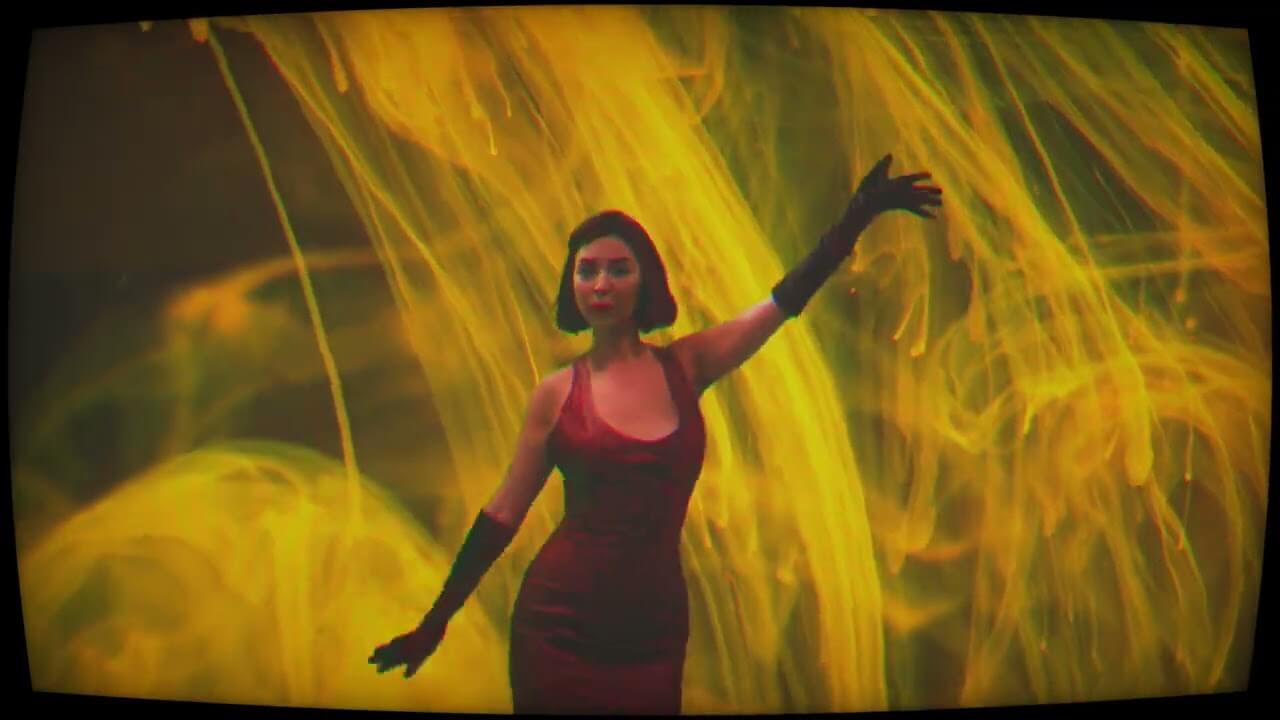
What about live music? You’re now having live gigs with your Dina Summer project (Max+Dina + their friend Kalipo) and you seem to enjoy it a lot! What are the differences? What do you like about it?
Dina: Live shows? Stress levels through the roof compared to Djing!
Max: No doubt. It's a whole new level of chaos - carrying the gear, sound checks, dealing with unexpected issues, and basically less control over how you end up sounding and looking. It depends a lot on the sound and light person and on the location.
Dina: But the biggest difference is that at clubs many people are just there to dance and not necessarily just for you. It’s a different story when you’re playing live. Most people in the audience are there to see you.
Max: Concerts could also happen on any day of the week and usually take place earlier, so you could be in bed by 12. (laughs)
How did Dina Summer happen?
Dina: We’ve been wanting to play live for many years, but we always postponed it because of lack of time and experience. In 2019 Kalipo, (who not only has his solo project, but was also part of a famous German band called Frittenbude) asked me to do vocals for some of his tracks as he wanted to go for a darker sound. We recorded the vocals pretty fast and then - since we were in his studio - we decided to also make some music together..It was a match made in heaven. After a few studio sessions we had an album worth of material and Kalipo suggested we release it as an album. As he is very experienced in playing live, he also suggested that we form a band in order to perform the album live. Working with Kalipo is great. Not only he’s lovely as a person, but he's also a very talented and skilful artist, he can play lots of different instruments and can mix and master too. So we were obviously up for this new challenge.
Max: The idea for the name emerged while Dina was testing a new microphone. I told her “You sound like Donna Summer with this mic”, and then, the inevitable wordplay led to the birth of 'Dina Summer’
Have you been influenced by any bands or artists recently, even outside of electronic music?
Max: We listen to what our friends are producing, and we spend a lot of time listening the 80’s.
Dina: '80s all day, every day. That era is a goldmine.
Electronic music has been mostly a part of western-world culture mainly in the 90’s and then spread everywhere (Eastern Europe, Russia, Israel, Latin America..). How did you experience this evolution? Which parts of the world are more important to you?
Max: Yes, definitely amazing to see how each part of the world has brought their own touch. We are huge fans of the Tel Aviv scene, especially of Red Axes. Mexico was as well with the Tech Mex scene with artists like Mijo, Theus Mago and Andre VII who are considered pioneers.
Dina: Italy too, with Rodion and the Slow Motion crew. The UK with Andrew Weatherall and later labels like NEIN and SC&P. France with labels like Lumiere Noire, La Dame Noir, Meant and artists like Chloe, Arnaud Rebotini, Ivan Smagghe and Damon Jee. And of course Berlin, some of our fav artists like Curses, Moderna and Skelesys live and create in Berlin.
Let's talk about Mexico, what is your link with this country?
Dina: Our connection with Mexico runs deep. It has become our number one fan base. We've done three tours there and are even being stopped by fans on the streets. We are also very close to artists who live there like Mijo, Andre VII, Theus Mago, Mystery Affair, Mufti, Cabizbajo, Zombies in Miami, Thomass Jackson and many others. The Mexican scene is vibrant, with incredibly talented artists and fantastic people.
Max: And we’re about to go back at the end of February or beginning of March for the wedding of two dear friends and we'll also play some gigs as well. Already looking forward to it.
Where else are you playing next? Are there countries where you have never played and would love to?
Max: We have many Dj gigs scheduled in Austria, Switzerland, Germany, Denmark and Greece in the coming weeks.
We’d love to play in places such as Japan, Brazil, Argentina, Australia and Georgia..
What about France?
Dina: France holds a special place in our hearts, and our sound resonates well with the French audience. Since 2009, we have made it a tradition to Dj in France at least once a year. Last year, we had the pleasure of playing at La Station for La Culottée and at the Lumière Noire party at Virage in Paris and in Rennes. For this year at the end of April we already have confirmed a gig in Bordeaux at iBoat and Biarritz at Rhapsodie. Can’t wait to be back!
Text by Le Pépinèriste / Proofreading by Larraine Grimm / Photo by Artemis Melanidou
Unter Strom, by Dina Summer
Hide & Seek, by Dina Summer
All Or Nothing, by Dina Summer
Excess, by Dina Summer
Unter Strom (Radio Edit), by Dina Summer
Hide & Seek (Club Edit), by Dina Summer
Unter Strom (Club Edit), by Dina Summer