2024-08-04
HAEPAARY
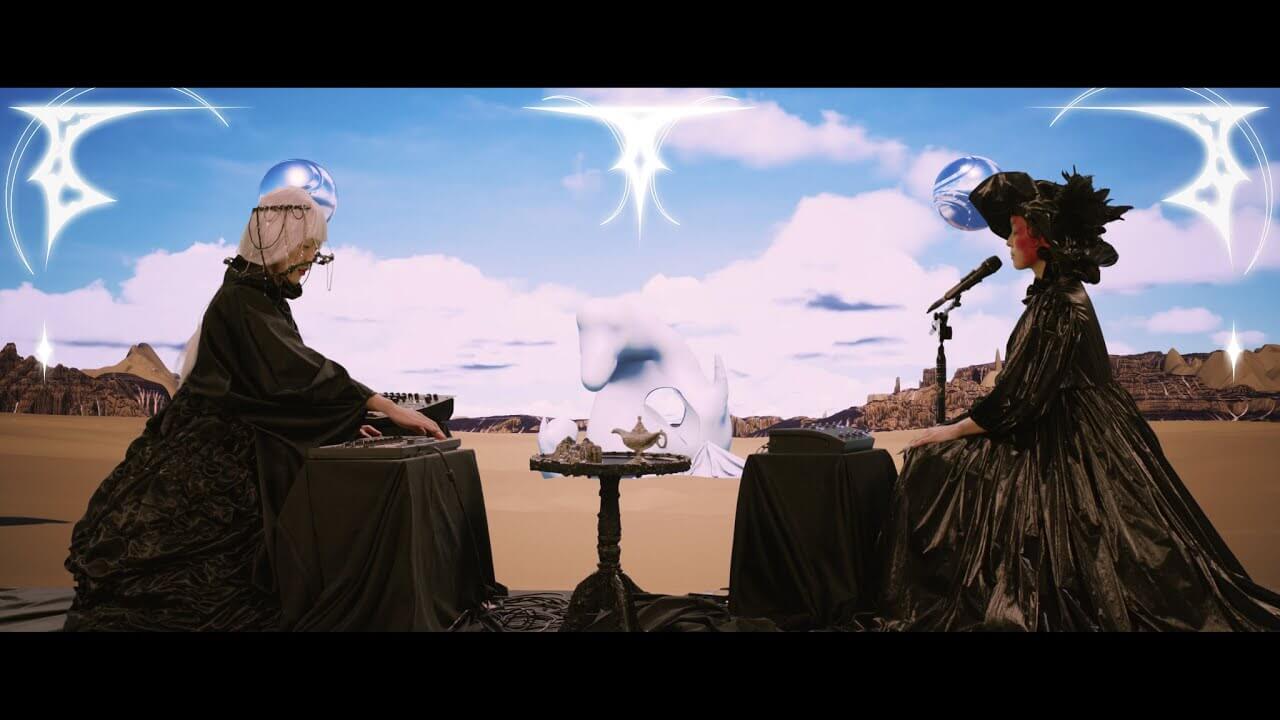
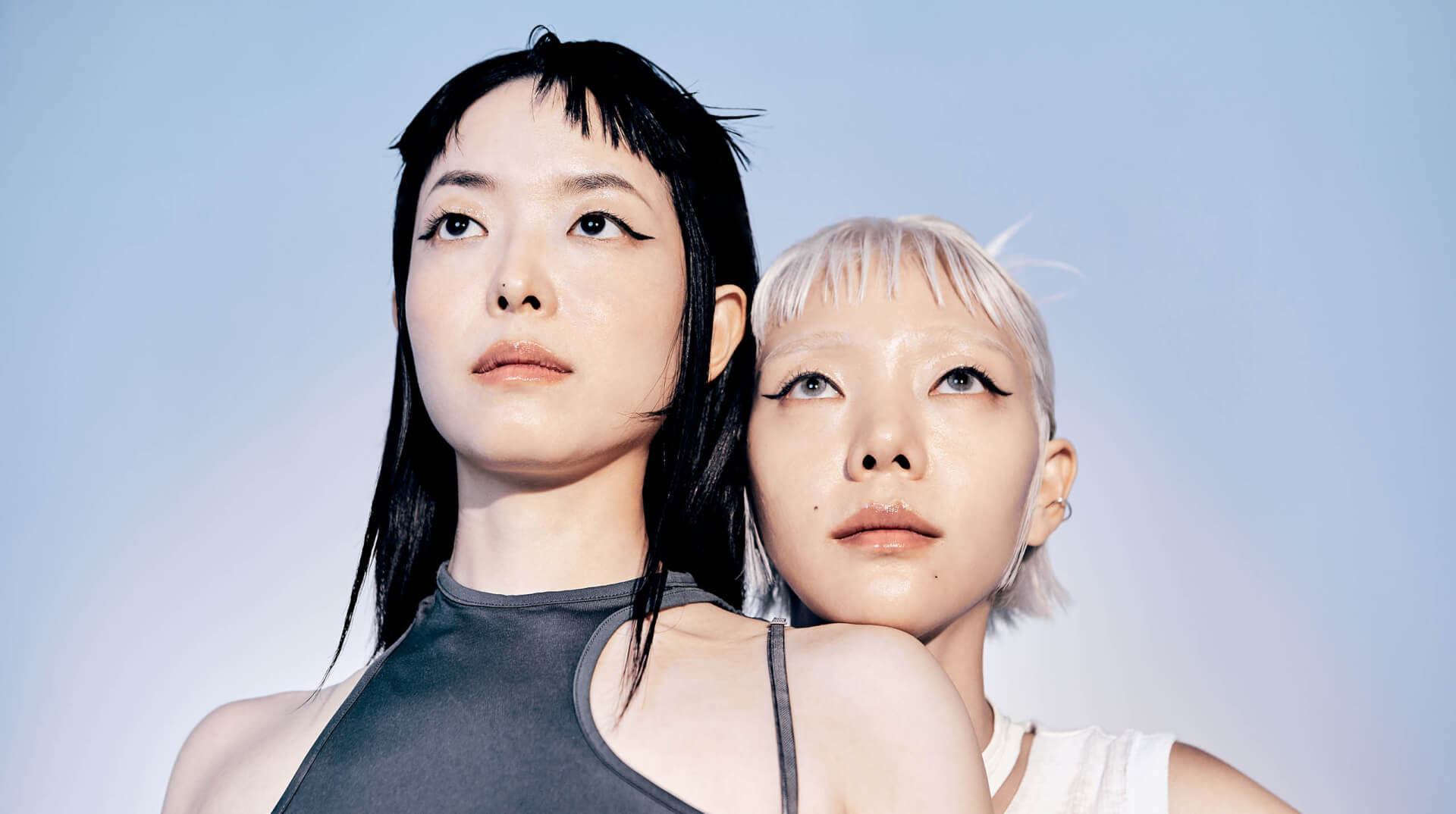
Haepaary is a project from South Korea led by the vocalist Minhee Park and the instrumentalist Hyewon Choi. Created in 2017, they perform Live across the world and transmit their cultural heritage by combining trip-hop, ambient, trance, alt-electronic with traditional Korean ritual music as the Jongmyojeryeak from the Confucian Jongmyo Temple in Seoul and the Namchang Gagok, appeared in the 15th century whose lyrics are adaptations of Sijo poems since then exclusively performed by men. Interview.
Was music an important part of your childhood?
Hyewon: I've been playing traditional Korean percussion instruments since I was a kid. At first, I started playing because it was fun, and I wanted to get better at it, so I studied at a high school and university that taught traditional arts. Later, I became interested in electronic music, and now I focus on creating and producing music. I think my past self, who used to play traditional music, and my present self, who plays electronic music, are well combined in our music.
Minhee: When I was in middle school, my father heard Gagok, a genre of traditional Korean vocal music, on the radio and fell in love with it, so he started learning it as a hobby and encouraged me to join him. Then, I found out that there was a high school that specialised in teaching Gagok, so I went to that high school.
How did you start Haepaary?
We knew about each other's existence through our common friends. While we were doing our own work, Minhee suggested that we should work together. We didn't start the band right away, but we played small shows and got to know each other. Our personalities, life backgrounds, and tastes are very different, but we had similar ideas, so we thought we could do interesting things together and then we started Haepaary in earnest.
Haepaary means jellyfish in Korean. When we were thinking of a name for the band, we wanted something that didn't mean anything. Haepaary is easy to pronounce and beautiful, so we decided on the name very easily.
Could you define your music?
I think it's hard to define our music in any one genre. In terms of genre, I think it's a little broader than traditional electronic, so we consider our music as alt-electronic. Some songs are closer to techno, some are not. Some songs are more like trip-hop or ambient. I would say that it's music that makes you dance inside.
What do your songs talk about?
It talks about an equal society. Not only in content, but also in form. Our music is a mix of different genres that are minor in Korean society. And we try to create a state where there is no hierarchy between the genres. Formally, we put different genres side by side and connect them horizontally. Musically, it manifests itself as a mixture of beats, long and short rhythm, and two or more scales.
Which main message would you like to convey?
In the song "The Night," released in May, there is a lyric that says: "Love is the part that doesn't need social consensus, and people are the part that doesn't need social consensus”. Korean society is still exclusive to heterosexuality, and there is a lot of discrimination in human existence. For example, protests for the right to mobility for the disabled are in full swing amidst the indifference of society. Not all songs convey the same message, but generally we talk about social inequality.
"Love is the part that doesn't
need social consensus, and
people are the part that doesn't
need social consensus”.
Nothing to Envy, by HAEPAARY
go to gpd and then, by HAEPAARY
Libation, by haepaary
Born by Irreproachable Gorgeousness, by haepaary
Shining Sentences, by haepaary
A Shining Warrior - A Heartfelt Joy, by haepaary
A Sendoff for Ancestor Spirits, by haepaary
You have a specific vocal genre, could you tell us more about it.
I sing a mix of genres, including Gagok, Shijo, and The Royal Ancestral Ritual in the Jongmyo Shrine and its Music. These songs are classical Korean vocal music. Gagok and Shijo are particularly characterised by the singing of formal poetry. They are characterised by singing short lines of poetry that are stretched out over a long period of time, so the content is not easily conveyed linguistically.
What is the composition which represents you the most and why?
I think part of the appeal of Haepaary’s music is that it doesn't fall into a clear-cut category, and I think that's because it coexists somewhere in the middle between the hard beats and the Korean style where breathing is more important, and the subtle detuned sound that straddles the line between precise melody and note for note. That's the musical identity we've each lived with.
How does the audience react in general when you perform in Europe?
I get the impression that they are very active listeners. For example, at the Fusion Festival in Germany, there were people who sat in their seats in the middle of our performance, meditating. The diversity of our music seemed to be reflected in the fact that some people were dancing while others were in a state of peace.
Your most memorable performance? And any anecdotes?
We have two most memorable live performances, one in Taiwan with Mong Tong in 2022 and the other at Roskilde Festival on our European tour last July. The club show in Taiwan was one of the few times we felt like we were connected with the audience. For the Roskilde Festival, our instruments and luggage didn't arrive at the airport while we were travelling for the European tour. After two days of anxiety over not knowing when they would arrive, they dramatically arrived just before the show. While we were waiting for our luggage, I think we decided that if our instruments did arrive, we really had to perform better than ever. Even though the performance was held without rehearsal, we gave a good performance with the utmost concentration and the audience responded well.
Your album “Nothing To Envy” has a psychedelic cover, what does this cover represent?
The song is based on a song that was popular in Seoul in the 17th century. One of the devices to bring the "pungryu" of the time to today's pungryu is the chanting of the lyrics, "If you have a kettle that fills itself with alcohol, a liver that never grows old, and a cute lover who cooks well, you have nothing to envy in the world. I thought it would be a good representation of the music if these lyrics were realised in a psychedelic cover image. Pungnyn is a Korean traditional word that literally means wind flowing. It refers to joy for arts or classical entertainment in real life.
Which artists would you like to work with?
We would like to collaborate with independent electronic artists from Korea and Asia. We think there are fewer opportunities to promote our music compared to music that is heavily funded as K-pop. It would be less lonely if we could befriend and work with artists who think similarly to us and are working independently.
If you could teleport yourselves…
Hyewon: If I had to go back, it would be around the age of 20. I think I was much more physically fit than I am now, so I think I would be less hesitant to do anything.
Minhee: About 10 years ago. I wish I had learned to love myself more and put myself first from that time.
Your projects?
We are releasing a series of singles, one song per month, starting this May, which will be finished in September. In October, we are working on a collaboration with one of our favourite fiction authors, and our goal is to release a full-length album based on that work. Currently, we are working on a new song, and we hope it comes out well and we want to perform more shows.
Interviewed by Sabrina Bouzidi / Photo by VISLA & Yerim Han