2025-09-04
FUKINSEI
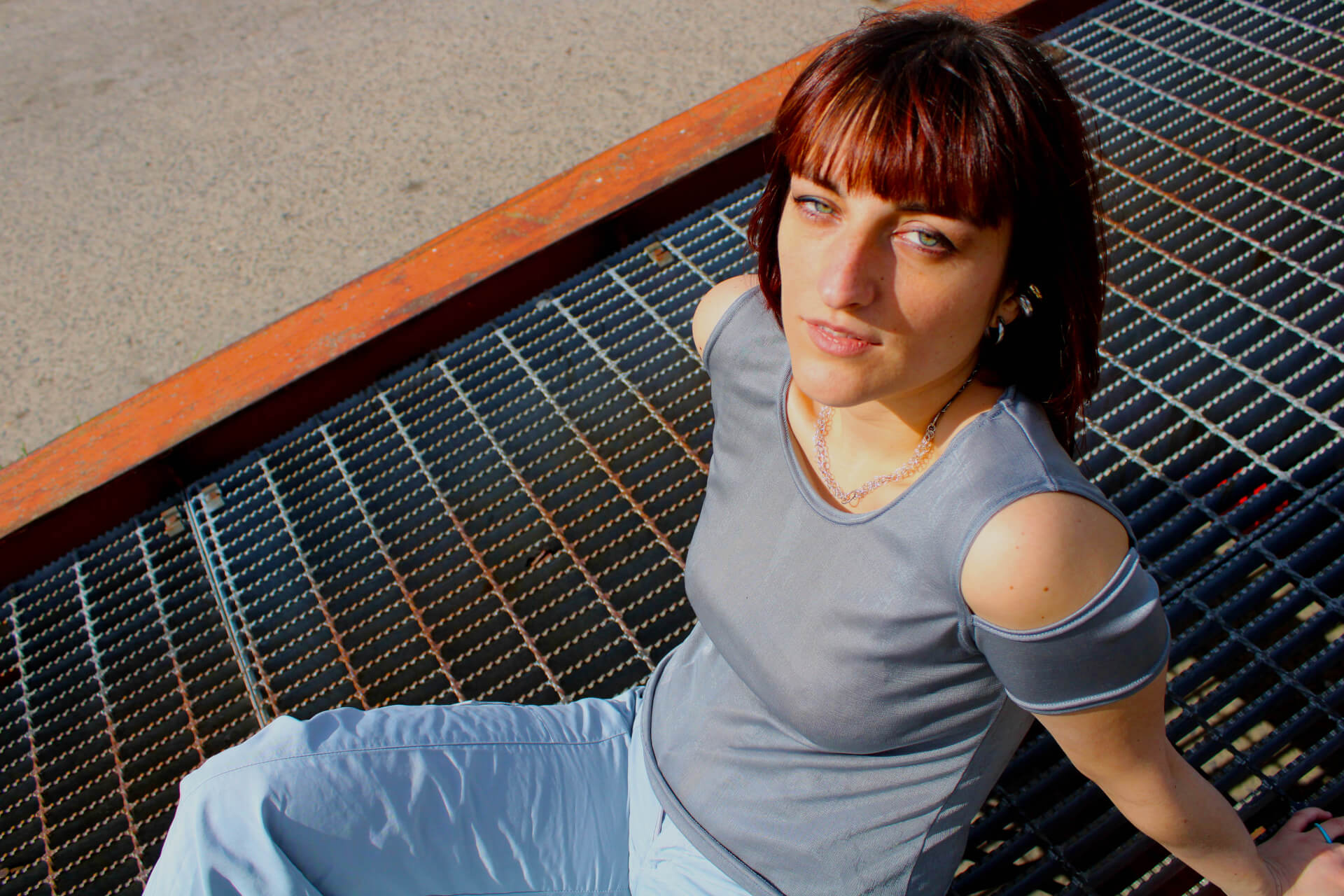
Hailing from Sicily, Fukinsei at a very early age frequented squats where hip-hop concerts and free parties were organized. Behind the booth, she brilliantly handles the various approaches to electronic music while cleverly maintaining an experimental approach. After having spent many years in the Roman IDM/noisy punk/ scene, she moved to Berlin. Today, she focused on Fukstep, her own label linked to crossover sounds. The producer introduces her first EP teamed up with Broken Audio and the concept behind her bass events. She looks back at her references; she tells us more about her vision of raves and sound system culture; and shares her ethnomusicological research on the sounds of her Sicilian roots which she conveys at her “Innesta” performances. Interview with a complete artist to closely keep an eye on.
Where do you come from?
Hi Sabrina, thank you so much for this interview. I come from a small town in Sicily. I don't come from a family of artists, but there was a piano at my grandparents' house that my aunt and cousins taught themselves to play. No one ever really chose music as their vocational path. When I was 10, I played the cello for a few years and sang in a choir. However, I was quite restless and didn't want to study the rules of solfeggio. As a teenager, I started singing in a punk band, but it didn't last long. I took up music again almost ten years later, very slowly.
Your first impressions when you discovered electronic music?
That's a big question. I don't come from a family that listened to this kind of music, but I've always been the first and only one around me, so I had to find my way. I've always looked for answers in books, magazines, blogs and libraries. Perhaps it depends on how we define electronic music? I would say my first encounter was at the age of 9, thanks to electronic projects/bands such as Prodigy, Skunk Anansie, Massive Attack, Portishead, and the Italian band Subsonica, thanks to MTV in the early 2000s. I didn't even know it was electronic music; to me, they were amazing bands making incredible music. If by electronic music we mean music where the presence of vocals is reduced, I would say that at 13/14 I finally had a PC at home, I listened to a lot of jazz and from there I stumbled upon Brian Eno and then finally fell in love with the sound that changed my life forever, Amon Tobin. About the first one, I said “damn, this must be the music you listen to in heaven. There are no drums, who knows what instruments are used to play it”. About the latter, I said, “OK, this man has taken jazz to another level, but how does he do it? Does he have a giant orchestra at his disposal?” I had no idea that sampling existed. Then, luckily, at that age, Skins was on MTV. And there, with Skream's "The Haunted House", I discovered dubstep and Roots Manuva. I said... What the hell is this music? What is it? It's beautiful and powerful. On the other hand, in Sicily, there was always the recurring sound of reggae, dub, and hip-hop filling my ears during school assemblies, strikes, and demonstrations. The first events I went to were pervaded by these sounds. In Catania, the clubs are by the sea, and the sun always calls for a good sound system. I grew up with the sun, the sea, the volcano, the songs of the comari and the holy days. If you come from my part of the world, you are a very physical person; the vibration is linked to the earth and respect for nature, the vibration is the music of the sound system. Then I discovered free tekno parties when I moved to Rome at the age of 19, but I already had a vast knowledge of electronic music.
Your first approach to Djing?
I started collecting records in 2016, perhaps even before I had a turntable to listen to them on. I was more interested in production, so I bought these records with the idea of sampling the sounds. Lost records by Asian Dub Foundation or acid stuff sold for 1 euro. I collected hip-hop and dubstep tunes in the only little shop in Rome frequented by the hip-hop scene, Kato's Mangiadischi. Before that, I used to make playlists for my friends and organise lots of listening sessions at my house. At one point, my friends said to me: “You know the craziest and most absurd music, you're always introducing me to new things, you should be a Dj”. Anyway, in the meantime, my record collection began to expand, I started digging even before I had my Technics, and I discovered one of the milestones of my life, "Trigger Finger" (on the label Haunter Records, Editor’s Notes) by Zuli; then I started digging UK stuff and discovered footwork, which blew my mind forever. I was always trying to organise trips to the UK to buy records and go to concerts. In Rome, there wasn't anything that interested me viscerally constantly apart from noise and punk. Eventually, when my collection became more substantial, I started asking Hugo Sanchez, from Front de Cadeux, to teach me how to mix these records. It was 2018. I had a collection of dubstep, break, footwork, jungle, hip-hop and experimental music. I was part of this artists' community called Pescheria - literally a fish shop full of records - that all of us in Rome frequented. We spent hours listening, trying to time the music and talking about the history of music. Rome's queer and underground community was my safe place to learn, to feel protected, even if only by understanding that we were all people who had escaped from something similar but extremely different. All illuminated by sound and DJ Muf's scratches.
Your main influences? I also heard that you spun records during hip-hop open mics in Rome.
My biggest musical influences are IDM, punk/grunge, hip-hop/trip-hop and everything in between. Squats have always played a key role for me. Squats are those magical places where you first hear the strangest things coming from around the world. In Rome, I was deeply inspired by the IDM/noise and experimental punk scene I was part of, and to a lesser extent by the tekno of raves. Strike, Forte Prenestino, Snia and Brancaleone were home. I always frequented squats with their hip-hop concerts and free parties, until I too arrived with my bag of dubstep/noisy records to play in the record shops where the scene hung out and where the three of us always tried to grab the weird dubstep stuff that Kato brought. Later, I also played records during MC and skater battles, and after punk concerts.
Rave in 3 words?
Liberation, Unity, Care
Your vision of the sound system culture?
In Sicily, as in the whole of southern Italy, sound system culture has very specific connotations. It talks about the strong stereotypes that people have about those who come from southern Italy and how capitalist and imperialist dynamics pollute the world and trample on nature, which is precious and always present in the lyrics. For me, the sound system is social criticism, reappropriation of spaces (the land, the sea, the countryside, the island itself), respect for the land and everyone's roots, and peaceful coexistence of all cultures that have been meeting and exchanging ideas for centuries where the sea meets the land. Despite the ever-present practices of foreign domination, what we are talking about is respect, resilience, and the beauty of being together. All the lyrics of "Le Posse" movement are sung often in Sicilian, Neapolitan, Apulian and Calabrian dialects... Everything is designed to remind us of our connection with our roots and respect for different cultures, because southern Italy has always been crossed by Mediterranean migrations processes. In Italy between the 1980s and 1990s, many artists embraced this underground phenomenon, often supported by social centres, for which they became spokespersons. Their music, mainly raggamuffin rap, dub, trip-hop and the first hints of jungle, was linked to social and political themes, often with a clear anti-fascist and inclusive connotation. Fascism tried to erase regional specificities - which in Italy represent the heart of cultural diversity among different populations - by creating stereotypes and ghettoising campanilismo. If you speak the dialect of your region and not Italian, you are an outcast and a “savage”. Southerners are still stereotyped and ghettoised today because of their diasporic identities, economic status, connection to the land, high illiteracy rate and work in the countryside. For me, the sound system is archetypal, ancestral, a source of sound that has a physical impact that makes you feel good, puts people in a position to be close to the sound, and therefore to interact, smile, dance together, take care of each other, resist and remember to exist. Sound is the totem that reminds society of the basic rules (very different from laws) and justice needed to stand on its own two feet. I love playing with sound systems. There is always a family behind a sound, a story, a reason, a physical care for the material that composes it. For me, sound system culture is substance. It is matter that creates beauty and unity, in the literal sense of matter shaped like wood and mono or stereo signals, in the figurative sense of bodies and therefore matter that is traversed by frequencies that make you feel good. Music itself is a matter, having to be calibrated in terms of frequencies. The audience only knows that it feels good. The sound system is family; a neglected sound is like an unheard community.
Elena Colombi w/ Fukinsei 170423
Reyetto Tapes w/ Fukinsei 18-03-2024
Fukinsei - 21 Avril 2025
What does Fukinsei mean?
In Zen aesthetics, Fukinsei means asymmetry and irregularity, and it is a regulating principle that presupposes irregularity creating equilibrium and balance. For me, balance translates into harmony. As we all know, the word harmony is not only the pleasant combination of different parts in any context, but also the perfect combination of sounds that creates harmony in music. My harmony is asymmetrical. The harmony I create comes from exploring changing rhythms and from a combination that may be unexpected but is necessary, at least for me. I will never be able to stay within a single genre or style.
Could you define your sound?
A sweaty anabasis
What do you think about the bass music scene in the UK?
I don't like the category “bass music”, I found it so reductive. It's like calling electronic music, dubstep. However, I think the UK scene, let's call it “bass”, is still driving the global culture. It could not be otherwise for a place that represents the cradle of these cultures and sounds, thanks to its multicultural background. I think that today artists such as Grove, Kavari, Blood of Aza, Diessa, Kinlaw and Klaudio have been revolutionising the UK scene, intertwining elements of noise and heavy industrial with breaks, hip-hop and jungle. Avon Terror Corps, Western Lore, Hooversound, Drowned By Locals, Hyperdub, SZNS7N, Pressure and Bristol Normcore are always present in my research to name a few. Leaving the UK aside, I think the most interesting influences have been elsewhere since a while.
Tell us more about this scene spreading outside the UK, please.
I've been obsessed with the Egyptian experimental scene for years now, which draws on the UK scene but subverts and decodes it (Irsh, Moshtrq). I started mixing with trap/hip hop from the Palestinian scene, such as BLTNM, and I'm glad that more and more people are getting to know these artists today. Yuku (Czech), Danse Noire (Switzerland), Hakuna Kulala (Uganda) have also been among my favourite labels for years. I don't think one interview is enough to map out all the artists I love (laughs).
And the scene in the USA?
First mention to the Chicago footwork scene and beyond, which I love, long live to Teklife! There's a whole scene of killer rappers that I've loved since I started mixing: Quay Dash, BbyMutha, and there's an electronic scene that hybridises a lot and I think is making underground history, like Shinra Knives, Sober Rob, Dj Haram: they create tracks that contain many different style changes, especially Shinra. I think the way music is composed will become increasingly unstable and full of sudden changes, a true reflection of the times we live in and the lie of borders.
In Italy, which artists should we check out?
Katatonic Silentio, Piezo, Talpah, Monstera Black, Massimo Pericolo, Franco Franco, Futura Cimice, st.grimes, Daniela Pes, Deriansky, Maria Violenza, Hans Arsen, Jaf Ge Nos, to name but a few.
You have recently played in France, a memory to share with us?
I have a crazy memory of closing at Le Sample. It was one of the best booths I've ever played at, and at one point, while I was wearing headphones, I heard a loud noise and felt the whole table vibrating, and my mind interpreted it as if the ceiling was about to collapse. I looked up and saw nothing, then I looked in front of me and saw two people in the front row banging their fists so hard on the booth while jumping and screaming that they wanted more. I thought I was going to die in an earthquake, but instead it was a moment of intense life, energy and excitement (laughs).
So, Bass Music in 3 words?
Spring that snaps.
Today, there are more and more Bass Music events. For you, what are the main reasons? And which ones would you recommend?
I think bass music like jungle is a bit trendy right now. I'd say that's a good thing, in that more people are getting into it, but I'd also say that sometimes these sets are full of re-edits or banal constructs that I honestly find extremely boring. I also think that today people have more opportunities to learn about styles and genres they didn't know existed, so to a certain extent, that's a good thing. However, every underground movement is destined to be noticed and sometimes incorporated into mainstream culture. Have you noticed that all commercials use breakbeat or trap beats? It's a destiny inherent in what is at the root of exploration and inclusivity and rave culture, which is heightened and permeated by free identities that take up their own spaces. I think there is more collective awareness today of when control and repression are an integral part of our daily lives. I think people are drawn to these genres, with their energetic rhythms and powerful basslines, in search of a collective input that washes away everyday subordination, a kind of collective ritual that breaks the chains with its already broken drums (laughs). Moreover, despite everything, these genres remain niche and authentically physical. I think people want to get closer to the authenticity found in communities, in well-structured proposals, in sensible timetables, in spaces where the party has a strong and inclusive social value. Unfortunately today there is a lack of key figures in our musical culture, key figures who are drivers too. There is a lack of clubs that are not places passed through by customers, but places where people stay and interact. There is a lack of artistic directors who know how to curate seriously and show news, and there is a lack of promoters who think about engaging people. There is a lack of club residents who know those rooms like the back of their hand and whose confidence leads them to have people who also follow the guest proposals and build more daring listening moments. Above all, there is a lack of live music and performances in clubs, in most cases. Everything seems to be geared towards consumption. Let’s consume pins and shoe soles, not art. Due to a lack of funds, everyone does everything today. This search for truth is still vivid in experimental events. This is probably the main reason that drives people to approach these sounds. My favourite venues in Berlin are OHM and Panke because there is care and dedication for those who are welcomed into that space. There is an alternative artistic offering, and there are places where you can go alone and know you will have a good night. I also really like Köpi, Supamolly and 90mil. I haven't been living in Berlin long enough yet, so I don't have the opportunity to regularly attend a single party. But Irsh, AL.berlin, HOME, Setten and Bruits are the ones I follow most closely.
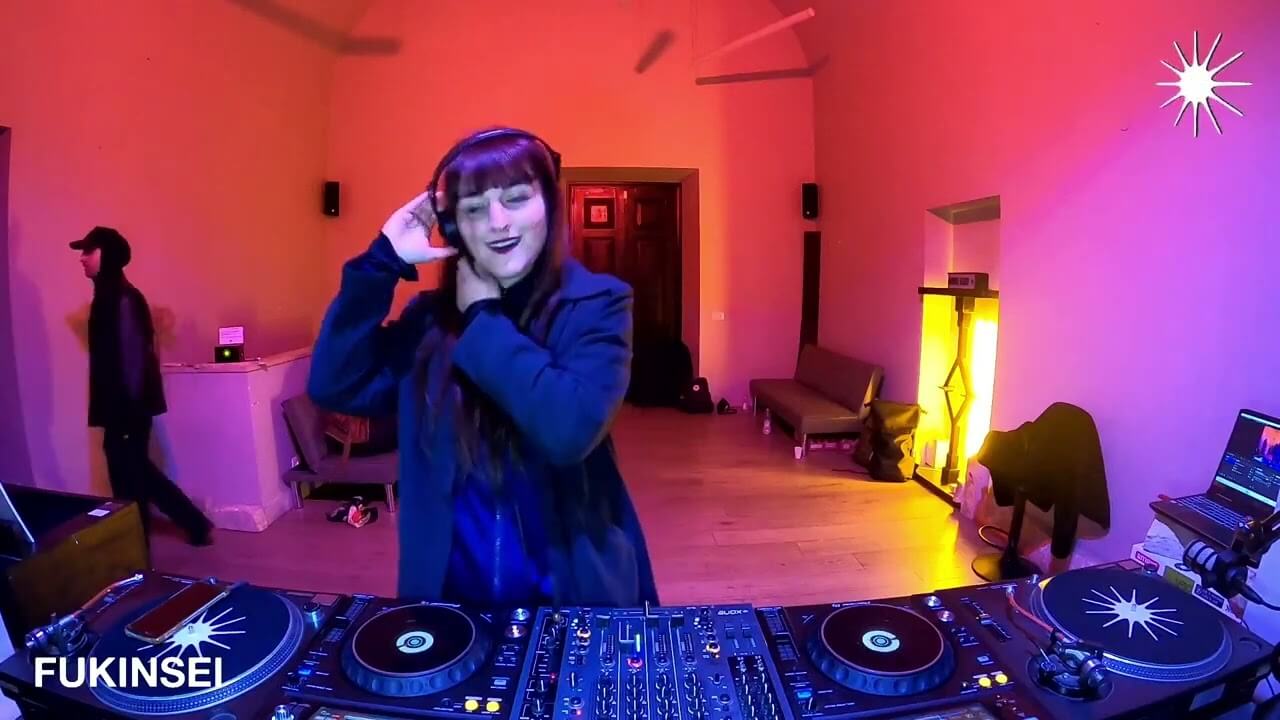
Could you describe the DNA of your label FUKSTEP and who are the next artist you will sign?
DNA is definitely shape-shifting and unstable. I would like to connect projects that are crossover and hybrid in nature. I would like to produce many different things, from EPs to albums, from clubby stuff to albums with rappers or singers. The nature of the label is exploratory. I like projects that have something to say, hidden personalities that need someone who believes in their project, as well as established producers or artists who want to release their most radical projects, with no compromises. I want to take an unknown path and walk it together with people I find surprising. I like projects that explore adventurous sounds. The first release will be the one I did with Broken Audio, a very talented Italian artist. We explore distortion by destroying classic footwork and baile funk drums. The rest is still a mystery, but there will be some very strong rappers and producers. "Bad sprouts" is the label's claim. Precisely because it is from these seemingly blackened sprouts that robust and invasive plants always grow. I am looking for an invasive sound.
Could you reveal some producers you would like to sign?
There are already some underground artists I am working with. I would love to work with rappers, singers, producers who explore breaks, dubstep, IDM, bass, deconstructed, footwork, jungle, breakcore, dancehall, trap... If the attitude is massive, hybrid or bold, it’s a match.
You’ve recently made a really great remix for Piove on the “Miracolo RMX” album under the Woodworm label. What’s next?
Thanks, that remix marked the beginning of my production path. The next thing coming out will be Fukstep's first release in September, a very distorted Ep made together with Broken Audio. In the meantime, I'm collaborating with other producers and rappers and very slowly moving towards more intimate and visceral things.
A banger in 3 words?
In your face.
And what about your own events?
I am far from wanting to homogenise the sound within an event. For me, the unifying stylistic line of a party is more of a colour or energy, and sometimes I like to play with contrasts and put together live performances that break up but recharge the listening experience. I think that's what Fukstep means to me and my collaborators: curating an artistic direction with a heart. Does it make sense? I come from crossover (Prodigy, Skunk Anansie, Korn, Rage Against the Machine) and have a deep respect for David Mancuso's legacy, as I come from contexts where the audience turns their backs on the DJ and faces the sound system. The first time I saw a DJ, he was part of a band. I come from concerts and albums. I am really looking forward to this backgrounds with my collaborators. We just try to create a context where you can listen to amazing artists and where everyone feels included. It is based on these influences that I live and build the sound spectrum of Fukstep. The desire to be in a room where there are lots of danceable acts, but each with a different nature, from hip-hop to punky basslines, from mad dubstep to heavy jungle, from dusty dancehall to hard breaks. And then, of course, carefully selected DJs who play long sets or B2B sets that should have been done a long time ago. I can't stand it when people talk about music by codifying it with BPM. I'm bored by events where I find line-ups with only DJs. Fukstep research explores the surprise effect and a gradual physical crescendo in the construction of the timetable. I always think like a dancer and a listener when I curate the artistic direction. I try to have guests that you don't often hear in Berlin; I'm not interested in playing the same cards as everyone else. I don't call guests because they “work” and “bring people in”. Fukstep is not a monthly format; it's rare and therefore special.
What’s the difference with REYETTO TAPES you have co-founded with E.L.I.O?
With Reyetto Tapes, there was a specific sound, but it was deliberately distant from clubbing. The sound was dreamlike and nostalgic, closely linked to hip-hop and sweet electro, but also dubby and noisy, with Abu Ama - interview in the Star wax PDF N°56 here - for example. I felt that I wanted a more extreme sound, and, why not, one that could be heard on a good sound system at a party. I don't want to set myself any limits. Club, non-club, let's talk about music, not places.
What about your “Innesta” project?
Innesta is a sound project that I like to describe as radical Mediterranean and experimental research. The project is based on the grafting of elements of the Sicilian oral tradition onto rhythmic cuttings stolen from the dancefloor, manipulating different rhythms and exploiting the peculiar acoustics of the space. The project stems from the need not to lose the memory of this tradition, transporting the participants into an imminent collective ritual in which heritage, languages, archaeology of sound and strongly percussive elements combine to create a state of trance. I intoned this project as a Memoir, in which the recognition times of memory do not coincide with the linear narrative time. They are open periods, broken, shattered by the incursion of the new additive element. Just as sound is a process of sums, Marranzano and recording shatter its linearity and at the same time prepare the thought, filling the skull with ritual frequencies.
Why did you move to Berlin?
I moved to Berlin because this is where most of the Egyptian and Palestinian experimental scene that I am very interested in and follow closely is located. I told myself that if they are all here, there must be a reason; it means that Berlin is not just a techno city. I am happy to find many independent realities that are trying to do everything they can to build something meaningful. I like the proactivity I see, even though the city is going through a period of funding shortages and clubs are closing down. I like the mutuality in the artistic field that I am lucky enough to find, though not always.
Could you give us an example, in particular ?
Irish. Zuli and Rama's proposal is bold and central for live performers. They are two people whom I greatly admire on an artistic and, above all, human level. Every time I go early and stay until the end, they focus on artists who break the rules and genres, navigating between clubs and non-clubs, which is why they are avant-garde.
Do you still dig vinyl and where?
Right now, my favourite productions are digital, there's so much to explore. When I travel, I always like to visit at least one local record shop. During my trip to France, I went to Unite Centrale in Lyon and Syncrophone in Paris. Here in Berlin, I like to go to Hardwax or Tricky Tunes.
If you could have a short conversation with an artist…
Amon Tobin, I would like to thank him for all his discography
Finally, FUKINSEI in 3 words?
An apotropaic collusion?
Interviewed by Sabrina Bouzidi / photo by Tash Todd.