2024-09-04
DJ TONER
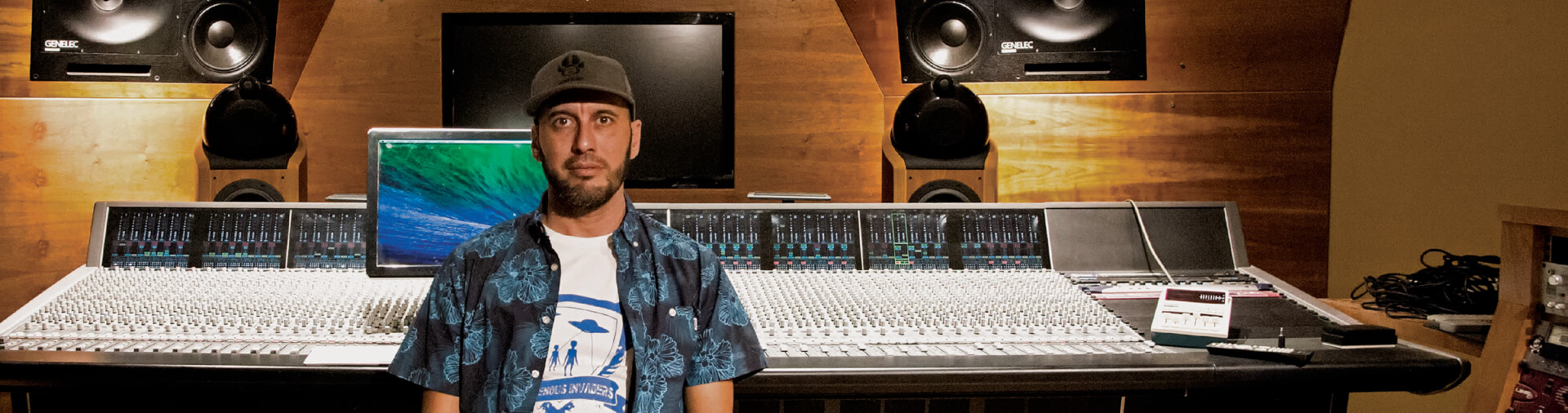
Digger and beatmaker, Dj Toner left the conservatoire to immerse himself in the DIY and boom bap movement of the 90s. His studio life took over from that of a club DJ. Jazz-hop became his preoccupation. From his studio in Granada, Spain, he produces beats combining organic and digital instruments. Keen to surround himself with highly qualified musicians and technicians, he launches "OutSide", his fourth album, with the support of Erik Truffaz, Jorde Pardo and a host of other talents. Let’s stream "OutSide" Lp and enjoy reading.
Before you were an adult, aged sixteen, you got your first job as a DJ. Did you already have a vinyl collection, and what were your memories of your first gig?
My memories from the beginnings of my career are not clear because I just went with the flow of my interests. I never imagined that I would end up dedicating my life to it. My first steps with music were with cassette tapes, and when I started earning my first money, I began collecting records.
Were you already at the conservatory? And, how did the conservatory help you to be a good beat maker?
I enrolled at the conservatory at seventeen but never finished because classical music bored me at the time. It was hip-hop and street music that taught me to create my ‘sound universe’.
When did you first start making beats? When did your way of producing and the equipment you use begin to evolve?
In 1996, after years as a DJ and influenced by the European scene, I started producing house music with my first Roland C03 and a very basic computer, which allowed for slow but very creative work. Currently I have a very advanced studio and prefer to create lines with analog instruments before producing them with a more electronic sound. I produce using Logic Audio and love all the plugins from Arturia and Universal Studio. I practically went about it the same way I worked on my other albums, except that this time I had an external studio to record the drums.
At the end of the 90s you founded Domestic Jazz Collective…
The Domestic project was born in parallel with me working for the artist Enrique Morete in his studio. At that time my idea was to create a group that could acoustically interpret the electronic music productions I had in my studio. That’s when I found the most open-minded musicians I could find in the local scene.
When did the idea of a quartet emerge in your head?
Actually I use the term “quartet” as a reference to the jazz-style band we formed. On stage and in recordings we are usually more than just four musicians. The musicians in my band have been carefully chosen for their personal and technical qualities. They are from different cities, which makes it difficult for us to meet, but they are the right musicians. I met all of them during my continuous travels.
This is not your first collaboration with Erik Truffaz. You shared the stage with Erik Truffaz ten years ago…
Erik Truffaz has been a constant reference for me. His way of reinterpreting jazz through electronics, his professionalism, and his love for music are the qualities that have won me over. Working with him and knowing that he likes my music, and is motivated to play with us, is a great incentive for me. The only downside is his busy concert schedule, which prevent us from having more opportunities to play together.
Why did you choose to call this record “OutSide” in one word?
It’s the feeling I have regarding my situation in the world of music and culture in general. I feel completely outside the current trend of digital consumption and the circuit of large festivals that make music a paradigm I do not identify with.
La Rimosa, by DJTONER Q4RTET
O´Beat, by DJTONER Q4RTET
Flama, by DJTONER Q4RTET
Camina, by DJTONER Q4RTET
Sweetband, by DJTONER Q4RTET
The Day, by DJTONER Q4RTET
Fanega, by DJTONER Q4RTET
Esperanza, by DJTONER Q4RTET
Under Beat, by DJTONER Q4RTET
Surprise, by DJTONER Q4RTET
The bass line is heavy; there is also a counter bass. Why are there two bass players?
Both musicians are part of my closest circle, but Alfonso Alcalá works for a very renowned singer in Spain, so he does not have dates to collaborate with me beyond the recording studio. That doesn’t prevent him from participating in some songs on my album. That’s why I count on Felipe Aguilera, who currently lives in Amsterdam. Despite his young age, he is the person I need for my concerts.
There are often scratches in your album. You like turntablism but without following the trend (flare trick, e.t.c.). Can you tell us about your approach, your vision?
Turntablism is part of my life. I don’t like DJs who only perform in exhibition mode; they all repeat the same tricks. Beyond the obligation to create scratch to demonstrate skills, I understand it as just another musical instrument. Currently this world has become mere exhibition, ignoring what is truly important.
And how did the recording of “OutSide” go? Were you all together in the studio? Is it correct that you play drums too?
I usually compose the songs in a beat maker style, then meet with the musicians one by one in the studio to reinterpret the lines and fix my mistakes as a bad musicians, haha. It’s a slow but really effective process for me. I usually play the drums as a study and fingering method. I create my beats, then count on Marc Ayza, a unique drummer in the jazz scene.
I sample directly from vinyl records in my collection. In our case, the process is very different. The musicians play over the idea of a sample. I also tend to play with their tracks but nothing that we cannot later do live without sequences or a click track.
The flautist Jorge Pardo is also a great musicians…
He is a great musician, a Grammy winner with Chick Corea, with whom he used to play a lot. He was the one who sought me out to participate in his live shows. Playing with him is really magical; his flute is very powerful. I always learn from him, and when I call him for my albums and he says “yes!” - it’s a gift of life.
Can you tell us about “Flama”?
It’s a song that perfectly fuses three styles: jazz, flamenco, and hip-hop. The guitar sample is from a very old flamenco record by the artist “Pepe Pinto”.
I know this is a difficult question, but do you have a favourite track or a top three, and why?
I wouldn’t know which is better for me, perhaps “Fanega” and “Esperanza” for their originality.

This kind of jazzy boom bap is popular in Japan. Are you connected with Japan or do you want to be?
I am seeking this connection with the Japanese scene. I have some followers from there, but I am not yet linked with the music industry there. I love the culture, and was about to move there a few years ago. I would love to release a special edition for Asia as we plan to play there in 2025.
You are well surrounded for the release of this album: Gyat, Tangential Music, Institut Français...
I have known Lee of Tangential Music since his time at BBE. At that time I was working with the MC BluRum13 from the USA. From the beginning of my relationship with my management agency we were clear that my music had to get out of Spain, and the best place to be is the U.K. So having Lee and his long and reputable experience is our bet. The word of music is difficult but if you surround yourself with pure people, everything is more motivating.
I believe the vinyl LP is already sold out. Are you planning to press a new edition, perhaps with remixes?
There are still some copies left, but I’m sure they will sell out quickly like the previous album. We have in mind an edition for Asia and some remixes on 7” for 2025.
And you, do you still do remixes? I think it’s an exercise that you like…
I like to create but don’t usually have a method. I always play based on what kind of song it is. I don’t usually think about the dance floor; there are always very good producers in that style. My method is more of listening and reflection.
Are you interested in the new jazz scene in London or in artists like Kuna Maze, who compose often uptempo jazz with clubbing influences like house?
I am very attentive to everything that happens in the UK. Undoubtedly, it is the cradle of musical evolution in Europe. Artists like Alfa Mist or Nubia García, etc., are great examples. Jazz is the most dignified gateway for decent music.
As a beat maker, one often needs a sound engineer to do mastering. Sometimes the work is already completed but one needs to be reassured. For that, you have Daniel Molina. You go further with him. How is your research progressing on the Swinging Paris artists circa 1900 and why this period?
Daniel belongs to the new generation of super-qualified musicians and technicians in Spain. Since my training is self-taught, it’s great to have people like him who, in addition to being a musician, is an advanced technician and musical anthropologist. This has led me to have a research process using a documentation centre of Andalusia, where we have a vast archive and instruments from that era, which we are using in the process for our next album. Choosing this connection between Spanish and French composers of that era is to delve into the beginnings of modern music that later influenced American jazz composers. It’s a total regression to continue experimenting.
Can you tell us about your gig at the Meeting Of Styles in Granada? Are you also a graffiti writer?
No, I really like urban art. Graffiti is a wonderful and current art form. I am a very active collaborator with art and like to link these disciplines, music, and painting. Having this exhibition in Granada was a great gift.
What is your best memory as a DJ in the club and as a turntablist?
I started in the 80s as a resident DJ. My best memories are from playing in a club with an audience I already know. But I have shared the DJ booth with greats like DJ Vadim, DJ Food, Terminator (Public Enemy), etc. I always remember the freedom that was felt in the club scene in the 90s. Now everything is more fake, much more economically costly for the audience, which means not everyone can attend a club. My best memory is a whole decade of fantasy and freedom. Now everything is too subject to success on social networks.
And the worst memory?
For a few years, I used to play at big breakbeat festivals. Seeing thousands of sixteen-year-olds out of control and playing with drugs to the point of seeing people die made me completely leave that world and focus on club culture.
You have a large vinyl collection. How many LP's and are you more a fan of 7 or 12 inch?
My collection is my life. I have many more 12” records; I don’t know the quantity. I have everything from classic jazz to house and minimal. My ritual has always been to go record shopping in every city I visit. My favourites are instrumental hip-hop and old school. But I love all my records equally.
And are you still digging? What kind of music, label, and artist are you obsessed with?
Currently, I really like artists like El Michels Affair and their label Royal Crown or the artist The Philarmonik.
Otherwise, how has the hip-hop scene and the clubbing scene evolved in Granada in the last decades?
Like in other cities, massive tourism and the current scene based on algorithms have greatly influenced new generations. I’m still waiting for music that represents me in the new generations. Here, reggaeton and social media have done a lot of damage. In clubs, there aren’t even turntables to play vinyl music. We are living in times of change, but there is always a small resistance to trends, so there is some hope. But I prefer the atmosphere in the clubs of Barcelona, where I am, more often than in Granada.
Do you have any passions other than music?
Living in the countryside, my garden, and animals. Ah! and basketball, but the body can’t take it anymore, haha.
Is there anything else you would like to discuss before we finish?
I would like to talk about my next concert in London on October 6 at Jazz Cafe and October 7 in Paris, at the New Morning. It’s my first time playing there with my band, and I’m happy to do it. Thank you very much for your time. Don't miss my instagram
Interviewed by el coshmar / Photo by Julietta Guerra