2025-03-10
DISCO BIZARRE
In Germany, during the late 70’s and early 80’s, as rock record sales were declining, disco music significantly was gaining popularity. In the clubs, the most important was to dance and the extroverted crowd honored dance-moves such as the disco-fox, still popular in Germany. We met Disco Bizarre, a collective and label, resident at KitKat club. Bizarre Billy and DJ Himself share with us their perception of the arrival of this powerful movement, their vision of first “sexopositive” parties they attended, the main bridges between Italy and Germany, the key influences of disco on “contemporary” dance music, its significant impact on the music production, the difficulties faced with the current electronic scene which, according them, might pose a threat to the disco culture. Interview from the special disco edition – star wax #74
I heard that you are specialists of disco music, how and when did you get into this music?
Bizarre Billy: My mum was always listening to Kraftwerk, Tangerine Dream and several obscure electronica dudes like Eberhard Schoener. My dad preferred Donna Summer, Chic, Rockets, Bombers. The Giorgio Moroder solo albums were playing in non-stop repeat. You can imagine what an excitement it was to get my hands on two Moroder multitracks to do my own remixes after knowing those songs my whole life. Two of the first records I bought myself were Gazebo's Masterpiece and George Kranz's Trommeltanz. I still play them at parties.
DJ himself: My first contact with pop music was around 1980 when I was listening to the tapes of my friend's older brothers while playing with toys. These were bands like Genesis, Marillion, Yes, The Police, Madness, The Who, Queen, Level 42 etc. I loved eclectic stuff, so the first record I bought was from Saga "Images at Twilight". The first big concert I visited was Pink Floyd 1988. The foundation for my love of soul music came when I saw the Blues Brothers movie for the first time, around 1982 I think. It was then in the late eighties and early nineties that I often went to concerts of the Blues Brothers Revival Band with a friend, all dressed up like Jake and Elwood Blues, something that grew into my affection for vintage seventies clothing later on. Then the Acid jazz wave caught me and since then, I was totally hooked on soulful funky music which I preferably played on any private parties I was invited to or my own. So when I moved to Vienna in 2006 I had already played music occasionally at parties for 20 years. But then I was asked to play at a public party and suddenly I had to think about a pseudonym for the flyer. As my initials are D.J. and this had also been a nickname in school, I chose DJ himself. With some friends we started 2008 doing parties in Vienna called "Flying Funk Circus" and I did my best to integrate all the funk-soul-disco related artists of Vienna's rich music scene into it. Musically it was pretty much the same vibe as in Disco Bizarre now. Then from 2010 to 2015 I lived in Hamburg and played 4 years at Le Fonque Bar, a temple of funk & soul music, vinyl only and each day a Dj playing hits and rarities of black music. Several friends from that time have rocked the Kitkat since then with their funky grooves.
The story behind Disco Bizarre?
Bizarre Billy: Dirk aka D.J. himself and I aka Bizarre Billy had both started doing disco nights at KitKat. The name was super straightforward given KitKat's party has been called "CarneBall Bizarre" since 1994, but it turned out to be a good pick since everybody understands it, everybody finds us, we don't have to explain it. The boss of KitKat presented us to each other and we turned out to be a great team ever since. Stephi aka Shimanski joined a bit later.
DJ himself: My first visit to a KitKat party was in 2006 in Cologne's Alter Wartesaal. I was blown away by the hedonistic sexual freedom and extrovert outfits, yet I wasn't into techno, so the music did not really catch me. Whilst in Vienna I had no contact with any parties or people from the fetish-scene, I started to check out such events again when I moved to Hamburg. There I came across the Kunst & Sünde parties where they played really all kinds of popular music, but with terrible stylistic breaks. I saw that many guests on fetish-parties were not necessarily Techno, Trance, Gothic etc. fans but came from all kinds of musical backgrounds and that the sexpositivity and fetish/BDSM context brought them together. So people like me couldn't find a kinky party where they could enjoy fetish and sexy funky grooves. In February 2015 I went for the first time to the KitKat Club in Berlin with a friend from Brighton, not in kinky attire but both neatly dressed in colourful 60s' 70's vintage suits and our leather suitcases. Surprisingly at the entrance we were asked if we were Djs, maybe because of our suitcases, and we confirmed 'cause we were, and the reply was "so you are our guests tonight". Already enchanted by this hospitaly, I later talked again to Mira, who granted us the entry, telling her how the whole hedonistic vibe there reminded me of what places like Studio 54 might have been in 1979 and that I would love to play sexy disco music in such a place cause it just totally fits. As the Saturday party was called "CarneBall Bizarre" it would be like "Disco Bizarre". And it was some months later that I got asked to play in June 2015 at a charity party for Nepal, there was this terrible earthquake that time. I did the whole night on the small separate floor, and lots of people enjoyed it so I was asked to play also the next night at the fetish party. From that night on, I came from time to time to Berlin and KitKat and played long sets, but soon I brought some of my Dj friends to share the decks with me. And I met Joseph Turian at KitKat, who was one of the first to support me in organizing and booking and who encouraged me to do more than just playing DJ sets. So we sometimes had an MC, our first live act was the R&B/Soul-Group James & Black from Texas in October 2016, and then the talented flute and sax player Ibon Goitia jammed with our DJs during their sets.
And the first official Disco Bizarre event?
DJ himself: The first "official" Disco Bizarre named night at KitKat's Separée floor was then june 3rd 2017 feat. My friend Ronny Disco from Highdelberg and I. That time Disco Bizarre took place monthly and more and more people enjoyed the new funky vibes at KitKat. It was also a time where the interest in kinky parties grew more and more and Kitkat thought of expanding its spaces also to the until then only occasionally used so called "4.Raum". So by the end of 2017 I was asked if I wanted to host that floor with my Disco Bizarre concept every saturday. I said yes, but I needed some support from resident DJs in Berlin - cause I lived and still live in Neuss. In DJ HOVR, a friend of Joseph Turian, I found a first resident supporter, quickly followed by Carlo aka Bizarre Billy, who I met one morning at KitKat, realizing he also loved Disco and even played this way before I did at KitKat. In 2019 Mr Fonk joined us, who also runs the label "smile for a while" and later we came up with the idea of releasing our first Disco Bizarre records together. A bit later in 2019 Shimanski played her first set for Disco Bizarre, recommended by a friend, and after a while and some events we asked her to join our crew as we got along so well. In the following years Cara Carpaccio and Lisbird joined us for a short period but after some time they left again our resident team with HOVR and later also Mr. Fonk, so since 2022 it's Shimanski, Bizarre Billy and me as residents/bookers of Disco Bizarre.
Böhmische Dörfer '80s Tool, by Disco Bizarre
Uzbeki Nature Tool, by Disco Bizarre
Blitztanz (Disco Bizarre Tool), by Disco Bizarre
Schoolboy Dreams, by Disco Bizarre
Fast Fashion - Fuggi In Silenzio, by Disco Bizarre
Die Jungs vom Zoo - Herzklopferl, by Disco Bizarre
La Biondona - Atomisch, by Disco Bizarre
Basta Costa Radio (Disco Bizarre Tool), by Disco Bizarre
Weltumordnung - Montag Blau Machen, by Disco Bizarre
Disco Bizarre, by Local Suicide vs. Billy Idle
What are the main values of your project?
Bizarre Billy: Starting in 1994, CarneBall Bizarre is the oldest sexpositive party on the planet. The founders, Kirsten Krüger and Simon Thaur were inspired by the music and sense of liberty at the parties on the island of Goa in India, so for decades the soundtrack of sexpositivity has been trance, techno and electro. When we started bringing disco to this audience, the appreciation was enormous. It turned out that for many of our visitors it is easier to let go and fall in love while happy disco music is playing rather than techno. This way we understood what the vibe must have been in those legendary disco clubs of the 1970s: almost sexpositive. In fact our regular DJ "Der Würfler" has danced at Studio 54, Paradise Garage and the like in his youth, and he claims that Disco Bizarre took that kind of sense of liberty to a next level. Nicky Siano once mentioned in a documentary that there were sex orgies going on in the backstage and VIP areas of Studio 54. At Disco Bizarre you are free to interweave dancing, love and sex freely and openly in any way you feel comfortable with, without a need to hide. It feels like we are closing a circle now that we also play late HiNRG at our parties which is the music that had been played at Goa parties in the late '80s before trance took over.
What about the dress code?
Bizarre Billy: For 30 years, Kirsten Krüger has been at the organisational top of KitKat. By her choices she has created this space that makes women feel comfortable and developed an instinct to pick the right people to make the magic happen. To a lot of people it is the only place on earth that gives them that special sense of freedom. The effort people have to put into looking gorgeous not only makes the party much more awesome, it's also a way to sense how much they have the necessary mindset. How much it matters to them to be part of it. Kirsten says, if you let normally dressed people in, only normal things will happen. For example we hardly ever have thieves at our party, because being thrown out of KitKat for the rest of your life is a truly hard punishment. It's not like you can just go to some other place instead.
And what about the roller disco?
Bizarre Billy: One of our DJs is a roller skate choreographer, runs a roller disco, and dances on roller skates while he deejays. He probably kickstarted the new popularity of roller skates on Tempelhofer Feld that had some video clips go viral, but I think France has a much longer and deeper tradition regarding roller discos. Parisians were among the few that sticked to rollerskates while the rest of the world switched to inline skates. Inline skates are like house music, you can't dance disco in them. It's the wrong body posture.
For you, what characterises disco music?
Bizarre Billy: The first dance music in history that comes with solid bass and sometimes sub-bass frequencies.
What kind of messages does the disco movement convey?
Bizarre Billy: Inclusion in diversity.
If I tell you “Love to love you baby”?
Bizarre Billy: The first disco tune long enough for the Dj to go have dinner, not just to the toilet.
The disco music is a reflection of an era: technology evolution with the creation of sub-genres of disco. What do you think about that?
Bizarre Billy: Technological developments have always been the strongest drivers of art and music. A new technology allowing us to do art differently than before would frequently spark a new trend and be more influential than any particular human being. It is particularly obvious with the invention of MIDI in 1981. Almost all music that came out in the following years is radically different from the music that came before. Artistically speaking, the years 1980 and much of 1981 still belong to the seventies.
Is disco music still popular?
Bizarre Billy: Why do today's twenty-somethings scream and celebrate music that belongs to the generation of their grandparents? This has never happened before. It's not just a revival effect. We have a theory why that is happening. Disco was the first music genre empowered by studio technology to create banging dance music, yet within the general flow of the time it would maintain advanced songwriting and harmonic progressions habits as had firmly been established by the 60's beat movement and furthered by extremely contrasting music cultures such as easy listening, punk and progressive rock. The supporters of these genres disregarded each other, yet all of them shared the love for complex harmonies, because it was normal. Some disco producers found out that they no longer needed to write complicated songs to be successful on the dancefloor, yet the majority did so anyway, because it was normal. Further on, the '80s experienced a historically unique culmination of factors why its music became particularly complex: while still in that flow of advanced songwriting using chord progressions with key changes and such, the '80s were defined by the radical introduction of synthesizers, electronic sequencing and digital studio technology. It was the only decade in music history, where all of these factors conflated. It seems that especially at the beginning of electronic music, authors would make use of tricks in the box of jazz harmony to make this radical new sound more acceptable to the general audience. Donna Summer's "I Feel Love" wasn't just the first spectacular demonstration of sequencer-driven electronic music, it also played with alternating key tonalities to create a sense of outworldish space travel. Even commercial HiNRG bangers such as Frankie Goes To Hollywood's "Relax" contain elaborate jazz voicings in the background synthesizer pads. It was so normal and expected, that even the Sex Pistols would include Beatles-style key changes in their chord progressions. Electronic sequencing allowed for a New Wave of songwriters that no longer needed to be good at playing keyboards, emancipating themselves from the arrogant instrumentalists of the ‘70s, but they would still maintain refined chord progressions. With the 80's it became even more about the music as such, and not the musician having learned their instrument. To some this was considered cheating, making Depeche Mode one of the least appreciated bands at the time, whereas to others this spelt liberation and the empowerment of the compositions beyond the bodily limitations of human beings.
Your top 5 disco masterpieces?
Bizarre Billy: Impossible question. It makes sense however to recognize which songs were the first at doing something nobody had done before. In this regard the obvious Moroder/Faltermeyer production "I Feel Love" for Donna Summer sticks out as the first ever computer-sequenced disco hit. "Europe Endless" and "T.E.E." by Kraftwerk (Trans Europa Express, Editor’s Notes) probably came out earlier, but they weren't such big hits. It is hard however to point out other songs that fulfil this criterion of changing the cards on the table.
How do you perceive the disco scene today?
Bizarre Billy: Again under threat by the ease of use of house music. I know many Djs that started their career because they wanted to put on disco, then they switched over to house because it is a lot easier to mix and the audience seems to accept it anyhow.
Your top venues for disco events?
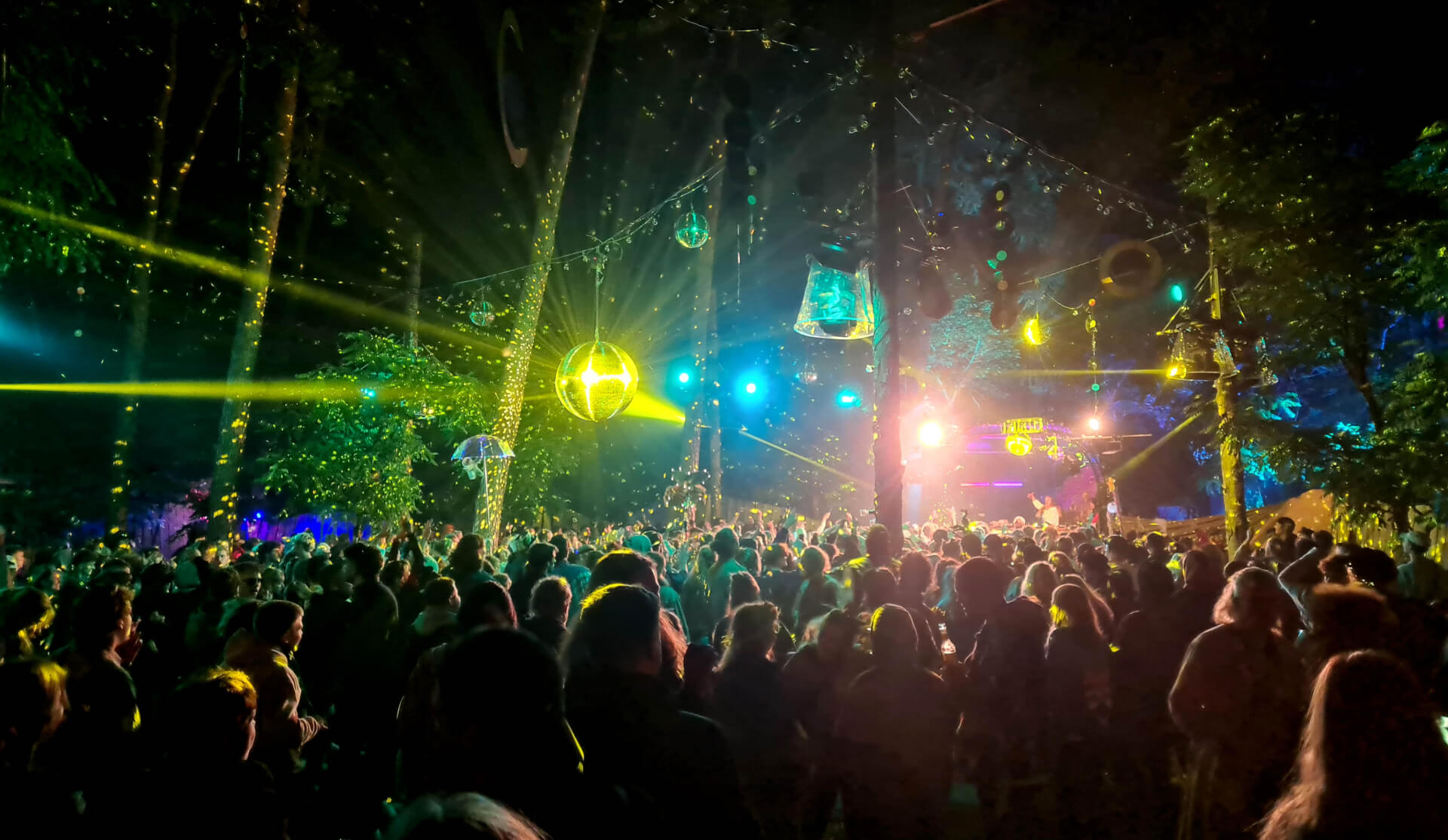
DJ himself: Since 2019 we have a Disco Bizarre showcase at the "Zurück zu den Wurzeln" (“Zurück zu den Wurzeln” is an annual music and culture festival held in Niedergörsdorf, Germany. The festival was first held in 1995 and has since become one of the largest and most popular open-air festivals in the country, Editor's Notes).
Bizarre Billy: It used to be a niche stage back then, with every year it has grown in size. I think it was the 2nd biggest stage last year. We had the most impressive light and fog systems and I think there were over a thousand people dancing. I dared to do my "live remix" show, whereby I remix new tunes and old classics live for the party, ready to switch to regular djing should it not work out as planned, but the number of people going crazy on it just kept on growing throughout those two hours. It was the most exciting experience of the year for me.
Your top movies which mention disco music/movement?
Bizarre Billy: “La Boum”. Just kidding (laughs). There was a terrible American movie about roller discos starring Patrick Swayze (“Skatetown, USA” in 1979, Editor’s note). The rollerskate scenes are fantastic.
Your top vinyl shops where we can dig disco records?
Bizarre Billy: Too many. I like Glove Records in Barcelona.
The term “italo disco” was created in Berlin…
Bizarre Billy: The name was coined by the ZYX label from Western Germany that released first compilations of that music genre in 1983 by that name; not in Berlin, but the name was straightforward at the time: There had already been dozens of "Italo Pop" compilations bringing Italian pop music to the German audience during the 1970s. "Italo" is simply a German slang word for Italian, whereas in Italian it makes no sense: it is a male name for individuals. So when Germany started noticing that disco culture was still alive in Italy, it was natural to call it "Italo Disco" while the Italians themselves used terms like "spaghetti dance" or just "dance". In fact, most of the time they weren't talking about it at all, because in order to be able to sell it to a new generation of Italians that didn't want to hear Italian music, it was important that the music sounded as if it were coming from abroad. That's why real italo disco is never sung in Italian. Had I known that Gazebo comes from my hometown Rome, maybe I wouldn't have bought his record. 1983 even launched a new radio station called "Radio Deejay" which achieved huge instant popularity and had that one special rule: no Italian vocals allowed. Nowadays there are several wrong understandings of italo disco. Wikipedia defines it as anything Italian that vaguely sounds like disco. Italians think of it as just those embarrassing hit songs that made it into their charts back in the 1980's whereas those who have been making dedicated italo disco parties in the past twenty years (includes me) have been doing it because there are hundreds of really beautiful pop songs that never had a lot of commercial success, and it's exactly those songs that the audience on the dancefloor loves the most. So what really is relevant about italo disco is a combination of factors:
1. any language but not Italian;
2. the best songs you never heard before because your radio doesn't play them;
3. pop music produced systematically to be beatmatched by the Dj, because Italy was the first country in the world to have a nationwide passion for proper beatmatched mixing and
4. massive use of MIDI and electronica to dramatically cut down on the production costs compared to '70s disco, plus it was the new sound everybody wanted to hear anyway.
Does a transition from Disco to House music exist?
Bizarre Billy: There is a much stronger transition from HiNRG to house than there is from disco to house. Early house frequently has the same drum and bass patterns as late HiNRG - even the same handclap and rim shot sounds, both styles co-existed around 1987-1990. In that period 70's disco was super uncool and not en vogue. During the 90's, the first disco revival started happening with people like Jamiroquai moving away from acid jazz towards neo disco as in the case of "Cosmic Girl". Suddenly house producers found out they can be successful by using loops from 70's classics, which is a lot less work than producing complete new songs and also takes nearly zero musical training. In my perception "The Bomb" by the Bucketheads made that sort of recycling-house suddenly explode in the mainstream. The track is entirely based on samples of Chicago's "Street Player". It was totally different from the original "made at home" house music of 1987. Since original 70's disco is really hard to mix for DJs, there was a huge demand for house remixes of all the disco classics. Fundamental aspects of disco however got lost in the process: bass frequencies needed to be filtered away to stop them from interfering with the house kick drums, requiring the house music producers to also create new electronic basslines. House didn't treat disco with a lot of respect. It was just sonic material. The complex harmonic progressions popular in the 70's usually got cut out from the final house remix, reduced to simplified hooks and loops.House could have used any material for that purpose and disco was just its most inviting candidate. At Disco Bizarre we only play the early house that has nothing to do with disco. The house music that in 1987-1995 evolved out of HiNRG which itself evolved out of italo disco.
Any nice anecdotes you would like to share?
Bizarre Billy: Alexander Robotnick is an '80s new wave artist that hated italo disco, but everyone has been associating him to italo disco so much that he became an expert and an excellent italo disco DJ - especially because unlike other Italians he understood that italo disco is really about all those obscure and forgotten songs, not "Tarzan Boy" or "Vamos A La Playa". Many of the people that are frequently interviewed about italo disco actually never really liked it. Funny how journalists have a difficult time finding the real aficionados that started collecting obscure italo vinyls already during the '90s.
What are the main difficulties in organizing your events?
DJ himself: Well basically it is limited time available because most of us are working in a full job besides Djing.
Bizarre Billy: I used to do Internet business and politics in the past, then realized there is not much hope for humanity to fix its toxic habits in time before the planet implodes. So now I'm a fulltime music producer, booker, DJ. Time is still the limit on how much I can achieve, but I'm doing good.
Which artists would you like to invite and why?
Bizarre Billy: Another impossible question (laughs).
What makes you proud of yourself today?
Bizarre Billy: You can only survive Berlin winters, not fall into depression, if you do some happy dancing on the week-ends. We're proud to be one of the best places to experience uplifting moments that recharge you for the whole week. Would be interesting to know how many babies were born in the aftermath of our parties.
If you could teleport in another era…
Bizarre Billy: All of us would love to watch certain people make certain things that changed the course of music history (laughs).
Do you consider Disco Bizarre as militant?
Bizarre Billy: There are 4-5 other floors at KitKat club that either play techno or house. We are in charge of music that does not sound that way. So, within KitKat we have a role to fill, but even outside of it we tend to limit the amount of house music. Personally, I expect that the current house music revival will again reach a level of saturation like it did in 2000 whereas the re-evaluation of 70's and 80's disco is timeless since none of today's music genres can compete with it in certain regards such as the quality of compositions and the elegance of the production. As we speak many of our artists are trying to make new music on par with the old masters, while technically it has never been so easy to simulate an entire 80's music studio within your laptop, most of the knowledge how to write and produce that kind of music got lost over decades of wrong "less is more" thinking. You can find new kinds of disco under the label of "nu disco" and new kinds of italo-HiNRG under the stupid name of "indie dance". The name is stupid because dance music has always been predominantly independent from the majors, simply because of the DJs that act as gatekeepers. Nonetheless, I also release music myself that could get filed under "indie dance". Several of us are trying to get close to the high standards of 70's and 80's music, while maybe also leveraging the terrific possibilities of current technologies. When the audience is unable to tell if a song is young or old, then I guess we did our job well.
Your projects for 2025?
DJ himself: As every year - our showcase at the Studio 54 Floor at the “Zurück zu den Wurzeln” Festival 7th-8th june, lots of amazing gigs in Berlin, and other European cities, Dombrance live (July 12th), and collaborations with other parties and crews/ labels like Gouranga, Discolypso, Roadmusic, Golden Soul Records, Basspatrol Records...
Bizarre Billy: I'll surely be playing Marseille, Palermo and Barcelona again, because once I do they usually get addicted and invite me again (laughs). Hope to be adding more stops on the map and maybe dip my foot into foreign oceans beyond Europe.
The disco music in 1 symbol? A quote?
DJ himself: A shining mirror ball, because Disco music was started by "outsiders" of society but became so inclusive that it reflected people of every part of society, coming together on the dancefloor - dancing in joy and ecstasy through the rays of the mirror ball. My favourite quote about mirrors: “What surrounds us is the true mirror of ourselves, because it is our counterpart, while we are at the same time the mirror of our surroundings.” Gerrit Rietveld.
Disco Bizarre in 3 words?
DJ himself: superfunkycalifragisexy.
Bizarre Billy: Disco Trop Bizarre.
Interviewed by Sabrina Bouzidi / Photo: Disco Bizarre stage at Wurzel festival, 2024.