mar. 4 janv. 2022
DENGUE DENGUE DENGUE Interview
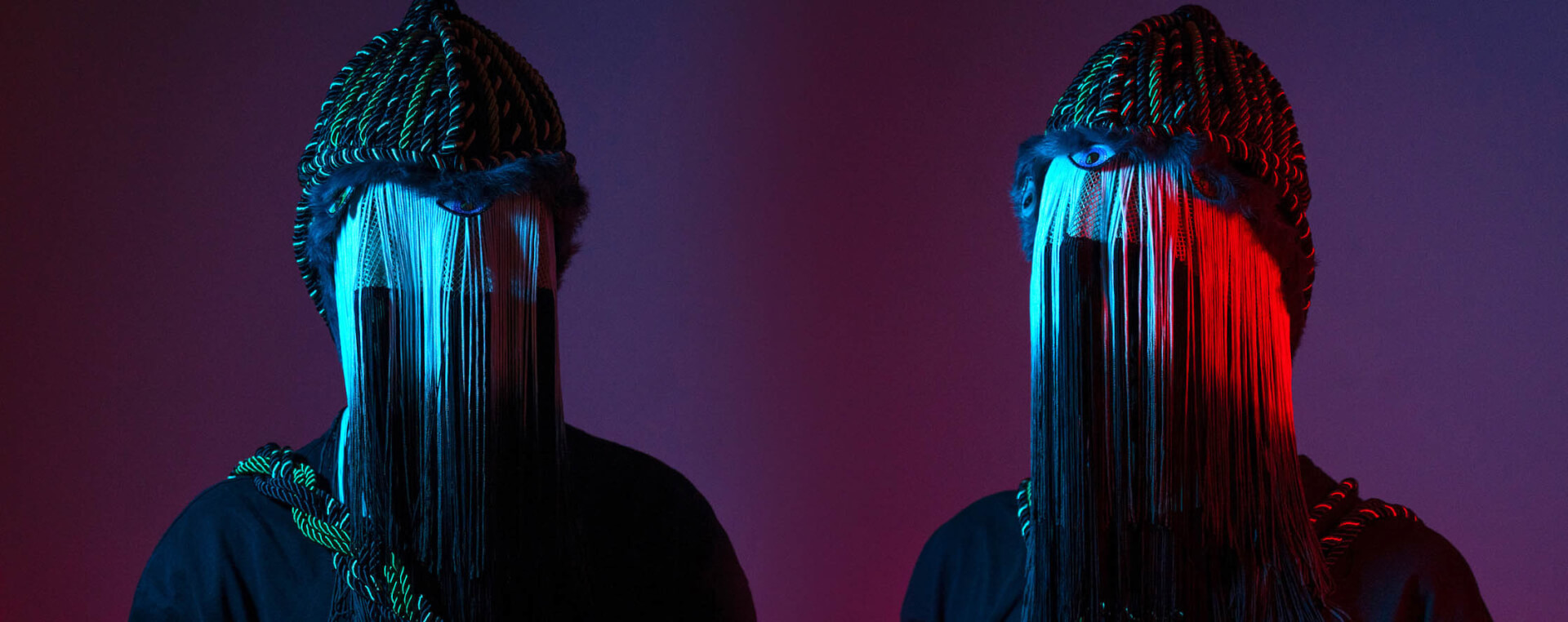
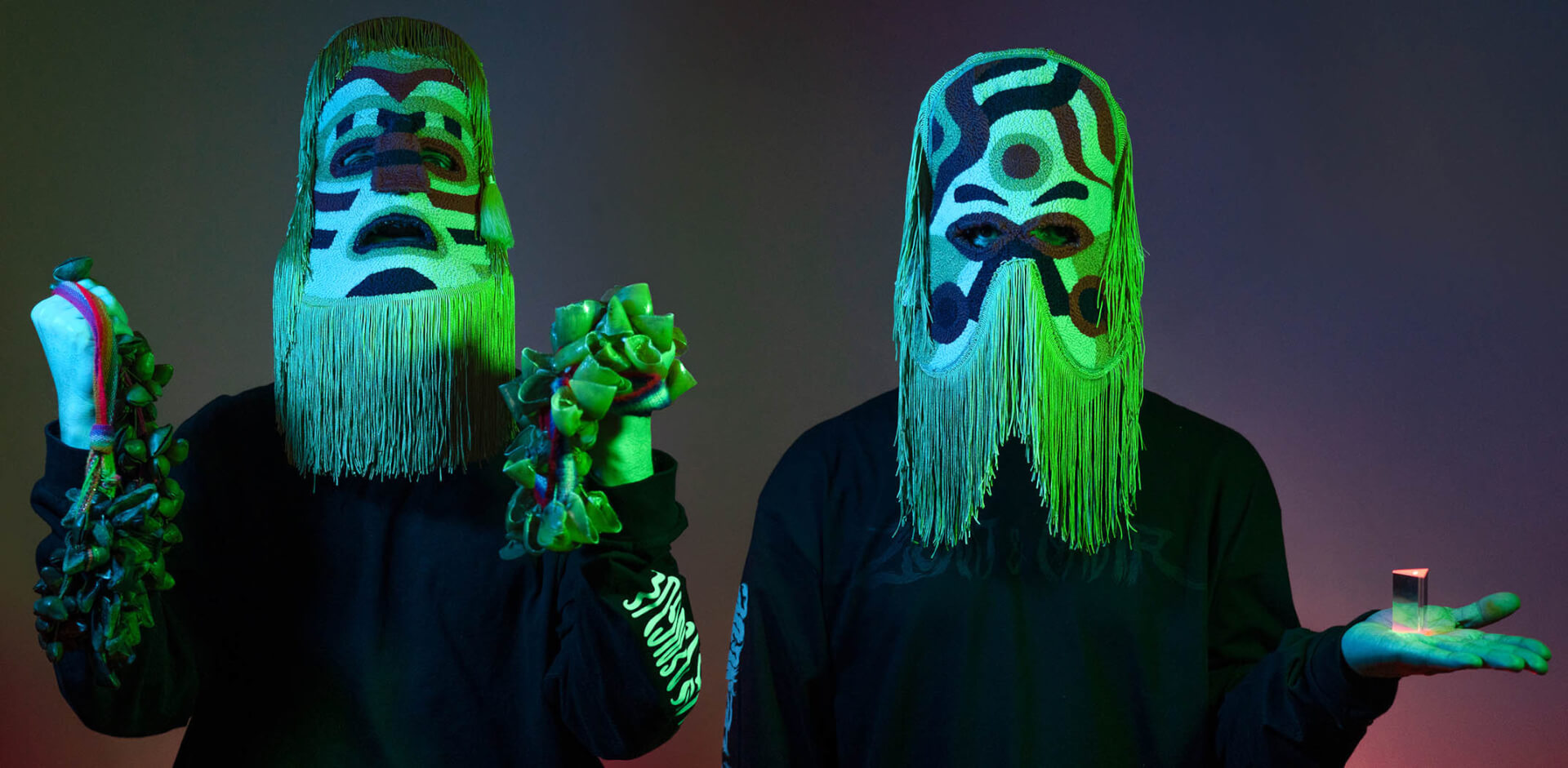
Dengue Dengue Dengue is formed by Felipe Salmon and Rafael Pereira, two Peruvian producers and graphic designers. In the last ten years they released albums one after the other, fusing tribal rhythms, cumbia, dub, bass music and IDM. Their live performances are always accompanied by a solid visual aesthetic and handmade masks in reference to their cultural heritage. In 2020 they launched the Kebrada label which develops a timeless catalogue. The duo looks back at the start of its career and evolution until its recent collaboration with the Tunisian Nuri.
Where do you come from and what was decisive for you?
FELIPE: We both come from Lima, Peru. I studied in a catholic school where music classes were a bit scarce and very boring, but after a while, when I was 14, I started a punk rock band with some classmates. After that I had a couple more bands where I learned to play instruments a bit. After a while I discovered electronic music and started experimenting on my dad’s computer, with demos I found on computer magazines that came in a cd. Then a friend gave me a pirate version of fruity loops 1.4 and that’s when I started to produce. But back then I was not very satisfied with my own production, it took me a while to be confident enough to call something a track. Also, it was very limited what u could achieve back then with FL. I think I kind of learned everything I know by myself and also collaborating with another musicians.
RAGAEL: In the early 2000’s, after 2 years in Art School I moved to London because I was heavily inspired by the IDM scene there and wanted to experience a bit off that, that’s when I got interested in computer music production and 3d animation. After a few years there, I went back to Peru and organised with a few friends a production collective named “Auxiliar”, where we did many projects, music video, installations, an online record label and we ran 3 different parties. “Ant3nA” with was dedicated to IDM and experimental electronics, “Volt” that was focused on Bass music and “Toma!”, which came to be the place where Dengue was born.
Your definition about “Dengue”?
The Mae comes from an Enrique Lynch record name like that DENGUE DENGUE DENGUE DENGUE DENGUE four times; we just took one off. The word Dengue has several meanings in Latin America and it depends on from what country or region you are. In the case of the record, it refers to a rhythm from Cuba, right around the time of Mambo. Dengue it’s also as most people know a mosquito that transmits a terrible fever, but for us, in Lima and I would say the rest of Peru too, it’s a slang that means you are excited about something that’s going to happen. Usually referred to partying, like you are super exited to go party, that weird feeling in your stomach its call dengue.
Why did you move to Berlin?
It was a decision we took because we wanted to expand our project out of Peru. We started touring a lot and finally decided that we had to move to Europe to be able to play many shows in different cities. We use to tour for months and then go back to Peru. At the core, DDD comes from an electronic background and we feel very lucky to be here where we can enjoy shows and exhibitions of great artists that fuel our minds with ideas.
What are your influences and inspirations?
Too many to mention, we would definitely have to leave important stuff off, so we don’t really want to get into names. We try to grab inspiration from everywhere we can. Musically we both come from electronic music backgrounds and maybe our love for IDM and also tropical sounds was a big reason to start DDD, but as I said, we try to add influences from everything we enjoy in life, somehow it all ties together at the end. We do think that we have a certain sound that is hidden inside different ideas/generes, for us it’s a journey and each step is different than the previous, every album or EP we try to focus in a different thing, it’s an evolution and that’s what the project it’s about, a constant exploration. We don’t expect anything from the audience to be honest, but we do like the ones that
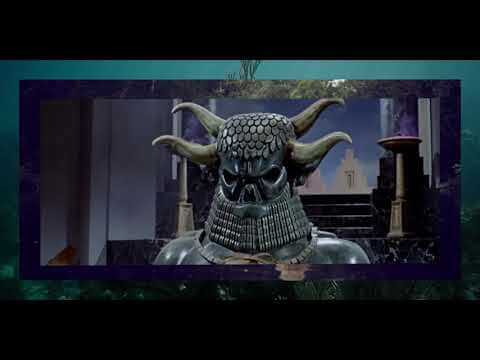
DNGDNGDNG - Atlantida
Contains image samples from : Atlantis, The lost Continent (1961) https://www.youtube.com/watch?v=vSDGbiqFYOw
Your way of producing has changed from the beginning of your career…
F: I believe that my way of producing is changing all the time, but normally I make music on Ableton. Before that, I was into FL studio or “fruity loops” when I first started using it back in 1998. I started using more recordings not long ago and I think that really makes a difference on some tracks, for example, for our album “Zenit & Nadir” we recorded Afro-Peruvian percussions with Cesar and Miguel Ballumbrosio in Lima. Also, I started buying some cheap gear that I think can be used in making it more special and unique. I just bought an electric guitar which I’m using to create weird effects and ambiences. We use cajon, quijada, cajita, cowbell and zapateo which are traditional from Afro-Peruvian music. We also use different types of chajchas, which are rattles made from seeds or animal nails that are used around Peru and some other parts of Latin America. To this we add sometimes more percussion like congas or frame drums and also, we work with samples to recreate traditional rhythms with different elements. In the Afro-Peruvian part of our music we have used classic rhythms that are played with some of these instruments and are used in many traditional songs, for example “Festejo”, “Marinera” and “Son de los Diablos” just to mention a few. When we started the project, we were exploring more into cumbia from different parts of Latin America. The main idea was to re-create the psychedelic part of cumbia with electronic elements. In our collabs with Sara Van, she wrote the lyrics and the tracks represent our take on Afro Peruvian music, specially “Landó”.
Why is it so important to transmit the culture of Afro Peruvian music?
It’s a very unique a beautiful sound that could get lost in time if new generations don’t explore it. Luckily in the recent years there has been a lot of producers and bands taking this sound into new different places, so the future looks promising. The polyrhythmic complexity of Afro Peruvian music translates very well on new approaches to electronic music composing, computers and machines are becoming very friendly with breaking the 4/4 square structure and adding more humanity into it.
Could you speak about your label KEBRADA?
We wanted to do the label for a long time, we just didn’t have the time before. We have a long list of artists we want to collaborate and there are new talents emerging every day, right now we just put out and album by QOQEQA and an EP by Susobrino, plus a 11 tracks compilation in double vinyl with several artist all across the Americas. The name “Kebrada” loosely translates to Broken, referring to the broken beats and polyrhythmic approach of the labels sound. We are also looking for acts that don’t relay heavily into the genere or sound that its popular now, we want music that sounds it could have been produced 10 years ago or also 10 years into the future.
You’ve recently collaborated with Nuri; are there any other producers you would like to work with?
F: We met Nuri in Copenhagen where we played together in a gig. We already knew and liked very much his music and it was very cool to meet him and watch his show. Of course, we always wanted to make a collaboration from the first moment we met him. I worked the “A5DHER” remix, from his “IRUM” album, in my studio on Ableton trying to play around with the stems and adding our own flavor to it. We think that we share a lot in common with Nuri’s sound even if we come from different places. We are currently in collaboration with a few artists we love, we have a bunch of tracks coproduced with our friend Prisma that should be out soon. And with Ehua, Kouslin and staring a few others soon.
Your album “Continentes Perdidos” under your alias DNGDNGDNG explores a darker shade of sound…
DNGDNGDNG is reserved for the darker and deeper side of our music.
What was your best experience?
The best experiences are when you don’t expect it’s gonna be a great night and suddenly it turns into an epic moment, usually in small dark clubs more than in big huge festival stages.
Interview by Sabrina Bouzidi / Masks by Twee Muizen and Carol Almeida.