2025-03-11
ANDY RIGBY-JONES
Andy Rigby-Jones has been passionate about vinyl and music since his teens. At the end of the 70s, he discovered the club culture and became the resident Dj at Tony Diamonds club in Falmouth. In England, it was also the disco era and at the same time, he was studying mechanical engineering. Then, Andy combined his passions by working for two decades in product research and development at Allen and Heath. In collaboration with Richie Hawtin, we owe him the much-feted Xone 92 and V6. The company was bought and in 2014 he launched Union Audio. He started in his garden and began designing and building a range of rotary mixers. From disco to techno, we look back on a journey dedicated to music. Interview from the special disco edition – star wax #74
Welcome! A glass of?
Pinot Grigio.
Where did you grow up and did you have any vinyl records at home?
I grew up on a farm in North Cornwall. As a child of the 60’s, with older brothers and sisters, music played a big part of my early years. Vinyl was the only format widely available then, so we had lots of records. My first record, bought for me as a present by my big sister, was “These Boots Are Made for Walking” by Nancy Sinatra.
Did you start your career as an engineer or as an DJ?
After leaving school I went to technical college to study mechanical engineering, that would have been in 1976. It was either that or working on the farm, and as I was more interested in engines than livestock, it was an easy choice. This was the era of Disco and Funk, it was constantly played on the radio and I loved it - still do actually! Around 1978, I started going to clubs, and decided that I wanted to be a DJ. Back then, the easiest way to get into Djing was to start your own roadshow, but speakers, amps, etc, were very expensive, and certainly way out of the price range of an 18-year-old student, so I was forced to build my own kit, which led me to get into audio electronics.
As Dj, who are your current main influences?
From an early age I’ve always loved dance music in all its forms – from Disco to Techno – and I still do. In recent years I’ve developed a love for deep, groovy, jazzy house, so I have a good collection of vinyls from producers such as Fouk, Danilo Plessow, Dam Swindle, Retromigration, Hamo, Brame, Atjazz, Jimpster, etc. But I also enjoy listening to Chris Liebling’s weekly podcast, which showcases some very fine techno DJs.
Can you tell us about the disco era in England because from here, in France, it seems to be under the radar. During the 70's and early 80's the Northern soul and reggae scene seemed more famous than disco but there must have been DJs, parties... ?
Disco was huge in the UK and became quite mainstream, regularly topping the pop music charts. Club life in Cornwall was -and still is- limited, but my first DJ residency in 1979 was at a club in Falmouth called Tony Diamonds. The building was previously a church but was transformed into a New York style club by Tony Bruce, a flamboyant millionaire who would arrive in an open top Rolls Royce. Above the dance floor was a full-size Biplane, with coloured spotlights placed in the wings, and a balcony that led into a leather seated lounge bar, complete with an open fire and a library. The amps, speakers, and Dj mixer were all custom made and sounded fantastic. The clientele was made up of art students and locals, and there was a gay night, which was very avant-garde for the time. I loved playing there, but sadly it closed in the early 80s, mainly due to noise complaints.
How did you get your vinyl records, can you tell us about the record stores back in the day?
Falmouth had a record store called Falmouth Records - although the name was later changed to Compact Records and Tapes. It was run by a lovely guy called John, who had a huge knowledge and love for music. It was always so exciting to visit the store to see what was new and playing it for the first time in the club. Happy Days!
Your top 3 Disco labels?
Tricky question! MCA, Atlantic, Columbia – but special mention to an old British label PYE as they featured one of the best UK disco bands : The Real Thing who released “Real Thing” in 1976.
Can you tell us about how you came to create the Allen and Heath Xone 92 and V6, especially the creation process?
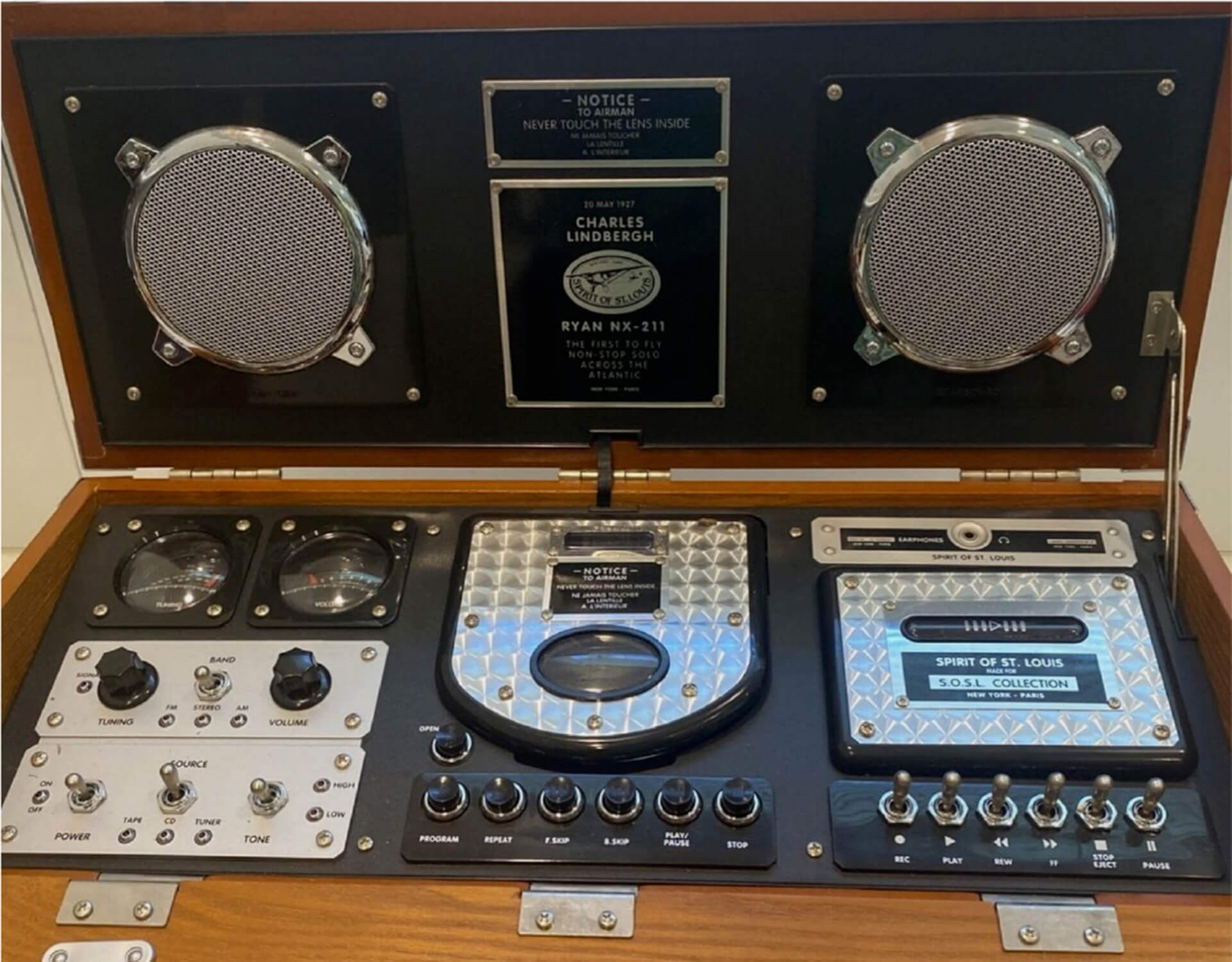
The inspiration for the styling of Xone:V6 was a cheap retro music centre that I saw in a tourist store at the Miami Winter Music Conference in 2002. (Photo below). As soon as I got back, I started working on the design, and sourcing all the parts needed. When I showed the prototype to the production manager, he (slightly) sarcastically said that it looked like something out of a WW2 bomber, which was just what I had expected! The prototype had its first gig at Heaven nightclub in London with John Digweed, but I was so nervous and I left early! Xone:V6 was a lot of fun to design, and remains one of my all-time favourites. Xone:92 was inspired by Richie Hawtin’s Xone:62 which his dad Mick had retrofitted with MIDI. This was well before computer-based Djing became mainstream and it took me a while to understand the reasoning behind it. But Richie was -as always- way ahead of the curve! We launched the Xone:92 in late 2003 at Cargo in London, with Richie himself headlining. It’s amazing to think that the mixer is still in production, and still relevant after all these years!
What did you learn from this experience as an engineer at Allen and Heath?
Working at Allen & Heath was an incredible journey for me. I started as the wave-solder machine operator as it was the only job going – this was in 1992 and the UK was in a recession, so jobs were scarce, and I had recently become unemployed because our family agricultural engineering firm had been forced to close. I had no real intention of staying at Allen & Heath, but somehow remained there for the next 22 years! I soon moved to the production test department, then into R&D, before becoming the Xone design manager. Those 22 years taught me everything I know about production, engineering, test, and design, and I remain truly grateful for my time there.
Then you launch your own company, why and can you talk about your vision and what you want to develop with the rotary mixer?
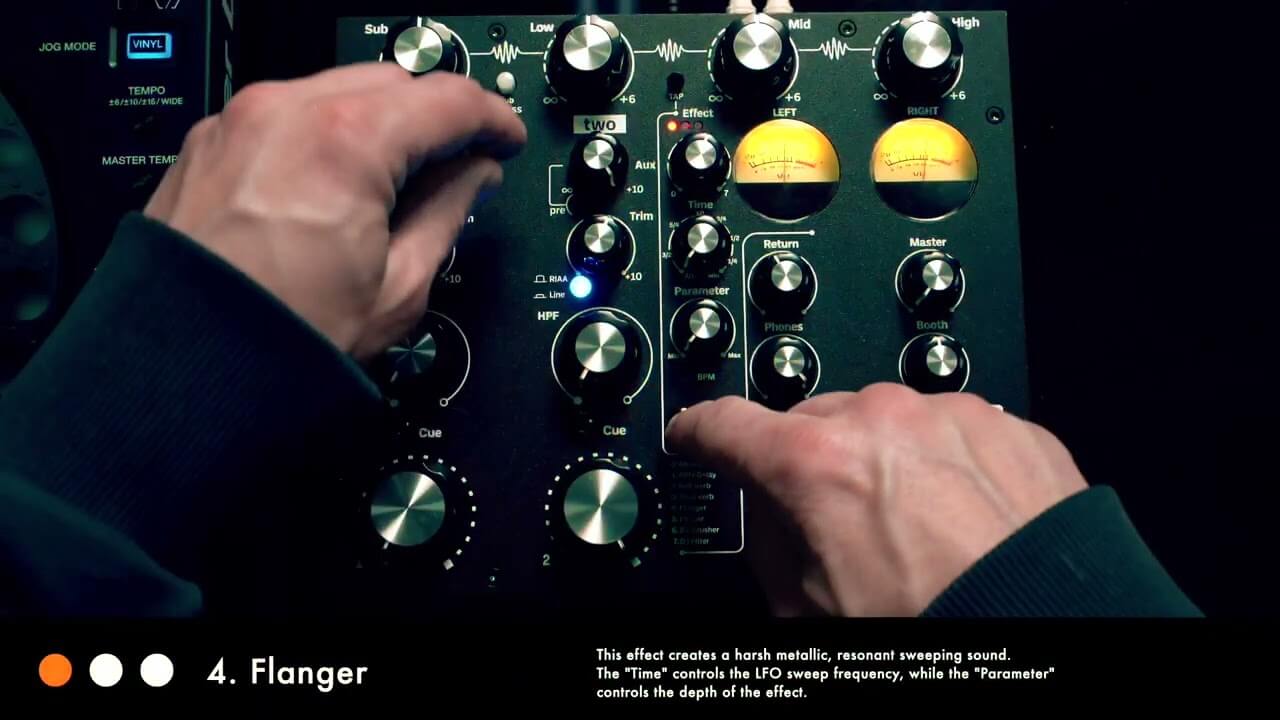
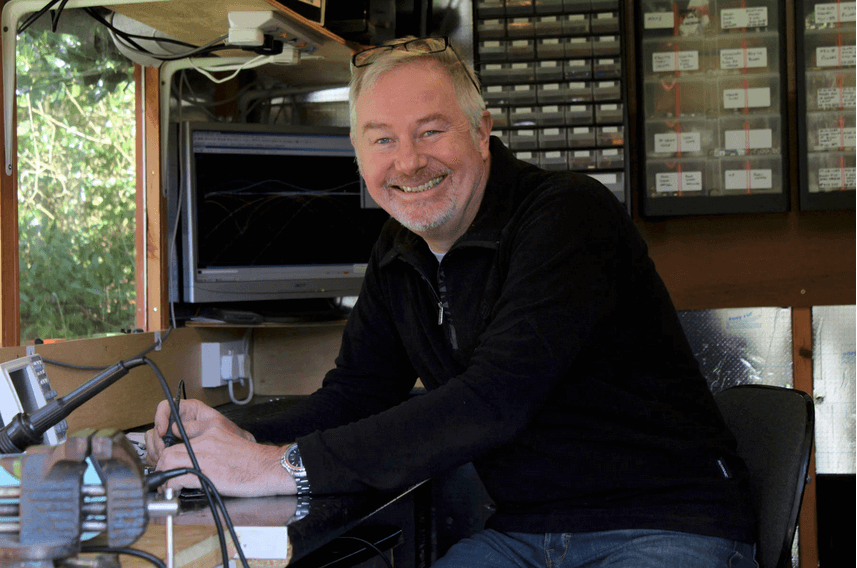
Around the time of the 2008 recession, Allen & Heath were acquired by Denon and Marantz and the company changed. There was a head freeze, a wage freeze, and new product development was subject to greater financial scrutiny. The Xone department was merged into general R&D and many engineers became resources to be allocated to whatever project needed them. I completely understand the reasoning behind it, but for me the fun of the job had diminished, along with the previous design freedom I had enjoyed. I stuck at it for another six years, but when I reached my mid-fifties, I decided to start a new chapter in my life while I was still young enough to do so, and in early 2014 left to set up Union Audio, but without any real plan of what I was going to do. At this point, fate took a hand, and I ended up working with Richie Hawtin on a project that ultimately became the Model 1. My office was the summer house in the garden, and my R&D the garden shed! Union Audio’s first R&D. Just as I was finishing the design work on Model 1, fate again played a part, and by chance I started a conversation with Ryan Shaw, boss of MasterSounds Audio. This conversation led to me designing and building the Radius Rotary mixer range for MasterSounds, which successfully grew both our companies over the following eight years. In early 2024, Ryan called me to say that he wanted to downsize his company to spend more time with his family and go back to the roots of MasterSounds, which are turntables and weights. This led to another chapter in Union Audio becoming where we are now, both a brand and manufacturer. My vision for the company is to design and manufacture products to the highest quality possible while keeping them relatively affordable and to keep manufacturing in Cornwall UK.
In this digital world, why is analog important to you?
Actually, the World and all its people are analogue! Seriously, there will always be a place for analogue, even if digital offers greater convenience. For me, it’s fascinating to see the incredible resurgence of vinyl, as a younger generation of Djs discover the beauty of record manipulation. Vinyl Djing is very tactile, you handle the medium, you can see the grooves and read the music. You physically hold the disc on the platter, you manually Cue it and launch it into the mix. Carrying your device around is also physically demanding - it's as far away from a USB and software as possible! And at the end of the day, you place your vinyl on a shelf, you have an actual object that represents your musical journey in life, not a hard drive full of ones and zeros…
Today, are you still digging and what kind of music are you obsessed with?
Yes, I love browsing Discogs or Juno Records for tracks. As previously mentioned, most of the vinyls I buy these days are deep house, but I still have hundreds of records from my time as a DJ, spanning the 70s to the early 2000s. I also love classic jazz and have a small collection of the greats.
What job would you like to do if you weren’t in music industry?
Probably something to do with engineering, engine building, or car restoration… I have a passion for motorbikes and classic cars so, maybe something to do with these.
One last word, maybe something you would like to talk about that I forgot?
Only to say thank you for taking an interest in me and my company! Visit us: https://www.unionaudio.co.uk/
Interviewed by DJ coshmar/Photo (c).