2024-09-20
ALPHA STEPPA
Talented English producer, Alpha Steppa founded the independent label Steppas Records in 2010 and has since collaborated with multiple artists. Rooted in reggae roots and UK dub, his unique style blends with electronic sounds and bass music. In the line of his father and his aunt, mythical duo Alpha & Omega, he creates a powerful music, conscious and enlightening. Meeting a free and rebellious spirit, like the pioneers of dub.
You played several times at the Dub Camp, Reggae & Dub Sound System festival in France: how was it this year?
It was absolutely fantastic! I really loved every second. It’s been a special year for festivals. Good vibes in the air, maybe after the positive results of elections here in France. We can feel and cheering that, as a relief. A little break from the far right and the hatred haters. This is a place for love. And Dub Camp is special because of the people. All the attendees, organisers, volunteers and artists are on the same page, united by our love of dub and soundsystem music.
You’re a bridge between the generations. With a huge musical legacy, you made your own path and create your own sound. How do you see your specific position in Dub music?
Thank you! My name is actually “Bridge” (lol). I’m spontaneously here because I love to make music. Then people after came and ask me to play. I’m happy to do that, to see the impact of the music on the people. Cause what I’m interested in basically is how the music makes you feel. If it can improve your day, your week, even for few minutes. Joy and happiness. This is ultimately why I’m here.
You have many collaborations with singers from around the world. At Dub Camp, you were performing with Awa Fall. What’s the story of your connection?
We’ve been working together for a long time. We first recorded Awa when she was aged 14, so very young. She has been singing her all whole life, she completely loves doing it. Since we connected and started making music, we’ve been making music ever since. We do it in a very collaborative way. Sometimes she writes the lyrics on the song and I build the riddim, the instrumental. Sometimes I write the song, the lyrics, I play on a guitar or keyboard. I send it to her and then she interprets the song in her own way. The album “What a joy” came in that way. It’s really a true collaboration in which the music, melodies and lyrics, are shared between the two of us. They manifest from us, as one, as an entity in a sense. I hope you can hear this specific connection in our music.
You created #Streetdub project with many artists invited. What’s the concept of dubbing in the street?
Most of the time, it’s completely spontaneous. One has an idea, what and where we’re gonna do and we just go to the place. It’s interesting for us to be in a particular place that have a meaning that also reflects in the lyrics. Sometime I write something to explain it. To share if people are interested to learn a little bit more about the message in our music, as a kind of platform. Of course, for joy and entertainment, but also for awareness, to shine light on social or human rights issues. It means a lot to us. Maybe inform people that may not know about it. And then with that information, you make up your own mind. Another reason I do it, it’s because it takes the singers and me outside of our comfort zone, the studio or stage. In a kind of strange environment, that creates a kind of magic. It makes something new, a different interpretation of the song. We really enjoy doing it.
This kind of spontaneous which stick with Jamaican tradition…
Very good point. For example, the 72th episode of Street Dub – video below, it’s in Mexico, in a quesadillas place. We were there with Joe Yorke and Nai-Jah to record a song. These two Mexican guys from the area just came making there reggaeton thing. I invited them to join us. It was a spontaneous fusion, magic, beautiful. Very cool to connect these talents. I played it in Dub Camp because it’s resonating with people. From the street to the session, it’s an interesting dynamic.

It needs a lot of work to record in one time, isn’t it?
Yes. Some kind of accumulative work, over the years. For everyone. For me, to envisage the concept, to record and mix. In a way that works, because it’s completely different from the studio. And then also for singers. They ‘ve been practicing for years to be great.
What would be your dream place for #Streetdub? And if you could resurrect an artist to play with?
To be completely honest, I would quite like to go to the moon. I don't think I would like to resurrect anyone, you can resurrect artists with AI now, but I don't think that's a good idea either.
For you, what is the symbolism of dub music?
Good question. I know everybody has different opinion, it’s controversial. For me, obviously, it goes back to Lee Scratch Perry, King Tubby and other engineers from the 70s in Jamaica. My perspective is that what they were doing was visionary, radical and experimental. I imagine that a lot of people at that time who are accustomed to listen or making reggae music, they may have not liked it, like “what are you doing with our music?”. They were putting effects, twisting it, remixing it, changing it radically. That was probably difficult for a lot of people. But on the other hand, the public loved it when it was played in the dance. You can turn up the bass, the riddim and everything like that. You had all new experiences, it created this live session where people can jump on the mic and interpret it in a whole new way. It’s always unique. In order to honor these pioneers, I try to do the same. Instead of trying to emulate or creating what they did, I just do my things. I experiment freely, without fear to do something radical. Because I want to respect that foundational message, the concept and the experimentation of dub and rebel music. Tradition meets innovation.
Analog vs new technologies: what's your preference?
It's a hot and evergreen topic. Objectively digital is better, but subjectively analog may be better. However, the most important thing is the source music and how it makes you feel.
How do you feel the influence of your emotions when making music?
My music is all about feeling, that will always be the priority for me, the emotion in my music. How I feel, where I am, who I'm with and what I'm going through definitely affects my music. And on the other hand, music affects how I feel, it works both ways, creativity and the experience of creativity work in a circle. Generally I hope that my music makes people feel good, but not necessarily, as melancholy, nostalgia and even anger are important feelings to face.
What do you broadcast on your Steppas web Radio?
It has been streaming live 24/7 uninterrupted on YouTube since Feb 4th, 2021! We include music from various artists on our label Steppas Records, as of 2024 there are 543 songs (35 hours)
and 171 dubplates (11 hours), and each and every song is followed by the dub mix!
Several songs in sanskrit: Rig Veda, collection of sacred hymns, Sannyasa, path of renunciation... What’s your link to spirituality?
Since my 20s I’ve been inspired by eastern mysticism and spirituality, although not exclusively. I find inspiration in certain branches of Hinduism, especially Advaita Vedanta or Non-Dualism. I also borrow wisdom from Buddhism! I lived with an incredible Buddhist nun for several years and she taught me to meditate.
Special attention is paid to the artwork of your albums, very beautiful with animals in black and white. What is the artist behind?
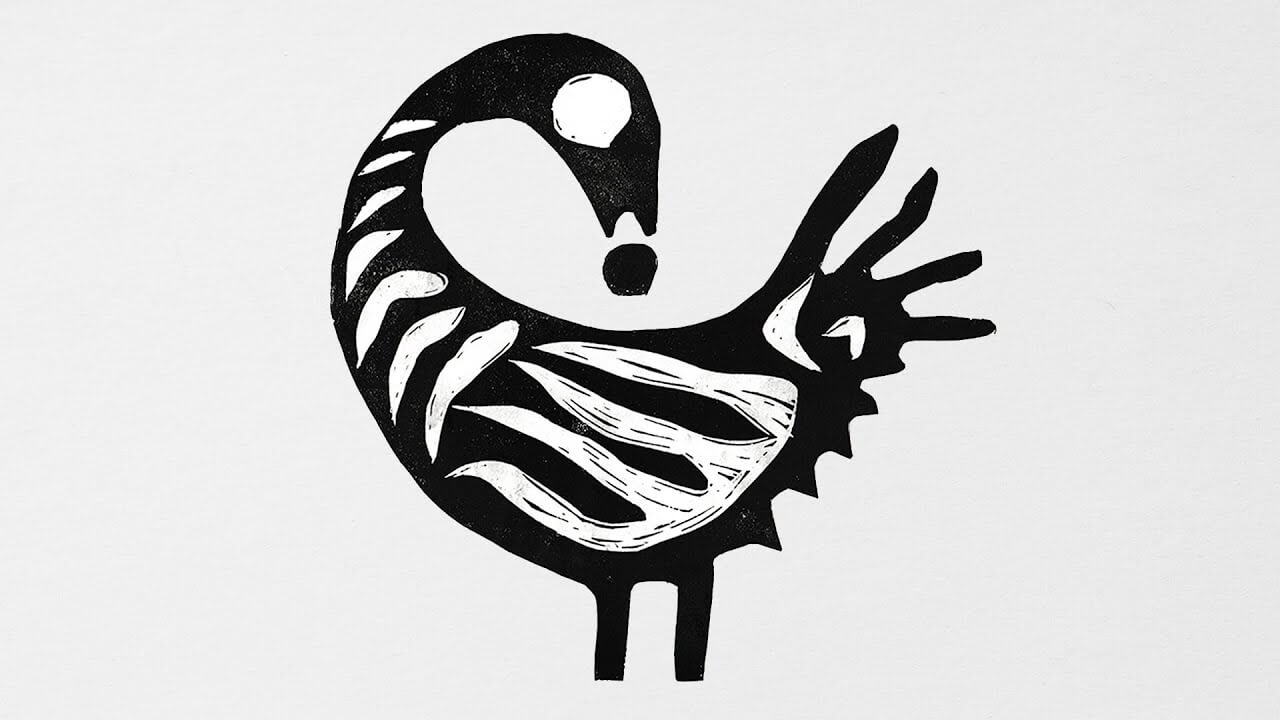
It’s my mum. She uses woodblock and lino printing techniques. The first album featured a tiger and magpie, common in Korean folk art, Minhwa. I chose this because I started the label around the time when I lived in Korea, and was very much inspired by the culture. We decided to maintain this style and use a different animal for each album, that somehow we felt represented the music or message. Shout out to my mum, she's a great artist! People often send me photos of my mum's art tattooed on their bodies, which I think is really cool. I'm not really sure how my mum feels about it, she just smiles and nods.
What’s the message in your music?
The fundamental is compassion. Try to cultivate it, in order that we become closer as people, more caring, more loving. More equal as human beings, as animals, as ecosystem on this planet. Also lately I’ve been, like many of us, kind of consume by was happening in Gaza Palestine. Automatically we’re making music about equal rights and justice. If we’re singing or dancing on a tune about that, we should stand for that. The path to peace is paved with equal rights and justice.
What are your incoming projects?
I have a new album coming out in October, it's called 'Collision of an Ancient Mind and a Modern World'.
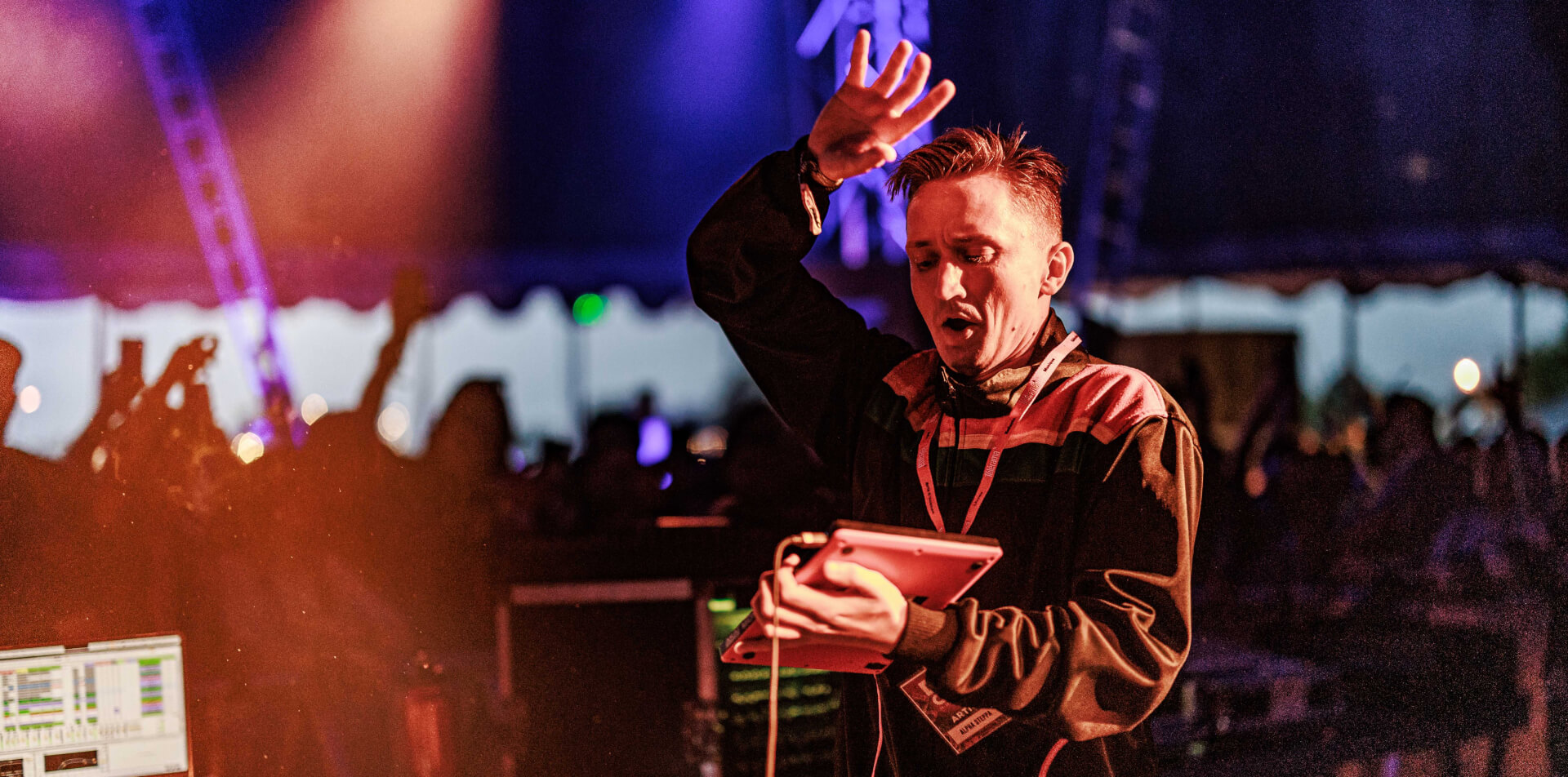
Interviewed by Maela & Yaksha / Photo by Etienne Bordet